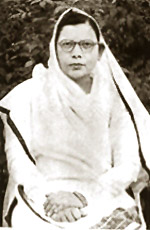
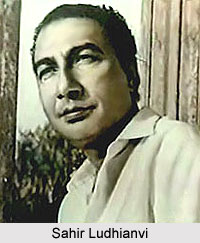
 Sahir Ludhianvi was born on 8th March in the year 1921. He was a renowned Urdu poet and Hindi lyricist, and was passionate lover of Hindi films. Sahir Ludhianvi is his pseudonym. He won the Filmfare Award twice, in 1964 and 1977, and in 1971 was awarded the Padma Shri by Government of India. In recent years there have been many attempts to chronicle his life and times. Many books about him were published both in India and Pakistan.
Early life of Sahir Ludhianvi
Sahir Ludhianvi was born into the wealthy Muslim Gijjar family as Abdul Hayee on 8th March 1921 in Ludhiana, in the Indian state of Punjab. His mother name was Sardar Begum. Sahir`s parents had a very loose and estranged relationship. In 1934, when he was thirteen years old, his father married for the second time. At that time, his mother decided to take the bold step of leaving her husband, forfeiting all claims to the financial assets. Sahir`s father then sued his mother for child custody but lost. He threatened to make sure Sahir did not live with his mother very long, even if that meant taking the child`s life. Sahir`s mother then found friends who kept a close watch on him and did not let him out of sight. Fear and financial deprivation surrounded the formative years of this young man. His parent`s divorce brought him and his mother face to face with poverty and struggle in life.
Education of Sahir Ludhianvi
Sahir studied at and graduated from Khalsa High School in Ludhiana. Upon matriculation, he joined the Satish Chander Dhawan Government College for Boys in Ludhiana. He was quite popular for his ghazals and nazms in the college.
In 1943, Sahir settled in Lahore where he completed the writing of his first Urdu work, Talkhiyaan (Bitterness) which was published in the year 1945. After his work was published, he began editing four Urdu magazines, Adab-e-Lateef, Shahkaar, Prithlari, and Savera; these magazines became very successful. He then became a member of the Progressive Writers` Association.
Career of Sahir Ludhianvi in Bollywood
Sahir lived on the first floor of the main building of an Andheri outhouse. His famous neighbours included the poet, Gulzar and Urdu litterateur, Krishan Chander. In the 1970s, he constructed Parchaiyaan (Shadows), a posh bungalow, and lived there till his death. Journalist Ali Peter John, who knew the poet personally, says real-estate sharks have been eyeing Sahir`s abode after the death of his sister. His belongings and trophies are in a state of ruin, according to the journalist.
Sahir Ludhianvi made his debut in films writing lyrics for the film Aazadi Ki Raah Par (1949). The film had four songs written by him and his first song was Badal Rahi Hai Zindagi... Both the film and its songs went unnoticed. However, with Naujawaan (1951), he gained recognition. S.D. Burman composed the music for Naujawaan.
Sahir worked with many music composers, including Ravi, S.D. Burman, Roshan and Khayyam, and has left behind many unforgettable songs for fans of the Indian film industry and its music.
From the time B.R. Chopra started producing and directing films under his banner `B.R.Films` around 1950, Sahir Ludhiyanvi remained the preferred songwriter for his films. This association continued till Sahir Ludhiyanvi died, with his last composition for B.R.Films being for Insaaf Ka Tarazu. It was only after Sahir died that B.R. Chopra decided to use a new lyricist Hassan Kamaal for his films, starting with films like Nikaah. The association between Sahir and B.R. Chopra`s family continued for so long that despite B.R. Chopra using different music directors in his movies, Sahir always remained the lyricist for his movies.
In 1958, Sahir wrote the lyrics for Ramesh Saigal`s film Phir Subah Hogi, which was based on Fyodor Dostoevsky`s novel Crime and Punishment.
With success, Sahir started displaying arrogance. He insisted on writing the lyrics first and then having them set to music unlike his other contemporaries who would be happy penning their verses to the tunes.
Sahir Ludhianvi`s work in the 1970s was restricted to films mainly directed by Yash Chopra. Though his output in terms of number of films had thinned out, the quality of his writing commanded immense respect. Kabhie Kabhie (1976) saw him return to sparkling form. These songs won him his second Filmfare Award for Best Lyricist, the first being for Taj Mahal (1963).
On 25 October 1980, at the age of fifty-nine, Sahir Ludhianvi suffered a massive heart attack and died in the arms of his friend Dr R.P. Kapoor. He was buried at the Juhu Muslim cemetery. His tomb was demolished in 2010 to make space for new bodies.
Personal life of Sahir Ludhianvi
Sahir Ludhianvi remained a bachelor all his life. He had two failed love affairs with journalist Amrita Pritam and singer/actress Sudha Malhotra. These relationships had left him an embittered man. He took to drinking heavily and drank himself deep into alcoholism. The tragedies and pathos of his personal life most truly reflected in his poignant poetry.
This famous lyricist Sahir Ludhianvi died on 25th October in the year 1980 by a massive heart attack. He was buried at the Juhu Muslim cemetery.
Awards Received by Sahir Ludhianvi
1958: Nominated - Filmfare Award for Best Lyricist: Aurat Ne Janam Diya (Sadhna)
1964: Filmfare Best Lyricist Award: Jo Wada Kiya ( Taj Mahal)
1977: Filmfare Best Lyricist Award: Kabhi Kabhie Mere Dil Mein (Kabhi Kabhie)
Sahir Ludhianvi has worked as a lyricist in the following films:
| Naujawan | Dharmaputra | Daag |
| Baazi | Gumraah | Kabbi Kabhie |
| Jaal | Taj Mahal | Hum Kisise Kum Nahin |
| Taxi Driver | Chitmlekha | Trishul |
| Munimji | Ghazal | Insaaf Ka Tarazu |
| Funtoosh | Kajal | Dhanvan |
| Naya Daur | Waqt | Ghunghroo |
| Pyaasa | Bahu Begum | Mazdoor |
| Phir Subah Hogi | Hamraaz | Daata. |
| Kaagaz Ke Phool | Izzat | Barsaat Ki Raat |
| Seema | |