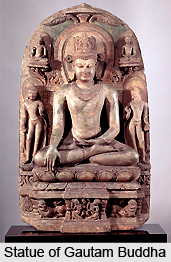
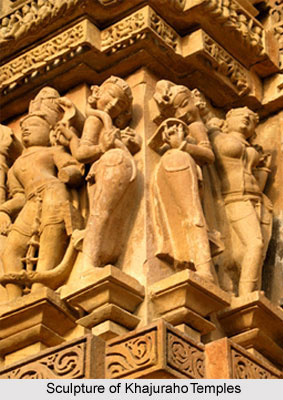
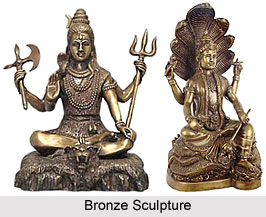
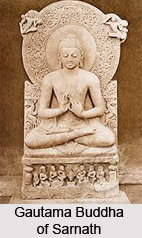
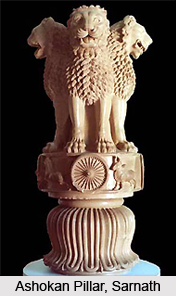
 Features of Mauryan sculpture characterises the usage of rocks as building materials. The concept of religious sculpture was also predominant during the Mauryan Empire. In fact it has often been pointed out that the use of cut stone in the religious sculpture first came into vogue in the Mauryan era. Mauryan sculptures have been dominated by Buddhist temples and caves. The caves have been clearly inspired by the Indian Vedic sculpture. The other features of Mauryan sculpture include the stupas, chaityas and viharas. The Pillars of Ashoka and the Lion Capital of Ashoka from Sarnath are said to be the most remarkable manifestations of stone sculpture of the Mauryas. Currently, the Lion Capital is the National Emblem of India.
The influence on sculpture was mainly due to Ashoka`s conversion to Buddhism. He has left behind his beliefs inscribed on the stone columns or rocks. In places like Lumbini Park, Sanchi and Sarnath there exists pillars which are part of the Mauryan architecture. While discussing the features of Mauryan sculpture one will definitely come across the monasteries. These units form an integral part of the Buddhist religious architectures. Jetavana monastery at Sravasti was rebuilt by Ashoka with solid materials like brick and stone so that it can survive the ravages of time. Thus the chaitya halls, stupas and columns came into existence.
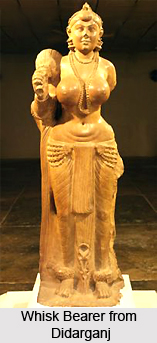
The pillars at Chunar, near Varanasi, are the essential examples of Mauryan sculptures. In fact the pillars built by Ashoka are appropriate examples of sculptures due to the carved figurines etched on them. Two types of stone have been employed in the construction of the Ashokan Pillars, of which some included fine-grained hard sandstone which were buff-coloured and other type which included white and red sandstone from the region of Mathura. These stones possess the markings of black spots. The similarity exhibited in the pillar capitals indicate that these masterpieces of sculpture were all crafted by sculptors belonging to the same area.
These notable structures have been accompanied by terracotta Gods and Goddesses. The Mauryan sculptures exude a unique, earthy appeal. Such terracotta objects have been traced in the area extending from Pataliputra to Taxila. A majority of such beautiful sculptures boast of magnificent structural embellishments, a dexterously moulded shape and a stylish appearance.
The tradition of rock cut sculpture, which was dominant from the 2nd century BC to the end of first millennium AD, has its roots in the Mauryan period. At a later stage these sculptures became characteristic features of Indian architecture. Besides these the features of Mauryan sculpture were also influenced by Shaivism and Vaishnavism.