Origin of Damodar River, Indian River - Informative & researched article on Origin of Damodar River, Indian River
  Indianetzone: Largest Free Encyclopedia of India with thousand of articles Geography of India


in  
Art & Culture | Entertainment | Health | Reference | Sports | Society | Travel
Forum  | RSS Feeds  | Free E-magazine
Geography of India : Indian Climate l Indian Mountains l Indian Forests l Indian Soil l Indian Vegetation l Animal Husbandry in India l Resources in India l Indian Demography l Indian Industries l Indian Islands l Indian Airports l Zoos in India l Indian Mines & Minerals l Indian Physiography l Indian Transport l Indian Geology l Communication in India l Indian Trade l Indian Astronomers l Indian Telecommunications
Home > Reference > Geography of India > Resources in India > Water Resources in India > Indian Rivers > Inland Drainage Basin > Damodar River > Origin of Damodar River
Origin of Damodar River, Indian River
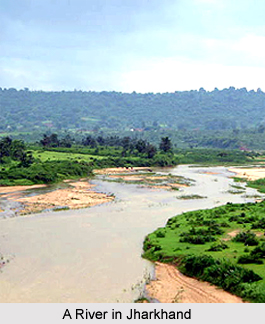
The origin of Damodar River is at the Chandwa village, Palamau district, on the Chota Nagpur Plateau in the Jharkhand.

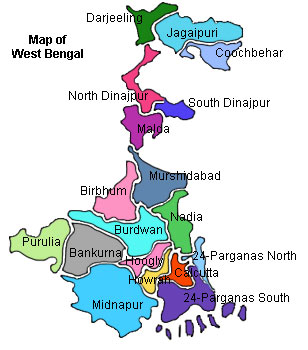
Damodar River begins near Chandwa village, Palamau district, on the Chota Nagpur Plateau in the Jharkhand state in eastern India. The river flows in the direction of east for about 592 km across the states of Jharkhand and West Bengal to the estuary of the River Hooghly. It has a number of tributaries and sub tributaries, such as Barakar, Konar, Bokaro, Jamnai, Haharo, Guaia, Ghari, Khadia and Bhera.

Origin of Damodar River, Indian River In some of the local languages of Jharkhand, the river is known is called Damuda. The term damu means sacred and da means water. The Damodar used to flow previously through Bengal on a direct west to east course and join the River Hooghly near Kalna. However, the river has changed its course and in its lower reaches most of the water flows into the Mundeswari River, which again merges with other rivers and finally most of the Damodar water debouches into the Rupnarayan River. The remaining water flows through the Damodar into the Hooghly south of Kolkata.

The Barakar is the most important tributary of the Damodar. It originates near Padma in Hazaribagh district and flows through Jharkhand before meeting the Damodar near Dishergarh in West Bengal. The Damodar and the Barakar divides the Chota Nagpur plateau. The rivers pass through hilly areas with great force, sweeping away whatever comes in their path. The Barakar, the great stone bridge build in 1913 and the successive iron bridge in 1946 interrupted two bridges on the Grand Trunk Road near Barhi in Hazaribagh district down.

This article is a stub. You can enrich by adding more information to it. Send your Write Up to content@indianetzone.com

(Last Updated on : 25/03/2009)
  More on Damodar River...
 
Geology of Damodar River Origin of Damodar River Dams of River Damodar
River Barakar Damodar valley Corporation  
Recently Updated Articles in Geography of India
  • Hydroelectricity in India
    Hydroelectricity is produced in several parts of the country. India is regarded a big potential as far as the generation of hydro-electric powers is concerned.
  •  
  • Copper Ore in India
    Copper ore reserves are found in various regions of the country. Several states like Bihar, Karnataka, Madhya Pradesh and Rajasthan accounts for a huge portion of the total output of copper ore of India.
  •  
  • Iron Ore in India
    Iron ore is found abundantly in the country. In fact, India is considered as one of the rich iron ore reserves.
  •  
  • Desert Soils
    Desert Soils are mainly of sandy quality as they contain very less content of clay. Rajasthan desert are mainly surrounded by desert soils.
  •  
E-mail this Article | Post a Comment
Free E-magazine
Subscribe to Free
E-Magazine on Geography of India

 
Origin of Damodar River, Indian River - Informative & researched article on Origin of Damodar River, Indian River
Sitemap
Contact Us   |   RSS Feeds
Copyright © 2008 Jupiter Infomedia Pvt. Ltd. All rights reserved including the right to reproduce the contents in whole or in part in any form or medium without the express written permission of Jupiter Infomedia Pvt. Ltd.