
Rajasekhara was a popular Sanskrit poet and playwright. He belonged to the Brahmin lineage in the ninth-tenth century. His father was a high priest and his grandfather, Akalajalada was a great poet. They appear to have originated from Maharashtra. Rajasekhara married Avantisundari, an accomplished Kshatriya princess. She was the `crest jewel of the Chauhana family.` The poet travelled widely, his familiarity with south India being particularly remarkable.
Plays of Rajasekhara
Rajasekhara was a great poet and dramatist of his age. He lived in the court of the Pratiharas. The Karpuramanjari was his first play. He was regarded as the teacher of Nirbhaya or Mahendrapala of Kannauj. The Balardmdyana was produced at his request. The Viddhasalabhanjika was produced for Yuvaraja Keyuravarsa of Tripuri. But again the unfinished Balabharata was written for the Pratihara ruler Mahipala I, whose rule begins probably in 914 A.D. The Balaramayana is Mahandtaka i.e. in ten acts which is very lengthy. The author has expanded each act to almost the dimensions of a Natika. Even the prologue has been expended to the size of an act. Though the drama is based on the Ramayana but the love of Ravana has been made the dominating factor.
The Balabharata i.e. `The Little Bharata or Prapanca Pandava or `The Five Pandavas` is based on the Mahabharata that depicts the marriage of Draupadi, the Pandavas` loss of kingdom, the gambling scene with the ill usages of Draupadi and the Pandavas` departure to the forest.
The Karpuramanjari is classed as a sattaka because it is in prakrit and none of the characters speaking Sanskrit. The play depicts the love affairs between the kind Chandapala and the Kuntale princess, Karpuramanjari cousin of the queen. The same motif is repeated in the Viddhasalabhanjika a regular Natika.
Viddhasalabhanjika is a four act natika. The parts can be mentioned as Chandravarman, king of Lata, has no son and passes off his daughter as a boy, and sending her to the Vidyadhara queen in Kerala. This leads to a secret marriage between her and the Vidyadhara king. Meanwhile, a messenger brings the happy news of the birth of a son to Chandravarman. The fourth work, Karpuramanjari i.e. `Camphor Blossoms` is a sattaka. This is a variety of drama written entirely in Prakrit in four acts. It tells the story, full of vicissitudes, of love between king Chandrapala and a princess of Kuntala. His queen`s jealousy, the consequent impediments, the lovers` secret meetings, and finally their marriage, follow a pattern borrowed from older court comedies.
Rajasekhara`s chief theatrical contribution lies in having written a new genre of play, the sattaka. The works of Rajasekhara depict the beginning of the process of decadence of real dramatic quality. In this he integrated the spectacular elements of his day, such as magic performances and acrobatics. Both his natika and the sattaka show the evolution of Sanskrit Theatre practice in which, with the gradual emergence of the new dramatic forms known as uparupakas, a predominant role was assigned to music and dance. At the same time, his two natakas based on the epics display his capability of composing in forms inherited from tradition. He also authored an important text, Kavyamimamsa i.e. `Treatise on Poetry` of literary criticism and theory.
Rajasekhara
Rajasekhara was a renowned Sanskrit poet, playwright, and theorist of the ninth-tenth century. He is credited with writing four famous plays.
Recently updated articles in Indian Literature
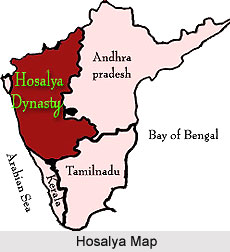
Gadyakarnamrita
Gadyakarnamrita is a 13th-century Sanskrit literary work written mainly in prose. It describes the ninety-day battle at Srirangam between the Hoysala...
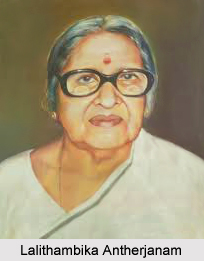
Women Writers in Malayalam Literature
Women writers in Malayalam literature have worked incessantly to make a place for their literary works. In the earlier periods, they were completely o...
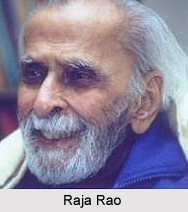
Comrade Kirillov, Novel by Raja Rao
Comrade Kirillov, a distinctive creation of Raja Rao, is presented as a brief yet incisive novelette that offers an ironic portrayal of the self-contr...
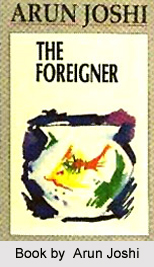
The Foreigner, Novel by Arun Joshi
“The Foreigner” is a book authored by Arun Joshi and published by Vision. It is an illustrious creation in the entire career of Arun Joshi, the famous...
Short Story in Telugu Literature
Short Story in twentieth century Telugu Literature was extremely popular and growing in and developing in a major way. Their popularity was greatly fa...
Related articles in Indian Literature
Mythological Themes in Indian Literature
Mythological themes in Indian literature have been integral to every ancient and contemporary writer and their path to f
Literature During Gupta Age
It is during the Gupta Age literature in the form of poetry, epos and drama gained a colossal importance.
Literature of Aravidu Dynasty
Sanskrit and Telugu were the popular literary medium of communication during Aravidu dynasty.
Munshi Premchand
Munshi Premchand was a legendary Indian writer notable for his modern Hindustani literature. A writer of a very high caliber, Premchand`s writings hav...
Sanskrit Poets
The names of some of the Sanskrit Poets are Bharavi, Devarshi Ramanath Shastri, Jayadeva and Srinivas Rath.