Rajagaha, Residence of Gautama Buddha - Informative & researched article on Rajagaha, Residence of Gautama Buddha
  Indianetzone: Largest Free Encyclopedia of India with thousand of articles History of India


in  
Art & Culture | Entertainment | Health | Reference | Sports | Society | Travel
Forum  | Free E-magazine
History of India : Sources of History of India l Ancient History of India l Medieval History of India l Modern History of India l Indian Historical Dynasties l Indian Battles l Sepoy Mutiny 1857 l Indian Rulers l History of India l Indian Freedom Struggle l Indian Governor- Generals l British Indian Acts l Post Independence India l Iron Age in India
Home > Reference > History of India > Gautama Buddha > Rajagaha
Rajagaha, Residence of Gautama Buddha
Rajagaha is residence of Gautama Buddha and is city near Benaras.

Rajagaha, Residence of Gautama BuddhaRajagaha is a city near Benaras, celebrated as the residence of Gautama Buddha.

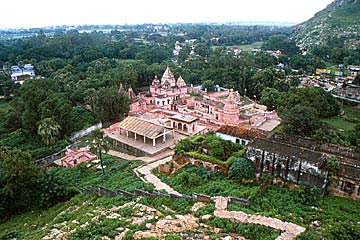
Rajagaha also known as Rajgir was a city and a notified area in Nalanda district in the Indian state of Bihar. The city of Rajagaha was the first capital of the kingdom of Magadha, a state that would eventually evolve into the Mauryan Empire. This place has been associated with both the historical Buddha and Mahavira.

Rajagaha means the house of the king or the home of royalty. This was the ancient capital city of the Magadha kings until the 5th century BC when Ajatasatru moved the capital to Pataliputra.

Jarasandha who hailed from this place had been defeated by Krishna seventeen times. Krishna left the battlefield in the eighteenth time without fighting. For this reason Krishna was also called `ranacora` or the one who has left the battlefield.

The epic Mahabharata narrates a wrestling match between Bhima, one of the Pandavas, and Jarasandha, the then king of Rajagaha or Rajgir. Jarasandha was unbeatable as his body could rejoin any dismembered limbs. According to the legend, Bhima split Jarasandha into two and threw the two halves facing opposite to each other so that they could not join.

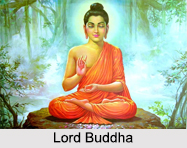
Rajagaha is a sacred city, which is celebrated in both the religions, Buddhism and Jainism. It was in Rajagaha or Rajgir that Gautam Buddha spent several months meditating, and preaching at Griddhkuta, the Hill of the Vultures. He also delivered some of his famous sermons and converted King Bimbisara of Magadha and countless others to his religion.

Rajagaha was also famous for its association with Shishunaga Kings Bimbisara and Ajatashatru. Ajatashatru kept his father Bimbsara in captivity here.

The First Buddhist Council on one of the hills is the cave of Saptparni was held under the leadership of Maha Kassapa. The Saptparni cave is also the source of the Rajagaha Hot Water Springs that have curative properties and are sacred to the Hindus, Buddhists and Jains.

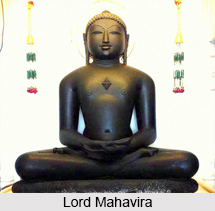
Jainism states that, Lord Mahavira spent fourteen years of his life at Rajagaha and Nalanda, spending chaturmas, which is four months of the rainy season at a single place in Rajagaha and the rest in the places in the vicinity. Rajagaha or Rajgir was the capital of his favourite shishya or disciple, king Shrenik. Therefore Rajagaha is a very important religious place for the Jains.
(Last Updated on : 24/09/2009)
  More Articles in Gautama Buddha
 
Birth of Gautama Buddha Early Life and Marriage of Gautama Buddha Legends Surrounding Gautama Buddha
Buddha`s Great Enlightenment Disciples of Buddha Formation of Sangha by Buddha
Great Departure of Buddha Mahaparinirvana of Buddha Physical Characteristics of Buddha
Teachings of Buddha Ministry of Buddha Yasodhara
Maya Devi Mahaprajapati Gautami Rahula
Lumbini Channa Kanthaka
Udaka Cunda Alara Kalama
Rajagaha Sakyamuni  
Recently Updated Articles in History of India
  • Mughal Architecture
    Mughal architecture is a combination of Islamic, Persian, Turkish and Indian architecture. It is a style that was developed under the Mughal dynasty in the sixteenth and seventeenth centuries.
  •  
  • Mansabdari System in Mughal Dynasty
    Akbar introduced the Mansabdari System in the Mughal army which primarily meant the ranking of officers on decimal system.
  •  
     
  • Deccan Policy of Mughal Dynasty
    Deccan Policy of the Mughal dynasty was weak during the reign of Babur and Humayun but after the accession of Akbar on the throne, the political situation changed and the Deccan policy was a success.
  •  
  • Coins of Pandyas
    Coins of Pandyas bear the legend of different Pandya ruler in different times.
  •  
  • Art and Architecture of Mughal Empire
    Art and architecture of Mughal Art offers an aesthetic degree to all art lovers. The subtlety of the finesse and the dazzle of the aura create huge amount of interest among tourist.
  •  
    E-mail this Article | Post a Comment
    RSS Feeds
    Forum
    Forum on History of India

    Free E-magazine
    Subscribe to Free
    E-Magazine on Indian Crafts
     
     
    Rajagaha, Residence of Gautama Buddha - Informative & researched article on Rajagaha, Residence of Gautama Buddha
    Sitemap
    Contact Us   |   RSS Feeds
    Copyright © 2008 Jupiter Infomedia Pvt. Ltd. All rights reserved including the right to reproduce the contents in whole or in part in any form or medium without the express written permission of Jupiter Infomedia Pvt. Ltd.