
Purvaranga or the preliminaries of a play is an important chapter in Indian theatre. The Natyashastra gives a vivid illustration regarding the rituals to be conducted before the commencement of the play. Purvaranga bears this name because ceremonies connected with it are performed at the inauguration of the staging of play. It is done on the stage. According to the Sahityadarpana, the term Purvaranga is significant as it includes that which the actor does before the play is presented in order to remove all hindrances.
Bharata states that Purvaranga has twenty different constituent parts. Out of these the first nine are to be performed behind the curtain and the rest on the stage. Pratyahara, bringing in of the musical instruments (kutapa); avatarana, placing of singers (gayaka); arambha, beginning of the rehearsal song of the chorus; asravana, tuning of instruments which are played upon by striking (atodya); vaktrapani, tuning of the wind instruments (vadya); parighattand, tuning of the stringed instruments (tantn); sahghotand, meant for rehearsing the use of different hand poses for indicating the time beat; margasarita, playing together of different instruments and asarita, entrance and practice of the dancing girls. All these are done behind the curtain.
The parts of the Purvaranga which are played on stage are gita, song in praise of gods and then utthapana, song on the setting up of the banner of Indra. At this point the sutradhara appears, followed by two pariparsvikas who carry a water jug and the banner of Indra. The sutradhara strews flowers, brings in Indra`s banner and cleanses himself with the water of the jug. After this is done the parivartana is performed which involves stalking round the stage with praise of the guardians of the world and adoration of Indra`s banner. A benediction is next recited by the sutradhara in a middling tone. It consists of twelve or eight padas. It is followed by vardhamana, an increasing intensity of tandava; suskavokrsta, an introduction in which the sutradhara recites some verses in a sonorous voice; and the jarjara slokas, in praise of the god whose worship is being celebrated, or in praise of a king or of Lord Brahma.
According to Bharata these are the constituent parts of a regular Purvaranga or a caturasra Purvaranga. The tryasra Purvaranga is similar but shortened, while in the citra Purvaranga, strewing of flowers and dance of the gods etc. are added. The Purvaranga is not a part of the drama proper. Bharata issues a note of warning that there should be some limit to the dance, song and instrumental music introduced so that the audience may not lose patience. In Bhasa`s dramas the stage manager enters after the introductory music is over. It is an old example of introduction according to which the nandi did not form part of the drama proper. In Bhasa`s dramas there are no intimations of the contents. The well established form of beginning in later dramas shows that the practice had become progressively different, as the nandi and the prarocand were included in the drama proper and were composed by the author of the drama.
The Purvaranga was greatly shortened by its inclusion as a component part of the drama, but its principal parts, including dancing, singing and instrumental music were preserved. After Bhasa, almost all Sanskrit plays begin with the nandi. This is followed by the prelude, prastavana. According to the Natyashastra, the nandi should have words invoking blessings. It should have eight or twelve feet, should be poetically beautiful and should be approved by gods. There has to be two pariparsvikas by the side of the sutradhara. The Abhinayadarpana states that after many kinds of charming tunes have been performed in honour of Ganapati, the god of the muraja drum and other gods, the dancing girl should have the authorisation of her preceptor to begin dressing herself properly. According to Adibharata, in addition to Bharata`s words of blessing, the nandi should include salutation (namaskriya); it should suggest the plot of the play and should have eight or ten padas. In the Agni Purana, the nandi is one of the twenty two divisions of the Purvaranga. It adds to the words asirvacana, of Bharata, prayers to elders and benedictions of cow, Brahmana and king. In the Dasarupa it is found that the nandi should please the audience and that the verses must be sweet. In the Natyashastra, Bharata gives an illustration of nandi. The authors of the Natyadarpana states that the nandi should have six to eight padas and adds the term kavi, sarasvati and gunokirtana to Bharata`s list. The nandi is supposed to remove obstacles in the way of the performance of a play. The Natyadarpana also says that the nandi may be composed by the poet or the troupe manager and that it may be recited by the sutradhara, sthapaka or pariparsvikas.
Thus, the Purvaranga deals with the ceremonies and conventions that are performed prior to the staging of the play.
Purvaranga in Natyashastra
Purvaranga or the preliminaries of a play deals with the ceremonies performed at the beginning of the presentation of play on the stage.
Recently updated articles in Indian Drama & Theatre
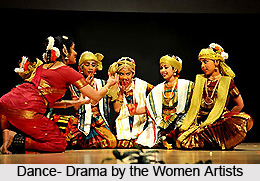
Amateur Theatre
Development of Amateur Theatre has been responsible for useful innovations in theatre culture of Karnataka.
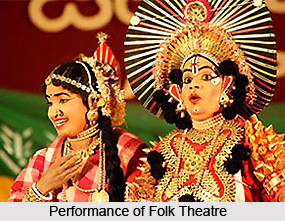
Surendranath Ghosh
Surendranath Ghosh or Dani Babu was a Bengali thespian active during the mid-20th century. He was mostly known for his contributions to Bengal’s moder...
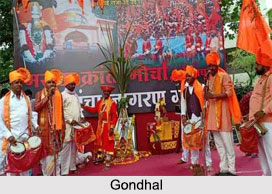
Gondhal Dance
Gondhal is a religious folk dance of Maharashtra. It is performed on special days like when there is a newborn in a family or marriage. Dedicated to g...

Pravritti in Natyashastra
Pravritti in Natyashastra refers to specific human behaviour varying from region to region. There are four types of Pravritti namely, dakshinatya, ava...
Padma Bhushan Awardees (2010-2019)
Padma Bhushan Awardees (2010-2019)
Related articles in Indian Drama & Theatre
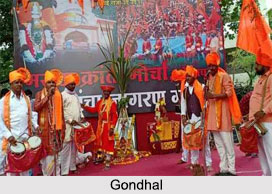
Gondhal Dance
Gondhal is a religious folk dance of Maharashtra. It is performed on special days like when there is a newborn in a family or marriage. Dedicated to g...
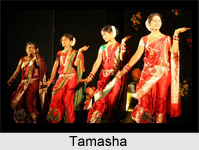
Tamasha Folk Dance
Tamasha is a folk art, which includes the love songs, which are traditional lavanis and dance along with the music.
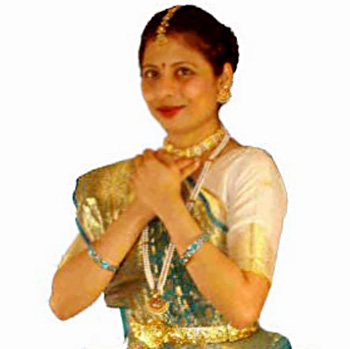
Sringara Rasa
Sringara Rasa is mentioned in Natyashastra as one of the important rasas. The Sthayi bhava in Sringara rasa is Rati or love.
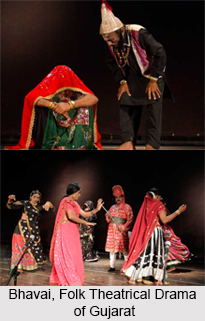
Bhavai - Folk Theatre of Gujarat
Bhavai is a popular folk theatre form of Gujarat that belongs to the tradition of theatre of entertainment.
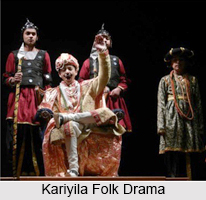
Kariyila Folk Dance
Kariyila is one of the most appealing and popular folk drama forms of Himachal Pradesh, portraying social satire with the accompaniment of folk dance...