


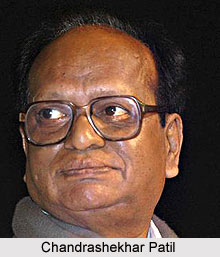
 Chandrashekhar Patil was a poet, critic, and also a dramatist in Kannada language. He was also known by the acronym Champa. He is a prominent personality in Karnataka, thanks to his unique talent and power packed plays, and his efforts to bring the Kannada language to prominence. His plays are very unique as they are absurdist in nature, and very few artists in India take this route. This is one of the main reasons why he's seen as a key figure in the Indian theatre scene. Chandrashekhar Patil was a poet, critic, and also a dramatist in Kannada language. He was also known by the acronym Champa. He is a prominent personality in Karnataka, thanks to his unique talent and power packed plays, and his efforts to bring the Kannada language to prominence. His plays are very unique as they are absurdist in nature, and very few artists in India take this route. This is one of the main reasons why he's seen as a key figure in the Indian theatre scene.
Early Life of Chandrashekhar Patil He was born in the year 1939. Chandrashekhar Patil was identifying himself with the Bandaya or protest movement rebelling against the establishment in life as well as literature. He was a student of linguistics and editor of the monthly journal Sankramana i.e. "Transition" since 1964. Chandrashekhar Patil gave a voice to budding writers in the Indian state of Karnataka and to the discussion of controversial issues about Kannada literature, life, and culture. Retiring as professor of English from Karnataka University, Dharwad, Chandrashekhar Patil joined government service as chairman of Kannada Pradhikara. This was mainly with a view to popularize the Kannada language. Life in Theatre for Chandrashekhar Patil Chandrashekhar Patil was somewhat influenced by absurdist technique. He employed it in plays like the lyrical Appa or "father" in 1969. This play was inspired by a vachana poem of Basaveswara. It deals with the identity crisis of a boy called Basava who was a prostitute's son searching for his father. This brings to mind Strindberg's play of the same title. Gurtinavaru i.e. 'Acquaintances' in 1971 also uses absurdist theory to express the existential paradox of how friends become strangers and vice versa. Tingara buddanna i.e. "The Dwarf" in 1971 recreates the mythical story of Bhasmasura in terms of a modern folk drama ironically reversing the power of destroying others into self-destruction. Gokarnada goudasani or "Duchess of Gokarna" in 1974 combines the spiritual theme of the encounter between Ravana and Lord Shiva and the sexual theme of the encounter between a village chief and a woman. They alternate, occasionally linked by the Bhagavata mela who indulges in meta-theatrical discussion about technique, language, and audience response, thereby providing a lot of comedy. Chandrashekhar Patil's Plays Chandrashekhar Patil did not write a large number of plays, but the few that he wrote were admired for the quality and for the satire involved. Here are this important plays: * Appa -1969 * Gurtinavaru - 1971 * Tingara Buddanna - 1971 * Gokarna Goudasani - 1974 * Nalakaviya Mastabhisheka - 1979 Chandrashekhar Patil wrote several street plays like Nalakaviya mastabhisheka or 'Nalakavi's Consecration' in 1979. This satirizes human follies and social evils. Although the quantity of his dramatic output is relatively small, it is conspicuous for its qualitative achievement. Chandrashekhar Patil's style is lyrical but known for its racy north Karnataka dialect, humour, and satire. Most of his plays have been staged by Kannada theatre groups and telecast frequently in Karnataka. |
| |||



Home > Movies & Entertainment > Indian Drama & Theatre > Personalities in Indian Theatre > Theatre Personalities of Karnataka > Chandrashekhar Patil
Chandrashekhar Patil
| Chandrashekhar Patil was a Kannada poet, critic, and was a successful dramatist |
| ||||||||||||||||||||||||||||

