 Deportations and capital punishments had increased tremendously during the post World War I period. This was a consequence which led to even more stringent and dishonest measures being taken by the imperial British, and the Indians boiling up from within to oust these oppressors.
The Government of India gave in to the forceful plea of Governor O` Dwyer and under dismal circumstances, the Defence of India Act (1915) was promulgated by which a Special Tribunal for the trial of the persons criminated of revolutionary crimes was established. A.A. Irvine was the president and T.R Ellis and R.B. Pandit Sheo Narain were the commissioners. Under this Act, commitment proceedings were dispensed with and the provision of appeal was erased.
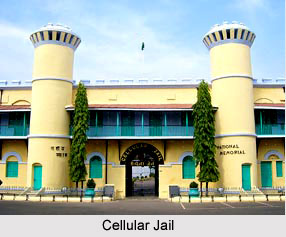
Many other patriots convicted in fake trials were also sent to the Andaman and Nicobar Islands. Master Chattar Singh Sangla, who under the influence of Ghadr Party attempted to murder Professor Duncliff in the house of the principal of Khalsa College, Amritsar on 16th December 1914 with a chhawi (a sharp edged weapon) was arrested. He was prosecuted under Section 307 of the Indian Penal Code and was sentenced to transportation for life. He too, was sent to the Andamans.
Sachinder Nath Sanyal was a revolutionary of the first rank. In Benaras, even during his school days, he had formed a club called the `Anushilan Samiti`, which subsequently came to be known as `Young Men`s Association`. In early 1914, Rash Behari Bose virtually took charge of the movement at Benaras with Sachinder as second in command. Sachinder was also a linkage between Punjab Ghadr leaders and Rash Behari Bose. The Bengal revolutionaries also adopted the line of action of Punjab Ghadr leaders and coordinated the armed rebellion in Benaras with armed rebellion finalised by the Punjab Ghadr leaders for 21st February 1915. But the information of the change in date to February 19 could not reach Benaras. Sachinder arrived on 21st February 1915, at the parade ground. He was arrested and booked in Benaras Conspiracy Case which was also heard by the Special Tribunal established under the Defence of India Act. A challan of twenty-five individuals was presented, but sixteen were actually facing the trial. The judgement was announced on 14th February 1916. Sachinder Nath Sanyal was sentenced to expatriation for life, while others were awarded short-term imprisonments. Sachinder Nath Sanyal was sent to the Andamans.
Another patriot sent to the Andamans was Randhir Singh, s/o Natha Singh of Narangwal district Ludhiana. He was a prominent Sikh leader and a literary figure. He led the movement against the British for pulling down a wall of Gurdwara Rakab Ganj in Delhi. He was arrested, prosecuted and sentenced to deportation for life.
Govindcharan Kar was another active revolutionary during the First World War period. He was prosecuted and sentenced to seven years rigorous imprisonment and was send off to the Andamans. After his release, he again participated in the revolutionary activities and was convicted in the Kakori Conspiracy Case. He was sentenced to expatriation for life.
The revolutionary patriots in Bengal were also keeping the British administration on tenterhooks by their swashbuckling acts. By the time the police was triggered to nab the people involved in one political crime, another was committed. Some of these astonishing events these brave patriots were involved in and their planning are worth recalling as these patriots were later arrested, tried and sent to the Andamans.
The revolutionaries were still fighting for the independence of their country and the government had also let loose the subjugation in full measure. After the Jallianwala Bagh episode, all of India was up in arms against the British. On 15th April 1919, the residents of Chuharkana destroyed the railway bridge, uprooted the railway line and set the railway station on fire. The European police fired back at them. Some were killed, many others were injured and about 400 were arrested. Thirty top leaders, including Teja Singh Chuharkana and Kartar Singh Jabbar were prosecuted. The judgement was announced on 22nd May 1919. Seventeen of them were sentenced to deportation for life, while Kartar Singh Jabbar, Teja Singh Chuharkana, Kahan Singh Chuharkana, Jagir Singh Muridke, Maina Singh Nankherke and Mehar Din Lohar were sentenced to death. On 30th May 1919, however, their death sentences were converted to transportation for life. Teja Singh Chuharkana and Kartar Singh Jabbar were sent to the Andamans. They were released in 1920 as a result of royal compassion. Master Raja Ram of Amritsar was also prosecuted in martial law trials and was sentenced to transportation for life and was sent to the Andamans. Some other patriots convicted and sentenced for political crimes were also sent to the Andamans during 1915-1921, the cases under which they were convicted are yet to be identified.