 Manual labor in the Cellular Jail, a grim and formidable prison located on the Andaman Islands during the British colonial era, was an arduous and brutal experience for its inmates. The incarcerated individuals, subjected to rigorous physical toil, were often met with regular physical tortures as part of their punishment. The tasks assigned to the convicts in Cellular Jail were diverse, encompassing a range of demanding activities. These activities, often seemed normal, were forcefully done by the convicts even during their ill health conditions. Sometimes, tasks were set beyond their physical ability or, to be precise beyond any human ability. And failing such tasks would further results in a series of tortures or punishments followed by sessions of starving. Some of the physical tasks for prisoners in the cellular jail are listed below.
1. Cane and Bamboo Work
Cane and bamboo work required prisoners to craft various items from these materials. Despite the challenging nature of this labor, it was among the less strenuous tasks.
2. Coconut and Mustard Oil Mills
Working in the oil mills was one of the harshest forms of labor in Cellular Jail. Prisoners were tasked with grinding coconut and mustard seeds to extract oil, a physically demanding and relentless endeavor.
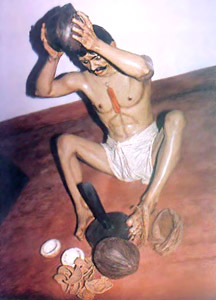
3. Husking and Opening Coconuts
The husking and opening of coconuts was a grueling task that involved removing the outer shell of coconuts to access their edible contents.
4. Drying Copra
Prisoners were responsible for drying copra, which is the dried kernel of coconuts. This process required meticulous attention and constant effort.
5. Making Hooka Shells
Crafting hooka shells, used for smoking apparatus, was another manual labor task assigned to the inmates.
6. Coir Pounding
Coir pounding involved beating the hard remains of coconut shells to extract coir fibers. This labor-intensive work took a toll on the prisoners` hands.
7. Sisal Pounding
Similar to coir pounding, sisal pounding involved extracting fibers from sisal plants, a task that was both physically demanding and monotonous.
8. Rope Making
Rope making was an especially challenging task. Prisoners had to produce a specific weight of ropes within a set timeframe, pushing their physical limits.
9. Net Making
Creating nets required meticulous weaving and precision, adding to the variety of labor-intensive tasks in the jail.
10. Carpet Making
Inmates were also engaged in the production of carpets, a skill-demanding and time-consuming endeavor.
11. Weaving Towels
The weaving of towels was another manual labor task assigned to the prisoners, further contributing to their daily workload.
12. Coir and Sisal Hemp Mat Making
Producing coir and sisal hemp mats involved intricate weaving and craftsmanship, making it a challenging task.
13. Cleaning Mustard Seeds
Cleaning mustard seeds may seem less physically taxing, but it was nevertheless an essential task assigned to some inmates.
14. Blanket Mulling
Blanket mulling, involving the processing of blankets, added to the array of labor-intensive duties.
15. Gardening
Some prisoners were assigned to gardening, a comparatively lighter task that provided a brief respite from the more demanding labor.
16. Hill Cutting and Swamp Filling (when necessary)
When needed, inmates were tasked with hill cutting and swamp filling, which required substantial physical exertion.
17. Miscellaneous
The jail also assigned miscellaneous tasks such as conservancy and cleaning drains around the premises.
18. Lowly Duties
Inmates were occasionally assigned lowly duties within the jail, including hospital ward assistance and sweeping.
19. Clerical Work
A select few prisoners were assigned clerical work in the jail office, providing a rare deviation from physical labor.
 Rules and regulations governed the assignment of manual labor to the prisoners. Those below the age of twenty were exempted from arduous tasks, while literate inmates were assigned clerical roles. However, political prisoners faced a different fate, enduring grueling labor, abuses, and humiliations intentionally designed to break their physical and mental strength.
Oil grinding in the mills, often described as the most miserable task, was especially harsh. Political prisoners were subjected to continuous hard work for two months, followed by one month of picking oakum, before returning to the grinding mill. Failure to meet the assigned quotas often led to sleep deprivation.
Beatings, handcuffs, and solitary confinement were used as punishments for those unable to complete their labor. The rate of sickness and death among inmates was alarmingly high, attributed to the harsh climate, poor food, and strenuous work. Solitary confinement was the most severe punishment, pushing even the strongest to the brink of physical and mental breakdown.
Manual labor in Cellular Jail was a grim and relentless ordeal, with prisoners enduring both physical and psychological hardships in this remote penal colony.