Kuttanuf
Kuttanuf is a rare Tamil treatise on dance, music, and performance.

Share this Article:

The literal meaning of Kuttanuf is `theatre book`. This is Tamil treatise on dance, music, and performance, which is important in reconstructing ancient Tamil theatre. Most often, only references to the titles of such texts appear in commentaries, and the originals are lost. Even when ancient Tamil texts were available, they remained in palm-leaf manuscripts, transcribed and edited as late as the twentieth century. Kuttanul is one such, discovered by S. D. Suddananda Yogiyar. Although he said he found the complete text, he could edit and publish only two sections, in 1968. Ascribed to Sattanar, it can be dated before the tenth century. But Sattanar is a common name for poets and scholars. The treatise contains nine sections. Cuvai i.e. the book of aesthetics deals with the origin of movements, sounds, shapes, and emotions. Tokai nul literal meaning of which is `compiled book`. This is a dictionary of Siva`s 108 dances, explicating twelve in detail. Van nul i.e. `division book` describes the folk forms found in the five ecological zones into which Tamils divided their landscape. Kalai nul i.e. book of art discusses movement anatomically. Karana nul i.e. `book of gestures` discusses poses and gestures, tala nul i.e. `book of tala` classification of time measures in music. Book of lyrics describes music, avai nul i.e. `assembly book` theatre architecture, and kan nul i.e. `eye book` discusses the aim of dance. The first two, published, sections give us the schema of emotions expressed on stage and the different dance forms as well.

This article is a stub. You can enrich by adding more information to it. Send your Write Up to content@indianetzone.com
Share this Article:

Related Articles

More Articles in Indian Drama & Theatre


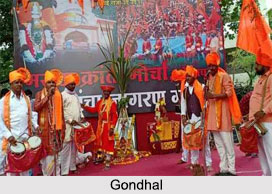
Gondhal Dance
Gondhal is a religious performing folk art of Maharashtra. It is performed on special days like when there is a newborn in a family or marriage.
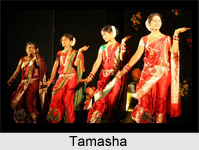
Tamasha Folk Dance
Tamasha is a folk art, which includes the love songs, which are traditional lavanis and dance along with the music.
History of Indian Theatre
The history of Indian theater is therefore the saga of changing tradition and the account of changing ritualism.
Indian Dramatist
Indian dramatists maintained Indian drama as a distinct art form.
Sringara Rasa
Sringara Rasa is mentioned in Natyashastra as one of the important rasas. The Sthayi bhava in Sringara rasa is Rati or love.
History of Indian Drama
History of Indian Drama is rich with Vedas and Indian epics and has gradually changed with time and remains unaffected by any foreign influence.
Navarasas - Natyashastra
Nine rasas or navarasas, described in Natyashastra contours the structure of Indian drama.
History of Kannada Theatre
History of Kannada theatre brings forth the richness in the Kannada culture. Theatre of Karnataka has been greatly inspired from various other forms of regional theatre in India.
Powada - Marathi Ballad
Powada is a Marathi ballad describing heroic deeds of valour by great warriors and kings.
Jatra - Bengali Folk Drama
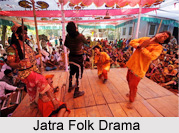
Jatra is a form of folk drama from West Bengal, which includes acting, songs, music and dance by travelling troops
Kuvempu
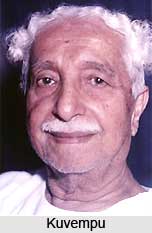
Kuvempu is a literary acronym of Kuppali Venkatappa Puttappa - a popular Kannada actor-playwright.
Natyashastra
Natyashastra by Bharata muni is the most detail and elaborate of all treatises on dramatic criticism and acting ever written in any language and is regarded as the oldest surviving text on stagecraft in the world.
History of Bengali Theatre
Blessed with its rich heritage the history of Bengali theatre is the saga of the journey of Bengali Theatre
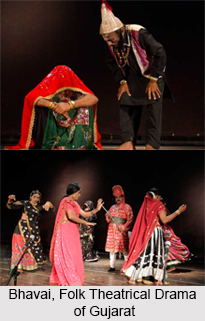
Bhavai - Folk Theatre of Gujarat
Bhavai is a popular folk theatre form of Gujarat that belongs to the tradition of theatre of entertainment.
Theatre In Ancient India
Theatre in ancient India in a systematic manner was introduced by Bharat Muni who prefaced the term "roopaka".
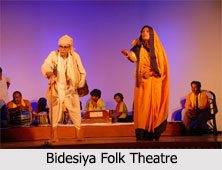
Bidesiya - Folk Theatre Dance
Bidesiya is one of the most popular folk theatre dance forms of Bihar which is said to have originated in the 20th century.
Regional Theatre in India
Regional theatre in India, in different Indian languages and regions, developed as an important element of Indian culture and tradition.
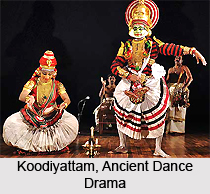
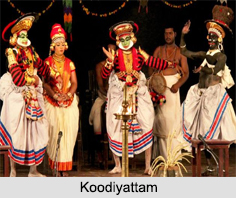
Koodiyattam
Koodiyattam is the oldest existing classical theatre form of the world. It has been recognised by UNESCO as a Human Heritage Art.
Indian Theatre Festivals
Indian theatre festivals help to bridge the gap between the various regions of the country. It also helps to bridge the gap among people and participants!
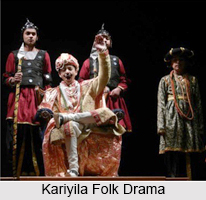
Kariyila Folk Dance
Kariyila is one of the most appealing and popular folk drama forms of Himachal Pradesh, portraying social satire with the accompaniment of folk dance and music.
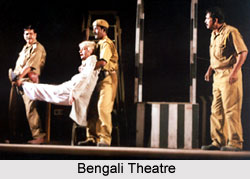
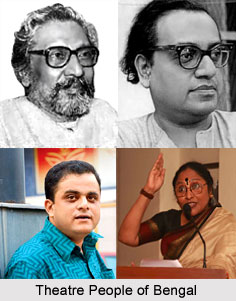
Bengali Theatre
Bengali theatre had developed as a prominent form of protest movement during the colonial period. But with time it has made a niche for itself.