
 Kashmiri theatre forms an integral part of Kashmiri culture. Having a recorded history that dates back centuries, Kashmiri theatre is an art form, which is rich in content. However, Kashmiri theatre has had a rather chequered development, and even though it started off with great pomp and splendour, it witnessed a significant setback in the later stages of its development. Currently, much effort is being made for the revival of Kashmiri theatre.
Kashmiri Theatre
Kashmiri theatre has a long history and is an important aspect of the culture of Kashmir. Due to a certain downswing, sustained efforts are being made for the revival of this art form of Kashmir.
Introduction
Kashmiri theatre forms an integral part of Kashmiri culture. Having a recorded history that dates back centuries, Kashmiri theatre is an art form, which is rich in content. However, Kashmiri theatre has had a rather chequered development, and even though it started off with great pomp and splendour, it witnessed a significant setback in the later stages of its development. Currently, much effort is being made for the revival of Kashmiri theatre.History of Kashmiri Theatre
 History of Kashmiri theatre goes back a rather long way. Kashmir boasts of a rather rich theatrical history which finds mention in ancient literary texts like the Nilamata Purana and Kalhana`s Rajatarangini. Broadly speaking, the history of Kashmiri theatre can be seen categorised into three developmental phases. These are the earliest phase of Kashmiri drama when it received and grew under royal patronage, the Muslim period when theatre underwent a slump and which can be traced till the early twentieth century, and following that the modern period of growth and revival of Kashmiri theatre.
In the earliest periods of its development, the royal palaces were the main centres of theatrical activity where literary connoisseurs were always present to point out merits and flaws. This golden age of drama in Kashmir lasted 1500 years. It started from the beginning of the Christian era to the fifteenth century. However, as far dramatic literature is concerned, very little has come down and whatever is there is written in the Sanskrit language. During this time, there also existed a tradition of theatrical performances in the vernacular which, unlike the elite drama, was based on the spontaneous folk imitation of elemental life. These include birth, calamities, death, and rebirth. All of these are in connection with celebrations and festivals of sowing, reaping, and threshing. The Nilamata Purana advised that the descendants of Kashyapa should mark occasions with song, dance, and music, and that a public performance was a form of religious obligation.
 Thus in the earliest form of Kashmiri theatre, any person could mimic for mere entertainment a king, a Sadhu, a soldier, a bridegroom, or other respectable social figures. The function of this primitive skit was only to provoke mirth. Folk performances, such as the Lagun and Pathir were much in vogue during this time. The folk performers wandered from village to village regaling audiences with their delightful performances. The tradition of devotional theatre was also prevalent during this time.
From the twelfth century onwards, Kashmiri theatre started undergoing a marked decline. The prime reason for this is that Kashmir was undergoing a period of immense crisis situations one after the other. These included invasions, attacks, floods, famines, raids, fires and epidemics from time to time and this has resulted in the loss of books, manuscripts and play-scripts. With the advent of foreign rule and invasions, decline in all forms of Kashmiri art and literature was seen. Moreover, when Muslim rule was established in Kashmir, a great setback was experienced by the theatrical arts in urban community for lack of state patronage and public support for obvious reasons. However, theatre was not completely in decline as folk theatre continued to survive and flourish in the form of the Bhand theatre.
 Even though Kashmiri Drama was banned in the royal courts, back in the villages, the folk performers continued to entertain the public in the popular folk-theatre-festivals known as Bhand-Jashn. Even during the Muslim rule, Bhands were the popular entertainers and used to cross Pir Panchal range and perform in Jammu, Himachal Pradesh, Punjab and other areas entertaining people through their humorous plays.
Following this period of slump, Kashmiri theatre once again made efforts towards development and revival. With the spread of modern sensibility, education and political awareness in the early twentieth century, many socio-religious institutions came into being which started staging plays on special occasions, festival, ceremonies and celebrations, even though it was just a couple of times in a year. The earliest sign of a revival was seen in the establishment of theatre companies such as Maharaja Drama Company, Kashmir Theatres Ltd and Amateur Drama Company etc. Following the establishment of such drama companies, Kashmiri theatre went through a gradual process of development, encompassing various phases along its way. These include the era of the Dharmic theatre when religious plays were in vogue, progressive era when revolutionary and historical events occupied centre stage, propaganda theatre movement in 1953 when the Kashmir Cultural Congress was formed, Renaissance period of Kashmiri drama when new and advanced techniques were introduced in Kashmiri theatre, the Revolution phase which saw new experiments being made in style and form of play-writing and presentation and following this came the Golden Period of Kashmiri Theatre (1980-90). The period from 1991 to 2000 again saw a downturn in theatrical works as Kashmir was plagued by militancy during this time.
Currently, sustained efforts are being made for the revival and propagation of Kashmiri theatre. The Jammu and Kashmir Academy of Art Culture and Languages is one of the leading institutions working towards the institutionalization and revival of Kashmiri theatre.
Development of Kashmiri Theatre
 Development of Kashmiri theatre has been a gradual process and the golden period lasted for 1500 years, from the start of Christian era to fifteenth century. Very little of the dramatic literature descended on Kashmiri theatre, and that too only in Sanskrit language, yet theatre was closely associated with royal glamour. There was also present the conventional vernacular theatre (old Kashmiri), which, unlike the high class drama, was based on natural folk imitation of elemental life - birth, death, rebirth, calamities - in connection with the celebrations and festivals of reaping, sowing and threshing.
Old Forms of Kashmiri Theatre : Ancient from of Kashmiri theatre, the naive and unschooled - Lagun ("Imitation"), any person could mimic for entertaining the king, sadhu, soldier, bridegroom and other noted and respectable social people. The main function of this age old burlesque was only to provoke mirth. Lagun did not at all require professional trainings and certain people called kelak ("buffoons") attained a special prowess in it and adopted it as their profession.
Improvement of Folk Theatre in Kashmir : An enhanced from of Kashmiri folk theatre was the Pethir - a satire, a comedy in which many actors desperately represented individuals, classes or supernatural beings with the motive of ridiculing human follies, frailties and cruelties. Pethirs on communal themes, with musical intervals and energetic harlequins, are still called as Bandi Pethir - a genre preserved through the efforts of Mohammad Subhan Bhagat (1927-93), himself born into a family of these performers.
There flourished, parallel to the Bandi Pethir, a tradition of devotional theatre that mainly aimed at telling the significance of truth and enlightening the happiness of leading a pious life. A repertoire of Hindu plays was always available to the performers and temple premises were the centres of these activities. However, no early manuscript of such drama is extant; among the preserved ones, Satich Kahvet ("Touchstone of Truth") is the oldest accessible to readers. The author, Nandalal Kaul Nana (1877-1940), composed it on the life of Raja Harishchandra, in rhymed dialogue with lyrical interludes. It was first performed in 1932 at Raghunath Mandir, Srinagar. Inspired from the success many young and seasoned writers started to write plays with independent ideas and thoughts.
Post Independence Development of Kashmiri Theatre : With the independence of India, there was a cultural body formed in Jammu and Kashmir named Kashmir Cultural Front (later Congress), and as a result theatre received tremendous attention. Many good and interesting plays were written and composed, that touched mind and soul. The content was highly inspired by the society and politics.
In the year 1974, eighteen repertories working in the Valley established an association known as Kashmir Theatre Federation under the intelligent leadership of Ali Mohammad Lone (1926-87), Pran Kishore, Som Nath Zutshi, Bansi Mattoo, M.L. Kharoo, Moti Lai Kemmu and Makhanlal Saraf. This led to brilliant presentations during that decade - a splendid epoch in Kashmiri theatre - of plays by Kemmu, Pushkar Bhan, Som Nath Sadhu, Sajood Sailani, Farooq Masoodi (Collegepethir, "College Play"), and Mohan Nirash (Rati deny posh, "Bleeding Flowers"). Among the many youthful performers who accomplished noteworthy triumph in those years were actor-directors Shabir Mujahid and Bashir Ahmad Qadri, and Nazir Josh, versatile comedian of the National Theatre (Badgam) and author of popular comic plays like Timi goryi gayi ("Gone Are the Days"), Mwal ("Vagabonds"), and Hazar dastan ("Thousand Tales"). The contribution of Pran Kishore and Ashok Jailkhani (as directors), Gayoor Hassan (for makeup), Abdul Rashid (as set designer), and Abdul Ghani (for special effects) cannot be ignored even in a brief excursus like the present one.
Revival of Kashmiri Theatre : The year that followed, more and more groups joined the Federation and also participated in many theatre festivals. During the 1980s, theatre received fresh impetus, as the JKAACL strived to revive the cultural movement by coordinating the actions of all rural and urban troupes. In the mid 1980s, theatre started to fade away with the possible beginning of militant politics in the state, and came to a standstill by the early 1990s. After ten years` complete lull, National School of Drama (NSD) undertook an idea in 2001 under the intelligent supervision of M.K. Raina, a Kashmiri who had made it big on the national stage.
In the year 2006, Raina, through the workshop, directed two plays in collaboration with the NSD, JKAACL, and the Centre for Heritage and Culture of Kashmir. Actors like Gul Reyaz, Shahid Lateef, Ovais, Ahmad Tufail, Showket Usman, Umar Rahman Reshi, Nadeem Afzal, Rifat, Marjina, Alamjan Irfan Dar, Sameer, and Zahid Ahmad Zargar formed the new wish for Kashmiri theatre. The same year, Sangeet Natak Akademi and the JKAACL organized a folk festival in Srinagar, where it was heartening to note that the old repertories of folk theatre like Kashmir Bhagat Theatre (Akingam), Kashmir Bandi Theatre (Wahthor), National Bandi Theatre (Wahthor), Folk Ruma Reshi Theatre (Rohmoo), Aziz Folk Theatre (Hiller Arhama), Sultan Bhagat Theatre (Gundpora), Alamdaar Bhagat Theatre (Muhripora), Gulmarg Luki Theatre (Palhalan), and Qazi Kashmir Theatre (Bomie) had resurfaced with bright strength.
Revival of Kashmiri Theatre
Efforts towards the revival of Kashmiri theatre have been seen since the early part of the 20th century. The earliest sign of a revival was seen in the establishment of theatre companies such as Maharaja Drama Company, Kashmir Theatres Ltd and Amateur Drama Company etc. Following the establishment of such drama companies, Kashmiri theatre went through a gradual process of development, encompassing various phases along its way. The era of the Dharmic theatre was when a number of socio-political and religious organisations started putting up plays of a religious and mythological nature, such as the "Satich Kahwaet" (The Touch-Stone of Truth) written by Nand Lal Koul in 1929.
 It was late in 1938 when the first full-length modern Kashmiri play titled "Grees Sund Ghare" (Home of the Farmer) was written by Professor Mohiuddin Hajni about the plight of Kashmiri farmers. Political unrest and democratic struggle saw the need for a serious expression of the people`s aspirations. The subsequent era of progressive theatre saw many revolutionary and historical events taking place. The nationally emancipated indigenous theatre movement of Kashmir turned into a sponsored propaganda theatre movement in 1953 when the "Kashmir Cultural Front" was dissolved and a new cultural outfit by the name of "Kashmir Cultural Congress" was formed to propagate, propel and prosper the new political ideology of socialism, secularism and democracy as put forward on national level. When the concept of the `five R`s` was introduced in Kashmiri theatre, following the construction of the Tagore Hall, the Renaissance period of Kashmiri literature is said to have emerged.
Kashmiri theatre was then for the first time introduced to the modern techniques of the proscenium theatre in the concept of lighting, designing and Acting. Following significant development in this era came in the revolution phase which saw new experiments being made in style and form of play-writing and presentation. The Decade of 1980-90 could be considered as the Golden Period of contemporary Kashmiri Theatre.
It was in 1980 when Jammu and Kashmir Academy of Art Culture and Languages, started holding District Drama Festivals in all districts of J&K. Apart from this, a number of other institutes such as the National School of Drama, and Sangeet Natak Academy played a major role in promoting and strengthening Kashmiri theatre. The period from 1991 to 2000 again saw a downturn in theatrical works as Kashmir was plagued by militancy during this time. After a gap of almost twelve years, the J&K Academy of Art Culture & Languages organized a theatre festival of six plays in 2002 at Tagore Hall Srinagar which again encouraged the theatre activists to rejuvenate the theatre movement of Kashmir.
It was late in 1938 when the first full-length modern Kashmiri play titled "Grees Sund Ghare" (Home of the Farmer) was written by Professor Mohiuddin Hajni about the plight of Kashmiri farmers. Political unrest and democratic struggle saw the need for a serious expression of the people`s aspirations. The subsequent era of progressive theatre saw many revolutionary and historical events taking place. The nationally emancipated indigenous theatre movement of Kashmir turned into a sponsored propaganda theatre movement in 1953 when the "Kashmir Cultural Front" was dissolved and a new cultural outfit by the name of "Kashmir Cultural Congress" was formed to propagate, propel and prosper the new political ideology of socialism, secularism and democracy as put forward on national level. When the concept of the `five R`s` was introduced in Kashmiri theatre, following the construction of the Tagore Hall, the Renaissance period of Kashmiri literature is said to have emerged.
Kashmiri theatre was then for the first time introduced to the modern techniques of the proscenium theatre in the concept of lighting, designing and Acting. Following significant development in this era came in the revolution phase which saw new experiments being made in style and form of play-writing and presentation. The Decade of 1980-90 could be considered as the Golden Period of contemporary Kashmiri Theatre.
It was in 1980 when Jammu and Kashmir Academy of Art Culture and Languages, started holding District Drama Festivals in all districts of J&K. Apart from this, a number of other institutes such as the National School of Drama, and Sangeet Natak Academy played a major role in promoting and strengthening Kashmiri theatre. The period from 1991 to 2000 again saw a downturn in theatrical works as Kashmir was plagued by militancy during this time. After a gap of almost twelve years, the J&K Academy of Art Culture & Languages organized a theatre festival of six plays in 2002 at Tagore Hall Srinagar which again encouraged the theatre activists to rejuvenate the theatre movement of Kashmir.
Popular Kashmiri Theatre Forms
Bhand Pather, Achi Lamo, Mane-Pa, Ras and Bhagat are the popular forms of Kashmiri Theatre. Bhand Pather is one of the most famous theatre forms of Kashmir. Pather means drama in Kashmiri language and Bhand means performer or actor. This form does not have any particular theme; it can be anything depending on the situation and available material. Achi Lamo form depicts the Buddhist Jatik Katha; normally it is a Tibetan form which has been hugely accepted by the Ladakhi people. Mane-Pa is written in narration and dialogue and is enacted by the professional Mane-Pa families in Ladakh. Ras and Bhagat performed in Jammu region have some religious significance. This form shows the scenes of Indian epics like Ramayana and Mahabharata.
Recently updated articles in Indian Drama & Theatre
Amateur Theatre
Development of Amateur Theatre has been responsible for useful innovations in theatre culture of Karnataka.
Surendranath Ghosh
Surendranath Ghosh or Dani Babu was a Bengali thespian active during the mid-20th century. He was mostly known for his contributions to Bengal’s moder...
Gondhal Dance
Gondhal is a religious folk dance of Maharashtra. It is performed on special days like when there is a newborn in a family or marriage. Dedicated to g...

Pravritti in Natyashastra
Pravritti in Natyashastra refers to specific human behaviour varying from region to region. There are four types of Pravritti namely, dakshinatya, ava...
Padma Bhushan Awardees (2010-2019)
Padma Bhushan Awardees (2010-2019)
Related articles in Indian Drama & Theatre
Gondhal Dance
Gondhal is a religious folk dance of Maharashtra. It is performed on special days like when there is a newborn in a family or marriage. Dedicated to g...
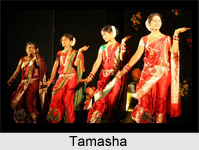
Tamasha Folk Dance
Tamasha is a folk art, which includes the love songs, which are traditional lavanis and dance along with the music.
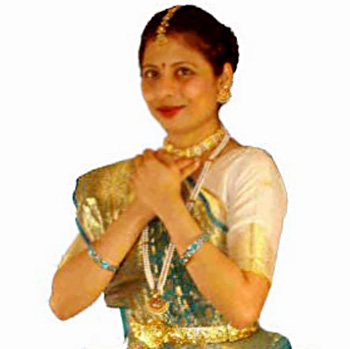
Sringara Rasa
Sringara Rasa is mentioned in Natyashastra as one of the important rasas. The Sthayi bhava in Sringara rasa is Rati or love.
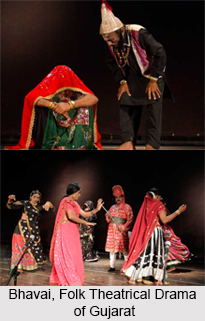
Bhavai - Folk Theatre of Gujarat
Bhavai is a popular folk theatre form of Gujarat that belongs to the tradition of theatre of entertainment.
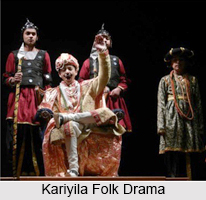
Kariyila Folk Dance
Kariyila is one of the most appealing and popular folk drama forms of Himachal Pradesh, portraying social satire with the accompaniment of folk dance...