
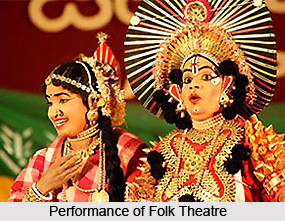
 Kannada theatre, with all its ancient heritage and rich culture, forms an integral part of the Indian state of Karnataka. Some of the Kannada theatre performances date back to the 12th century. As far as the folk theatre of Karnataka is concerned, some of the popular folk theatre performances are Yakshagana, Bayalata and Sannata, Talamaddale is a generic variant. The range of theatrical diversity in rural parts of the state also encompasses puppetry. There are two branches, which fall under the term Gombeyata i.e. various forms of ritual possession incorporating worship, such as Bhutaradhane and Karaga. There are also some devotional narratives by and for specific religious sects, as in Kamsale and Viragase.
Kannada Theatre
Kannada Theatre is a platform where different talented artists have shown their art and gave many masterpieces.
introduction
Kannada theatre, with all its ancient heritage and rich culture, forms an integral part of the Indian state of Karnataka. Some of the Kannada theatre performances date back to the 12th century. As far as the folk theatre of Karnataka is concerned, some of the popular folk theatre performances are Yakshagana, Bayalata and Sannata, Talamaddale is a generic variant. The range of theatrical diversity in rural parts of the state also encompasses puppetry. There are two branches, which fall under the term Gombeyata i.e. various forms of ritual possession incorporating worship, such as Bhutaradhane and Karaga. There are also some devotional narratives by and for specific religious sects, as in Kamsale and Viragase.History of Kannada Theatre
The History of Kannada Theatre or, theatre of Karnataka, speaks about the performing art in a great manner. The Kannada language has contributed a great deal towards the success of its theatre. The extensive usage of Kannada literature for the performance of Kannada plays has also facilitated a great deal from the time of Kavirajamarga of Nripatunga of the 9th century A.D. The history of Kannada theatre, at least, the post folk era - the modern Kannada theatre - begins during 19th century, when the British Empire already set up its rule in present day Karnataka.
Development of Kannada Theatre
Forms of Kannada Theatre
 Forms of Kannada theatre involves various elements of modern Kannada theatre and amateur stage. While on one hand modern Kannada theatre draws inspiration from various sources like the folk theatre of Karnataka, and also from various regional theatres of India, amateur stage was set up to propagate the theatre culture in various parts of Karnataka. All through the history of Kannada theatre it is evident that western influences have played a crucial role towards development of Kannada theatre.
Theatre groups have played a major role in enhancing the prospects of the art in Karnataka. Many talented actors, directors and playwrights, who contributed in various ways towards the betterment of Kannada theatre, have made a mark for themselves. These theatre groups travelled to interiors of the state to mix with people and promote the essence of history, mythology and social issues through apt use of Kannada language. These theatre troupes also travelled to places outside Karnataka to make people aware of the theatre culture in the state.
Forms of Kannada theatre can be discussed in various aspects. Some of the significant forms of Kannada theatre are one act play, operas, dance drama, impromptu play, shadow play, radio plays, and theatre for children etc. Let us discuss each part in little detail.
 One-Act Play: One-act plays gained popularity. As a matter of fact, one-act play was successful in amateur stage theatre of Karnataka. The one-act is actually fact moving and direct play with short duration and few features like speedy action, economy in expression and a final impressive climax. A particular act detached from a full length play can not be a one-act. For the one-act is like a golden ring rather than a detached link of a gold chain. It should process a dramatic theme.
Operas: Operas were also a part of Kannada theatre. It is capable of portraying diverse emotions of different characters at the same time. This form was highly inspired from West and has music as its mode of communication. Kannada Operas, though small in number, have exhibited a high musical quality and have proved to be quite dramatic.
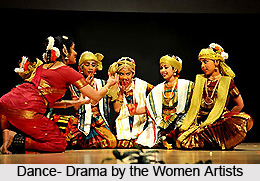
Dance Dramas: Close to the operas are the dance dramas. These dance performances are mainly based on certain themes. Just like Western ballet, the Dance drama also lays emphasis on gesture and dance to construe a theme; but the technique here may not be strictly classical as in Kathakkali though they bring home the full import of an emotion. In the present times, especially during the last two decades more and more young people are being trained in dancing and as a result the concept is getting popular with each passing day.
 Shadow Play: This is a very interesting experiment as an advanced technique in play production. Shadow play is just like every regular play with a particular story, theme and playing actors. But the actors present here are not one with flesh and blood, but only his shadow in black on the white screen.
Radio Play: It can be said that radio play has to direct link to professional stage theatre, but its indirect impact on the actors, composers, playwrights is undeniable. Over the last few decades the radio play theatre has grown by leaps and bounds, facilitating is bringing awareness among the people. With the usage of various themes from history, mythology and society, radio plays have grown in demand.
Children Theatre: This form of Kannada theatre has always been neglected in the past. However, constructive efforts are now being taken to promote children`s theatre in the Indian state of Karnataka. Some of the popular playwrights like Hoysala, Puttappa, Karanth Rajarathnam and Pandurangarao have greatly contributed to the children`s drama in Karnataka.
Impromptu Plays: These are plays which are new in the drama circuit of Karnataka. Hardly two decades old, are impromptu plays, mainly organized by members of Maharaja`s College of Mysore, and these were the first impromptu plays in Karnataka. These are enactments where actors are not required to rehearse and they give an impromptu performance. This is especially for busy professors who work round the clock and do not have the time to practise or indulge in rehearsal. The content, make up, performance and theme, all are discussed on the day of the performance. The details of the play and its duration depend entirely on the ingenuity of the actors who react according to the situation.
Amateur Kannada theatre<
Amateur Kannada theatre is not an ancient concept. The formation and development of amateur theatre began around the 1950s in Karnataka. With the "Karnataka Renaissance", a lot of creations were made in the field of literature - new plays, dramas, novels, short stories and poems were getting composed and written. The concept of Amateur Kannada theatre was incepted with an attempt to remove the stage from the hands of commercialism and to bestow it with decorum and self-esteem. This also assisted in developing awareness about theatre among the masses. The Amateur Kannada Theatre, unlike old time professional theatre of Mysore, had the required strength to co-exist with Indian cinema.
Types of Kannada Theatre
As far as the Kannada theatre is concerned, there are indeed varied forms. The Shadow theatre in Karnataka is a popular concept which is a specialised technique in play production. It has every accessory of a regular stage play with a theme and playingactors; but here, the spectator beholds not the actor in flesh and blood but only his shadow in black on the white screen.
The children`s theatre in Karnataka and Opera theatre in Karnataka is a popular form of theatre in the state. While the former is quite popular among the people of the state, the later is a musical representation of drama. The Children`s theatre takes care to produce different types of plays to different age groups. The specialist playwright, actor and producer use their best judgement and put in their best efforts to cater to the growing mind of the child. Kannada Operas, though small in number, have exhibited a high musical quality and have proved to be quite dramatic. It is capable of portraying different emotions of different characters at the same time. Radio plays, impromptu plays and court theatres have also been very common in the state of Karnataka.
The children`s theatre in Karnataka and Opera theatre in Karnataka is a popular form of theatre in the state. While the former is quite popular among the people of the state, the later is a musical representation of drama. The Children`s theatre takes care to produce different types of plays to different age groups. The specialist playwright, actor and producer use their best judgement and put in their best efforts to cater to the growing mind of the child. Kannada Operas, though small in number, have exhibited a high musical quality and have proved to be quite dramatic. It is capable of portraying different emotions of different characters at the same time. Radio plays, impromptu plays and court theatres have also been very common in the state of Karnataka.
Performance of Kannada Theatre
Performance of Kannada Theatre has improved over the years after a thorough experimentation process with the writing, acting and executing. During the short span of about eighty years, the professional stage made a slow but steady progress in the methods of showmanship. Considerable improvements were also made with regard to some of the fundamental aspects of the stage like; stage music, make up, settings, scenery and methods of portrayal. The theatre often gave in, though unwillingly, to the popular demands, and amended its ways both in regard to the theme and the manner of presentation.
Make-ups Used by Actors in Kannada Theatre
The Make-up was simple. Ingalika, the native reddish grey provided the foundation colour to the face and the black of the charcoal was liberally used for colouring the eye brows and moustaches. Crape-hair was yet unknown. After making-up, the final touch was given by smearing the face with Abhraka, the gold powder Any person could play the lady-role with the help of a piece of black cloth tied around the head and a string of artificial pearls dropping from the centre to indicate the parting of hair. The entire equipment of the green room was a big wooden box containing all the dresses. It was on this box the lamp was placed and all the actors sat around, with small mirrors in hands while colouring the faces. The size of the mirror usually indicated the status of the actor.
Neither was there any such distinguishing feature among the different roles as could be marked by the dresses they wore. Only when they talked, one could distinguish the king from his courtiers. Each actor was given a pair of socks, a long shirt, a necklace and a headdress which he had to preserve with care. The artist wore them all, immaterial of what role he played; he wore the socks and the necklace even if it was the role of an orthodox Brahmin, lest some other actor should use it if it was left behind in the Green room. It was a usual custom to go round the village to borrow colourful sarees and ornaments for the evening`s show.
Enactment of Roles by Artists in Karnataka Theatre
The audience would usually recognise the ornaments worn by the characters as belonging to a particular family or the other, while the play was on. Sometimes ornaments and head-dresses had to be borrowed even from the audiences. Quite often, members of the audience volunteered to lend the actor their shawls, walking sticks and ornaments. This fact at once reflects on the meagre equipment of the professional troupes on the one hand, and on the other, the survival of an element of the most ancient theatrical principle, the absence of any separatism between the performer and the audience. The plays mostly were written to highlight the mythological themes in Kannada theatre.
Make-ups Used by Actors in Kannada Theatre
The Make-up was simple. Ingalika, the native reddish grey provided the foundation colour to the face and the black of the charcoal was liberally used for colouring the eye brows and moustaches. Crape-hair was yet unknown. After making-up, the final touch was given by smearing the face with Abhraka, the gold powder Any person could play the lady-role with the help of a piece of black cloth tied around the head and a string of artificial pearls dropping from the centre to indicate the parting of hair. The entire equipment of the green room was a big wooden box containing all the dresses. It was on this box the lamp was placed and all the actors sat around, with small mirrors in hands while colouring the faces. The size of the mirror usually indicated the status of the actor.
Neither was there any such distinguishing feature among the different roles as could be marked by the dresses they wore. Only when they talked, one could distinguish the king from his courtiers. Each actor was given a pair of socks, a long shirt, a necklace and a headdress which he had to preserve with care. The artist wore them all, immaterial of what role he played; he wore the socks and the necklace even if it was the role of an orthodox Brahmin, lest some other actor should use it if it was left behind in the Green room. It was a usual custom to go round the village to borrow colourful sarees and ornaments for the evening`s show.
Enactment of Roles by Artists in Karnataka Theatre
The audience would usually recognise the ornaments worn by the characters as belonging to a particular family or the other, while the play was on. Sometimes ornaments and head-dresses had to be borrowed even from the audiences. Quite often, members of the audience volunteered to lend the actor their shawls, walking sticks and ornaments. This fact at once reflects on the meagre equipment of the professional troupes on the one hand, and on the other, the survival of an element of the most ancient theatrical principle, the absence of any separatism between the performer and the audience. The plays mostly were written to highlight the mythological themes in Kannada theatre.
Themes in Kannada Theatre
 Themes in Kannada theatre divulged into various genres. Kannada theatre adapted its content for drama from reality, as well as from fiction. In the initial days, the Kannada theatre was mainly based on mythological themes. Apart from mythological stories, Kannada plays also took ideas from historical facts and stories. Then there were playwrights who gathered inspiration from real life instances and wrote plays and dramas based on social issues. Modern Kannada theatre and contemporary Kannada theatre have produced playwrights who have written number of plays, but in most cases, none of their works turned out to be original. Writers had to cater to various constrains like; time, taste and preference of audience. He also had to keep in mind that the play has to be staged and must be written accordingly. So, as a result, writers took refuge to mythological stories.
Mythological Themes in Kannada Theatre
Mythological Themes in Kannada Theatre have always taken precedence above all other themes in the history of Kannada theatre. Kannada theatre, over the years, has produced many playwrights to supply good quality plays, but unfortunately, very few have been original and creative. The theatre being commercial, its playwright could not be totally indifferent to the people`s taste. Apart from making adequate provision for acting, music and transfer-scenes, the writer had to remember that the play had to confine to an acting space of a limited time and that it had to avoid multiplicity of characters and subsidiary incidents in the interest of the unity of impression. Unlike the novelist or the poet, the playwright was bound down by several conditions.
Use of Mythological Themes in Ancient Kannada Theatre
It is true that these considerations came to affect the stage seriously; but even in the initial stages of Kannada theatre, these considerations could not have been totally ignored though not much heeded to. In the last decade of the 19th century, it was not considered a befitting theme, if it dealt with a problem that is general today and exceptional tomorrow, and so, the playwright wrote on themes which were richly symbolic of an eternal and all powerful force; and only the epics could supply them. Thus, the professional troupe began to present in a more appropriate scene, settings, stage devices and a more intelligent use of the spoken word, the same theme that Yaksagana presented in colour, costumes, dance and music. Themes from the epics seemed to hold the Kannada stage forever.
Playwrights Popular for Penning Mythological Themes
 Prominent among the playwrights who wrote original plays which were based on Pauranic themes and who actively associated themselves with professional troupes were Shantakavi (Sakkari Balacharya), Srinivasakavi, Garud Sadashivarao, Narayanrao Huilgol and Kandagal Hanamantharao in North Karnatak and Bellave Narahari Shastri, Nanjangud Srikanta Sastri and B. Puttaswamiah in Mysore.
Venhannacharya Agalagatti (Srinivasa Kavi) wrote plays for, the Halsigi Dramatic Troupe on mythological themes like Shrimati Parinaya, Madalasa Parinaya, Draupadi Vastrdpaharana and Bhaumasura Vadha. Garud Sadashivarao and Kandagal Hanumantharao may not claim much credit for original themes, but indeed, they gave very original touches to the prevailing pauranic themes and made them sustain for decades. Paduka Pattabhiseka, Suddmadeva, Sairandhree and Kam-savadha written by Garud may be cited as some of the most attractive stage-plays of Karnataka.
The most prominent of playwrights who wrote for the professional stage in Mysore was Bellave Narahari Shastri who was closely associated with the Gubbi Company. A few of his plays like Krina Leela (1919), Yama Garvabhanga (1922) and Markandeya (1932) held the stage for years at length and remain popular to this day.
Another similar happy combination that brought about fruitful results on the professional stage of Mysore was that of Nanjanagud Srikanta Shastri, a scholar-playwright and A. V. Varadachar the great actor-producer. Srikanta Shastri made a prolific contribution to the dramatic literature by his translation of Telugu plays written by Veeresha Lingam Pantulu. Kanakalata Parinaya and Tiiottama are his original creations out of the Pauranic lore. His other plays like Seeta Swayamvara, Abhignana Pradhana, Seeta Parityaga, Rajasooya Yaga, Vijayabhyudaya, Dhruva Vijay and Vishnu Leele are based on dramatic episodes in the mythologies and have remained popular on the Mysore stage.
A number of others contributed original plays on Pauranic texts. Indrakeela Vijay Natakam of Mysore Seetharama Shastri, Shrimati Parinaya of Alasingachar, Nala Damayanti of Kerur Vasudevachar, Mandodari and Nachiketa of C. K. Venkataramiah are some of those plays which added colour and dignity to the professional stage of Karnatak. B. Puttaswamiah, a contemporary playwright with his ingenuous method of infusing modern thought into Pauranic themes wrote plays like Kuruksetra, Sati Tulasi and Dasavatara which are imposing and essentially theatrical like those of C. K. Venkataramiah.
Historical Themes in Kannada Theatre
Historical Themes in Kannada Theatre, along with the mythological themes, became very popular among the audience. There was a time when professional Kannada Theatre depended immensely on mythological themes, but after the partition of Bengal in 1905, there was a huge uproar in the country. That actually shook the writers and playwrights to think independently. The state of Karnataka too, awakened to the glory of its history - particularly to the great past of Vijayanagara and the noble work of many a patriot like Kittoor Chennamma and Baba Sahib of Nargund. The writers moved slowly towards transformation. As first experiments in historical themes, professional troupes brought on the stage, plays written on lives of Saint Poets, for, these themes contained both Pauranic and historical elements. The singleness of a lofty moral purpose championed by the Saint and his determination to destroy the evil and Maya in order to attain the sublime happiness, and then, an undercurrent of Bhakti, made the plays like Sant Tukaram, Tulsidas and Ramadas highly popular. Though historical in settings, these plays were essentially devotional in spirit and remained semi-mythological in their import. They occupied an equal place along with those based on the Pauranic themes. Mostly after 1920, plays based on lives of patriots who sacrificed themselves for the sake of the country came to be staged. Rajabhakti.
Popular Plays with Historical Themes
Karnataka Samrajya, Swami Nisthe and Tejaswini were staged by the Gubbi Company. These and Ecchamanayaka written and staged by Garud Sadashivarao, Shaha Shivaji and Tippu Sultan staged by the Halageri Nataka Mandali could be cited as examples of highly popular historical plays. Almost all prominent professional troupes staged plays built around patriotic heroes and heroines like Kittur Chennamma, Belavadi Mallamma, Kittur Rudrambe and Sangolli Rayanna. These plays threw a flood of light on the patriotic heroes and heroines of Karnataka and inspired people against alien rule. Another play in this line that observes a special mention is Nargund Bandaya written by Achyutarao Huilgol. Episodes from the history of Mysore were recreated in all their grandeur and dignity by Samsa. His plays - "Vigada Vikramaraya", "Ratna Simhasana" and "Suguna Gambheera", could well suit the stage if ever they were seriously taken up by the professional stage.
Playwrights Popular for Penning Historical Plays
Shahajahan, a Kannada rendering by B. Puttaswamiah of Dwijendralal Roy`s Bengali play became highly popular when staged by Peer and H. L. N. Simha. Chandragupta a Kannada rendering by M. N. Chowdappa of the Bengali original did stand to a grand stature, when it was staged by M. Veerbhadrayya`s troupe in Mysore. Quite a number of other plays like Chatrapati Sivaji, and Yasodhara of Masti, Mayura of Devudu, Vidyaranya Vijaya of D. V. Gundappa, Raktaksi of K. V. Puttappa touched significant historical themes, but unfortunately they were not taken up seriously by the professional stage.
Change In Kannada Plays Through Historical Themes
The historical theme brought about a necessary change in the showmanship of plays apart from providing some scope for the first time, to original interpretation of themes by the playwright. It however, bound the methods of production with a defined type of settings, costumes and presentation. It placed an emphasis on naturalness in acting. Stage songs gradually made way for good dialogue and dramatic action; symbolism of the Pauranic play made way for material suggestion and the emphasis on entertainment shifted to calculated education. In spite of the odd battle-scenes and "humorous" pathetic sequences in the historical play, it became acceptable for it led the way towards the natural and realistic elements in the stage play. It replaced the mythological play which was the exclusive occupant of the stage and provided something new and different. Imaginative artists like Sadasivarao Garud and Mahamed Peer recreated historical heroes more to inspire the audiences than to entertain them. Unlike the Pauranic play, the historical ones came with a specific purpose and made a mark in the march of the theme from the Pauranic texts to the social plane - both from the points of literary content and methods of showmanship.
Social Themes in Kannada Theatre
Social Themes in Kannada Theatre had already made its mark with the translation of Mrcchakatika in the last decade of the 19th century. Srikanta Shastri had translated a number of plays of Veeresha Lingam Pantalu from Telugu language. But it was after the year 1920, that the social theme was taken up by professional troupes. Imaginative playwrights like Kerur Vasudevacharya, Garud Sadashivarao, Irani Shantappa, N, K. Huilgol, Hanumantharao Kandgal, G. G. Hegde and others in North Karnataka and M. L. Srikantagowda, G. V. Ramaswami Iyengar, H. L. N. Simha, K. Hirannayya, Hunsur Krishnamurthi in Mysore wrote plays on social themes and they contained considerable dramatic element. They generally dealt with social evils and mal-adjustments like unequal marriage, drinking, tyranny of social customs, dangers of blind faith, unsound education and the like.
Shift From Mythological to Social Theme
There came a point when Kannada theatre stage theatre overflowed with Gods and Goddesses and kings and queens. And as a result, it was time to look beyond. There was a growing unrest towards the crowding of mythological plays where the heroes of the epics performed the same old tricks over again. Music used to run riot and the stagy intonation that missed the suppleness and changing rhythms of the speech. The cry went up for the "intellectual play" in preference to the "physical performance" of mythological ones. It was evidently a demand of the intellingentsia, but it was a demand all the same, the outcome of a new age influenced by western education, patriotic movement in the country and the challenge of a growing amateur stage. The demand had to be met by the professional stage for the sake of survival. It was not to be a question of complete replacement of the mythological and historical themes but one of finding place for something different, something more intimate and something earthly on the stage.
Use of Social Theme by Theatre Troupes
The first professional troupe that specialised in popularising plays built on social themes was the famed Halgeri Company with its versatile proprietor cum actors Dodda Jettappa and Chikka Jettappa. Stree, B. A, Pathani Pasha, Chalti Duniya and Black Market were among its popular plays. They infused a spirit of patriotism and aimed at the eradication of social evils and artificialities. The Mitra Mandali of K. Hirannayya staged long runs of social plays like Devadasi and Mahmal Topi that pleaded for prohibition and emancipation of women. Sadasivarao Garud`s performances of Paschattapa (Vishama Vivaha) and Satya Sankalpa, though in historical settings, were essentially social in spirit and implications. Even the Gubbi Company which had its mainstay in mythological themes soon took up social plays like Nisha Mahitne, Sahukar, Kalachakra and Addadari, all throwing light on the social and political oddities and artificialities from the angle of humour. Rayara Sose of the Amba Prasadita Nataka Mandali remained very popular on the professional stage. Samsara Nauka staged by Mahamed Peer proved that professional troupes could well prosper with social plays. Recently, though written on a contemporary episode of topical interest, Hunsur Krishnamurthi`s Dharma Ratnakara, a biting parody replete with irony and humour, held the professional stage in Mysore and drew crowded houses. Simha`s Abba Hudagi, a parody on the manners of` educated ` girls was also staged with great success in Mysore.
Awareness Created by Plays With Social Themes
The social theme which is intimately connected with the people, created new values and brought about a revolution both in the writing for the stage and methods of play presentation. It set at naught the accepted belief that the mythological play alone could hold the professional stage; it tempered down the stage language towards naturalness; it rationalised the manner of acting; it replaced the stage music with humour; it discarded the fabulous settings, scenery and other spectacular elements, and finally, it catered more to the mind than to the eye. In this sense, the social play came to be regarded as more intellectual in nature and more rational in presentation than the mythological and historical plays. The social theme brought about a change in the outlook of the writer, the actor and also the spectator. Very gradually, the stiffness of the stage-language began to make way for informality. Essentially, after the second decade of the present century, the professional stage came a step closer to society by dealing with its problems and evils. In such a role, it came to be regarded first as the educator of the society and then its entertainer.
Music in Kannada Theatre
Music and dance were the fundamentals of drama, but then, Bharata warned against overdoing any of them at the cost of a harmonious blending and beauty. The professional stage somehow disturbed the balance between music and the other aspects of drama by overdoing the former especially in the early stages of its career. Almost every speech and action was musically elaborated. A stage play in the first quarter of the 20th century usually had eighty to hundred songs and twenty to thirty Kanda and Vrtta. It was not different on the Marathi stage, where music had become the greatest blemish of the Marathi productions. Music was an integral part of the drama. It was used to enhance the feel of romance, dance, and even for a fight scene music was used. Even Varadachar paused to sing a leisurely-song while chasing the deer as Dushyanta, or while chasing the escaping Draupadi, as Keechaka. It was common that the hero sang before chasing the bandits who abducted the heroine. Thus, musically elaborating as to what he would do to the bandits when he caught them. A mother with a child at the point of death would sing a pathetic song in two or three ragas keeping perfect time the while, and it must be said to the credit of the child that it very obligingly refused to die till the music also came to a dying close. An able actor some times ignored his role to perform a regular musical concert by singing songs which were favourite to the audiences in response to their applauses, whistles and once mores, and, if it was a musical duet between rivals, the audience themselves had to intervene to bring about a peaceful end to the play. Music, instead of lifting the play, lifted itself at the cost of the play and disturbed the balance and good impression.
Music as a Support to Actors
Many an artless individual found place on the stage only because of his or her music. Though an illiterate, a dancing girl played the heroine mainly because of her musical abilities. It naturally became a hindrance to the progress of the stage, and an insult to its morality. After the advent of social themes, the undue importance enjoyed by music began to sink steadily. Enlightened artists like Garud, Raghavachar, Peer and Hirannayya were responsible in showing the stage-music its rightful place in drama. They established with the examples of their own performances that a play social, historical or even mythological could sustain itself and capture the audiences without music in it. They showed that a real actor with a sense of rational portrayal could make a glorious stage career without being able to sing. Today, the stage-music is at its low ebb, if not totally absent. The professional stage has yet to learn that the objection is not to the stage music itself - far from it - but to an indiscriminate employment of it; it has yet to strike a compromise between the excesses and a total absence of it
Music as a Support to Actors
Many an artless individual found place on the stage only because of his or her music. Though an illiterate, a dancing girl played the heroine mainly because of her musical abilities. It naturally became a hindrance to the progress of the stage, and an insult to its morality. After the advent of social themes, the undue importance enjoyed by music began to sink steadily. Enlightened artists like Garud, Raghavachar, Peer and Hirannayya were responsible in showing the stage-music its rightful place in drama. They established with the examples of their own performances that a play social, historical or even mythological could sustain itself and capture the audiences without music in it. They showed that a real actor with a sense of rational portrayal could make a glorious stage career without being able to sing. Today, the stage-music is at its low ebb, if not totally absent. The professional stage has yet to learn that the objection is not to the stage music itself - far from it - but to an indiscriminate employment of it; it has yet to strike a compromise between the excesses and a total absence of it
Playhouses in Kannada Theatre
Playhouses in Kannada theatre are some popular places that have, over the years, hosted some of the prestigious plays. Many of these old stage-methods seem to have persisted to reveal themselves glaringly even after the turning of the century. With the increasing financial stability of professional troupes, their performances became a whit more natural and certainly, more imposing. The well-to-do ones equipped themselves with their own tents to provide better shelter to the village audiences and also better seating arrangements with chairs and benches (Kalu mane) for upper classes. In the cities, where the halls proved insufficient to house the crowding audiences, spacious pandals were erected.
Flourishing of Play-houses in Kannada Theatre
The Palace Company of Mysore started the tradition of constructing them in the nineties of the last century, and by 1920, Varadachar, Veeranna, Shirahatti Venkobarao, Garud and all other important professionals moved with their heavy but mobile equipment to construct at a short notice, spacious pandals to house even 1,500 to 2,000 spectators. Later still, the zinc sheet pandal put up in 1934 by Veeranna in Bengaluru and Mysore for showing the play Kurukshetra accommodated about 4,000 spectators. The Gubbi Company, during its extensive touring of South India after 1935, had to move only in special trains because of its huge equipment and personnel. In addition to the improvised structures at different places, regular play-houses came to be constructed in big cities both by individual proprietors like Veeranna and K. Hirannayya, and also by local institutions.
The Municipal Town-halls, which sprang up almost in every important city, made specific provision for the performances of plays by visiting troupes. Such bountiful construction of regular play-houses is not seen in North Karnataka, though big cities like Hubli, Dharwar, Belgaum and Gadag prove exceptions. By the year 1930, every important city in Karnataka had its own play-house. It is a fact however, that many of them lacked the fundamental conveniences like separate Green-rooms, good ventilation and decent seating arrangement. Yet they provided a place for performances.
Neither the troupe nor the audiences seemed to mind the manifold inconveniences in these play-houses, but after the advent of the Talkies late in the thirties of the century, the stage suffered a major set-back, because many of these play-houses were immediately converted into film-houses. Some others which persisted in continuing as play-houses, yielded later to become granaries during the World War II. A few of the theatres in big cities like Bengaluru, Mysore, Mangalore, Tumkur, Hubli and Gadag, however, remained exceptions. Many a troupes who could not afford its own pandal, suffered a gradual death. The years that followed were gloomy for the professional troupe, and it looked that after the Second World War with the prices of commodities soaring high, neither the city nor the village could afford to build play-houses. But the cinema did not suffer. Every good village built its own film-house. Leading cities built tens of them at huge costs but even the biggest city in Karnataka has not yet built up a worthy play-house with sufficient stage equipment, provision for theatrical devices and a well ventilated and comfortable auditorium.
Duration of Kannada Plays
The Stage had remained the play-ground of Gods, Kings and Queens even in the first quarter of the present century; the characters talked and sang and sang and talked with only soliloquies and battles in between. They surely served the gallery and got from it claps and "once mores". The professional play was yet a moral preacher with long sermons. The performance usually went on for five hours at least. This condition which prevailed in 1928, had not improved even in the year 1935 when Kurukshetra of the "Gubbis" went on for six hours. Many a time the sleeping spectator had to be disturbed from his slumber for the final scene. Songs and soliloquies were specially devised to pad up the play, so that it could be drawn to the desired length. A series of attacks on the unnecessary length of the play gradually reduced it to about four hours by 1940, and brought out a better unity of impression in it.
Flourishing of Play-houses in Kannada Theatre
The Palace Company of Mysore started the tradition of constructing them in the nineties of the last century, and by 1920, Varadachar, Veeranna, Shirahatti Venkobarao, Garud and all other important professionals moved with their heavy but mobile equipment to construct at a short notice, spacious pandals to house even 1,500 to 2,000 spectators. Later still, the zinc sheet pandal put up in 1934 by Veeranna in Bengaluru and Mysore for showing the play Kurukshetra accommodated about 4,000 spectators. The Gubbi Company, during its extensive touring of South India after 1935, had to move only in special trains because of its huge equipment and personnel. In addition to the improvised structures at different places, regular play-houses came to be constructed in big cities both by individual proprietors like Veeranna and K. Hirannayya, and also by local institutions.
The Municipal Town-halls, which sprang up almost in every important city, made specific provision for the performances of plays by visiting troupes. Such bountiful construction of regular play-houses is not seen in North Karnataka, though big cities like Hubli, Dharwar, Belgaum and Gadag prove exceptions. By the year 1930, every important city in Karnataka had its own play-house. It is a fact however, that many of them lacked the fundamental conveniences like separate Green-rooms, good ventilation and decent seating arrangement. Yet they provided a place for performances.
Neither the troupe nor the audiences seemed to mind the manifold inconveniences in these play-houses, but after the advent of the Talkies late in the thirties of the century, the stage suffered a major set-back, because many of these play-houses were immediately converted into film-houses. Some others which persisted in continuing as play-houses, yielded later to become granaries during the World War II. A few of the theatres in big cities like Bengaluru, Mysore, Mangalore, Tumkur, Hubli and Gadag, however, remained exceptions. Many a troupes who could not afford its own pandal, suffered a gradual death. The years that followed were gloomy for the professional troupe, and it looked that after the Second World War with the prices of commodities soaring high, neither the city nor the village could afford to build play-houses. But the cinema did not suffer. Every good village built its own film-house. Leading cities built tens of them at huge costs but even the biggest city in Karnataka has not yet built up a worthy play-house with sufficient stage equipment, provision for theatrical devices and a well ventilated and comfortable auditorium.
Duration of Kannada Plays
The Stage had remained the play-ground of Gods, Kings and Queens even in the first quarter of the present century; the characters talked and sang and sang and talked with only soliloquies and battles in between. They surely served the gallery and got from it claps and "once mores". The professional play was yet a moral preacher with long sermons. The performance usually went on for five hours at least. This condition which prevailed in 1928, had not improved even in the year 1935 when Kurukshetra of the "Gubbis" went on for six hours. Many a time the sleeping spectator had to be disturbed from his slumber for the final scene. Songs and soliloquies were specially devised to pad up the play, so that it could be drawn to the desired length. A series of attacks on the unnecessary length of the play gradually reduced it to about four hours by 1940, and brought out a better unity of impression in it.
Prose Plays in Kannada Theatre
Prose plays in Kannada theatre were quite common during the folk period. The first evidence of the existence of prose plays was made of Bhattakalanka of the early 17th century. The further evidence can be found from the history of Vijayanagar Empire and also by ancient classics of Karnataka. Both actually substantiate the possibility of the existence of prose drama-both in Sanskrit and in Kannada. The Imperial Palace of Vijayanagar had a royal theatre (Pattada nataka shale) wherein `nataka` was staged. The court of Vijayanagar possibly had a band of expert artists also. Even the provincial courts of the Vijayanagar Empire had their own theatres. Tanjore had a beautiful theatre adorned with gems. Ikkeri also had one in the times of Sankanna Nayaka, a Samanta. These evidences support the existence of written plays, mostly in Sanskrit, containing prose-dialogues. They were frequently staged in the "nataka shale" itself, perhaps along with the more popular "dance dramas" called "nataka". This leads to the inference that there were two types of "nataka" one with prose dialogue and the other without it, and also, that the ones with prose dialogue were plays fully influenced by Sanskrit theatre/drama. It is not improbable that in the royal courts of ancient Karnataka, Sanskrit plays were staged occasionally if not frequently.
There are evidences indicating the existence of Kannada plays which seem to be mostly translated from Sanskrit. Ancient Kannada works (kavya) show a close affinity to Sanskrit language, and by the times of Nripatunga (9th century A. D.), writers in Sanskrit seem to have been accepted as models to copy. Sanskrit literature gave predominance to its drama (Kavyesu natakam ramyam), and eminent playwrights like Bhasa and Kalidasa must have impressed on the times with their craft and skill. It is possible that the Kannada writers of those times persuaded themselves simply to translate into Kannada the then available Sanskrit plays. That the Natyashastra of Bharata was held in high esteem as the ultimate authority on the science and art of dramaturgy is made evident by Adipampa, who, in his Vikramarjuna Vijaya, mentioned that the Kauravas and Pandavas were given lessons in the Natyashastra. It was perhaps the fashion of the times to fall back on the Sanskrit literature and to translate some of its well known works into Kannada.
The Sanskrit Kavya always included nataka. It is thus noticed that by the 10th century A.D., plays were possibly rendered into Kannada from Sanskrit and that Natyashastra was held in high esteem. The word "nataka" was freely used and its significance was fully understood. The inference that the post tenth century period had a flourishing Kannada theatre Stage is substantiated by a few references of that time when Karnataka reaped a rich harvest of merited literature.
Visible traces of art and culture are embedded in the invisible past, and thus, if some tangible traces of the existence of drama could be found in the early 10th century, the tradition must have found its roots further back in the past; but the absence of earlier evidences to the written drama or the court theatre leads one to consider as to whether the court theatre had its beginning in Karnataka only after the Sanskrit plays had come to be known all over. If ever there existed a theatre in Karnataka earlier than 800 A. D., it must have been the folk theatre which now demands a fuller consideration
There are evidences indicating the existence of Kannada plays which seem to be mostly translated from Sanskrit. Ancient Kannada works (kavya) show a close affinity to Sanskrit language, and by the times of Nripatunga (9th century A. D.), writers in Sanskrit seem to have been accepted as models to copy. Sanskrit literature gave predominance to its drama (Kavyesu natakam ramyam), and eminent playwrights like Bhasa and Kalidasa must have impressed on the times with their craft and skill. It is possible that the Kannada writers of those times persuaded themselves simply to translate into Kannada the then available Sanskrit plays. That the Natyashastra of Bharata was held in high esteem as the ultimate authority on the science and art of dramaturgy is made evident by Adipampa, who, in his Vikramarjuna Vijaya, mentioned that the Kauravas and Pandavas were given lessons in the Natyashastra. It was perhaps the fashion of the times to fall back on the Sanskrit literature and to translate some of its well known works into Kannada.
The Sanskrit Kavya always included nataka. It is thus noticed that by the 10th century A.D., plays were possibly rendered into Kannada from Sanskrit and that Natyashastra was held in high esteem. The word "nataka" was freely used and its significance was fully understood. The inference that the post tenth century period had a flourishing Kannada theatre Stage is substantiated by a few references of that time when Karnataka reaped a rich harvest of merited literature.
Visible traces of art and culture are embedded in the invisible past, and thus, if some tangible traces of the existence of drama could be found in the early 10th century, the tradition must have found its roots further back in the past; but the absence of earlier evidences to the written drama or the court theatre leads one to consider as to whether the court theatre had its beginning in Karnataka only after the Sanskrit plays had come to be known all over. If ever there existed a theatre in Karnataka earlier than 800 A. D., it must have been the folk theatre which now demands a fuller consideration
Stage Settings in Kannada Theatre
Stage Settings in Kannada Theatre always formed a crucial part in plays. Appropriate settings and scenery always played a specific part on the stage to help creating and sustaining the illusion of the drama. The early troupes of Karnataka realised the contribution of scenery, settings and costumes to the fulfilment of the play, from the performances of the visiting Parse troupes, but invariably they over emphasised the trick and crowded the stage with heavy settings, often inappropriately. The Palace Company of Mysore was perhaps the best equipped troupe in its times. Shirahatti Venkobarao and Shivamurthiswami Kanbargimath of North Karnataka paid a great attention towards making their performances pompous with fabulous stage equipment.
Background Setting in Kannada Theatre
But on the other hand, many an other troupe had but the four inevitable curtains of the "Durbar Scene", "Forest Scene", "Street Scene", and the "Home Scene", The same curtains were used to provide the `background` for different scenes in any play. These common curtains later acquired some incongruous paintings on modern subjects and a bold blatant mention of the painter`s name. Even mythological plays were staged with modern paintings on the background curtain, and more often than not, the very elementary principles of providing appropriate settings, scenery, costumes, ornaments and weapons to reflect the times of the theme were clearly flouted. Many a time the effect of a moving sequence or a piece of good acting was shattered by an odd and ugly background curtain and unnatural settings. Till the beginning of the thirties, a glaring artificiality in settings, costumes and an over-colouring in make-up seem to have been an accepted trait of the professional performances. The make-up looked so alien to Indian themes that in 1921, Jinaraja Dasa pleaded for a change in the method of play presentation.
Natural Settings in Kannada Theatre
Yet up to the time of Mohamed Peer, there were but a few instances of agreeable and natural settings in play-production, because the merit of the play of a professional troupe had come to be judged entirely on the qualities of transfer-scenes, settings, costumes and dances rather than, on the merit of the theme itself and the plot construction. It had been the aim of professional troupes to overshadow the fabulous methods of Parsi productions and indeed, some troupes like that of Veeranna, of Venkobarao and of Shivamurthiswami did succeed in their attempts. Kurukshetra of the Gubbi Company could be cited as an example for, it attracted thousands of people from villages and cities because of its fabulous transfer-scenes of Krishna`s apartment, of Geetopadesha, of Sharatalpa, and also on account of the movement of elephants, horses and chariots across the stage in the battle scenes. It became an imposing example of the most pompous productions on the Kannada stage. It was spectacular indeed, with its settings and scenery. Many a professional troupe aimed at emulating the daring example of the Gubbi Company, but it failed. Such overdoing of settings sacrificed all directness, simplicity and symbolism. The advertising handbills of the early thirties reflected on the tastes of the audience, as also on the attractions publicised by the stage.
Background Setting in Kannada Theatre
But on the other hand, many an other troupe had but the four inevitable curtains of the "Durbar Scene", "Forest Scene", "Street Scene", and the "Home Scene", The same curtains were used to provide the `background` for different scenes in any play. These common curtains later acquired some incongruous paintings on modern subjects and a bold blatant mention of the painter`s name. Even mythological plays were staged with modern paintings on the background curtain, and more often than not, the very elementary principles of providing appropriate settings, scenery, costumes, ornaments and weapons to reflect the times of the theme were clearly flouted. Many a time the effect of a moving sequence or a piece of good acting was shattered by an odd and ugly background curtain and unnatural settings. Till the beginning of the thirties, a glaring artificiality in settings, costumes and an over-colouring in make-up seem to have been an accepted trait of the professional performances. The make-up looked so alien to Indian themes that in 1921, Jinaraja Dasa pleaded for a change in the method of play presentation.
Natural Settings in Kannada Theatre
Yet up to the time of Mohamed Peer, there were but a few instances of agreeable and natural settings in play-production, because the merit of the play of a professional troupe had come to be judged entirely on the qualities of transfer-scenes, settings, costumes and dances rather than, on the merit of the theme itself and the plot construction. It had been the aim of professional troupes to overshadow the fabulous methods of Parsi productions and indeed, some troupes like that of Veeranna, of Venkobarao and of Shivamurthiswami did succeed in their attempts. Kurukshetra of the Gubbi Company could be cited as an example for, it attracted thousands of people from villages and cities because of its fabulous transfer-scenes of Krishna`s apartment, of Geetopadesha, of Sharatalpa, and also on account of the movement of elephants, horses and chariots across the stage in the battle scenes. It became an imposing example of the most pompous productions on the Kannada stage. It was spectacular indeed, with its settings and scenery. Many a professional troupe aimed at emulating the daring example of the Gubbi Company, but it failed. Such overdoing of settings sacrificed all directness, simplicity and symbolism. The advertising handbills of the early thirties reflected on the tastes of the audience, as also on the attractions publicised by the stage.
Theatre Personalities of Karnataka
All states of the Indian Sub- continent reflect the rich heritage of entertainment. Besides amusing the people`s mind, the theatres introduced various talented personalities to the world. Some of the popular Theatre personalities of Karnataka are Chandrashekhar Patil, Bellave Narahari Sastri, H. S. Shiva Prakash, A. V. Varadachar, Gubbi H. Veeranna, T. Hombaiah, B. Jayamma, R. Nagarathnamma, Bellary Raghava, Mysore Srinivasa Sathyu, Chikka Honnappa Bhagavathar, T. Raghavachari, Sadasivarao Garud, Mohamed Peer, T. P. Kailasam, Handiganur Siddharamappa and K. Hirannayya.
Women Artists in Kannada Theatre
 Women artists in Kannada theatre have played a major role towards making this form very popular in the state and across India. Just like Maharashtra, and unlike modern Kannada theatre particularly in its early period, avoided woman on the stage. The Kritapura Mandali, the Halasagi Troupe, The Palace Company and the Ratnavali Troupe had impressive careers without including women-artists in their performances. Women, indeed, gave a natural tone to stage-plays. And they made the commercial purpose of the theatre better fulfilled. Many a troupe hurried to find women artists having good voices and brought dancing girls on the stage. Their examples, however, were unwelcome to the conservative section of the society, for it made the actor yield to immoral influences on the one hand, and prompted the audience to measure the worth of a play on false values.
Entry of Women in Kannada Theatre
From the early twenties of this century, there arose a controversy regarding the inclusion of women-artists in stage-plays. Individuals, institutions and the public took active interest in the controversy. The conservative section of theatre-goers opined that many an evidence revealed that a man would portray the woman`s role with an ease and emphasis that could hardly be achieved by the self-conscious actress.
They said that only the morally loose women (professional dancing girls) with their single qualification of musical accomplishments volunteered to the stage, the temple of popular art, to render it impure with their bad ways, and that it was an irony that such women, morally so low, portrayed the great roles of Sita and Chandramati. They said finally that the drama itself was an illusion and if the man played the woman in it, it was a worthy part of that illusion; that the folk theatre in its representative modes like Yakshagana and Doddata had not entertained women artists had not suffered a whit in its impression on that account. Counter arguments were launched by the Progressive Section of spectators. They left the question of the artist`s immorality to his own individual concern and considered the theatrical art itself in relation to this issue. To them it was only natural that women played women`s roles.
Women In Mythological Roles in Kannada Theatre
Even the best of actors while portraying lofty roles like that of Sita, Savitri and Radha could at best express lust but not love. Only a woman could infuse a cheerful atmosphere all around, and put an end to the glaring expression of love-talk indulged in on the stage by the "male-females" and the resultant bad example set for the young boys and girls in the auditorium. The woman was to have her rightful place on the stage also, as she played a major role in all human activity. They pointed out the possibility of women taking part in ancient Sanskrit drama because of the creation of the role of Nati and the hint provided by Kalidasa that great women-artists like Urvashi played the roles of heroines. They spoke of the other regional theatres, particularly of Bengali theatre which had made a great progress on account of its women-artists who uniformly maintained the dignity and high standards of Hindu ideals. Thus the controversy did considerable dust raising in the city of Mysore.
The subject could have substantial arguments on both sides, but it was to a considerable extent true that many an illiterate and immoral woman had made her way on to the stage. Though she added considerable glamour to the stage, she had become instrumental in the fall of many a promising professional troupe both in North Karnataka and in Mysore. She could be easily lured by rival companies with a higher remuneration, and on such occasions, she seemed to have no scruples. For quite some time it were neither the merit of the play nor the dignity of showmanship that counted to make the play popular, but the number of girls that took part in it. Thus, if not for the sake of morality, for the preservation of the theatrical art itself, and in order to bring about a correct perspective of the theatre, the cry rightly went up to ban the woman from the stage.
Popular Women Artists in Kannada Theatre
The rational element of the argument expressed itself in the appeal for wives to act along with their husbands, an appeal for the educated men and women to take to the stage. The dawn of new reason brought its bright and warm light, and from the thirties of this century, many an example of an actor marrying an actress could be cited. The number of women-artists steadily increased on the professional stage and some of the talented artists like K. Aswathamma (Bharata Janollasini Sabha and later, Gubbi Company) Tripuramba (Gubbi Company), Lahshmibai (Sahitya Samrajya Nataka Mandali), M. V. Rajamma (Chandrakala Nataka Mandali of Peer ), B. Jayamma (Gubbi Company), Gangubai Guledgudd (Viswa Gunadarsha Mandali of Vamanarao Master), Ballari Lalita (Mitramandali of Hirannayya), Sundaramma (Chamundeshwari Company) added grace and charm to the professional stage by their exquisite performances. Apart from the women?s troupes as that of Lakshmeshwar (Stree Nataka Mandali) actresses like Gangubai Ouledgudda of North Karnataka, Nanjasani of Bengaluru and Kamalamma and Lakshmasani of Mysore founded and led their own professional troupes. With the increase of the liberty of the individual in the field of art, as in other fields, the society gradually lost both the right and interest to question the artist of his or her morality and the controversy that raised a dust-storm in the twenties, no more existed after 1935.
Theatre Companies of Karnataka
Theatre Companies in Karnataka came into existence during the last quarter of the 19th century. The years from 1880 to 1920, which brought about some major changes in the Kannada literature, were popularly known as the period of "Karnataka Renaissance". The theatres during that time encompassed themes related to society. The theatre companies travelled from one place to another to popularise the Kannada form of entertainment. These professional artistes donated their talent to echo the grandeur of the era.
Contemporary Kannada theatre reached a phase of change during 1950s. The contemporary Kannada Theatre speaks volumes about the potential of the state of Karnataka. The Kannada literature, comprising of prose, poetry and novels have always been appreciated by reader and literary lovers for its rich value, but theatre somehow has always been made to play second fiddle. With the new and talented theatre personalities of Karnataka taking up the responsibly of theatre promotion, Kannada theatre, certainly looks in good stead for future.
Contemporary Kannada theatre reached a phase of change during 1950s. The contemporary Kannada Theatre speaks volumes about the potential of the state of Karnataka. The Kannada literature, comprising of prose, poetry and novels have always been appreciated by reader and literary lovers for its rich value, but theatre somehow has always been made to play second fiddle. With the new and talented theatre personalities of Karnataka taking up the responsibly of theatre promotion, Kannada theatre, certainly looks in good stead for future.
Recently updated articles in Indian Drama & Theatre
Amateur Theatre
Development of Amateur Theatre has been responsible for useful innovations in theatre culture of Karnataka.
Surendranath Ghosh
Surendranath Ghosh or Dani Babu was a Bengali thespian active during the mid-20th century. He was mostly known for his contributions to Bengal’s moder...
Gondhal Dance
Gondhal is a religious folk dance of Maharashtra. It is performed on special days like when there is a newborn in a family or marriage. Dedicated to g...

Pravritti in Natyashastra
Pravritti in Natyashastra refers to specific human behaviour varying from region to region. There are four types of Pravritti namely, dakshinatya, ava...
Padma Bhushan Awardees (2010-2019)
Padma Bhushan Awardees (2010-2019)
Related articles in Indian Drama & Theatre
Gondhal Dance
Gondhal is a religious folk dance of Maharashtra. It is performed on special days like when there is a newborn in a family or marriage. Dedicated to g...
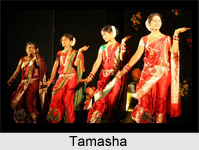
Tamasha Folk Dance
Tamasha is a folk art, which includes the love songs, which are traditional lavanis and dance along with the music.
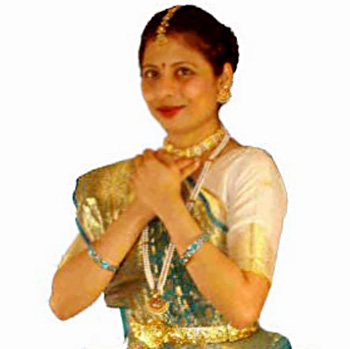
Sringara Rasa
Sringara Rasa is mentioned in Natyashastra as one of the important rasas. The Sthayi bhava in Sringara rasa is Rati or love.
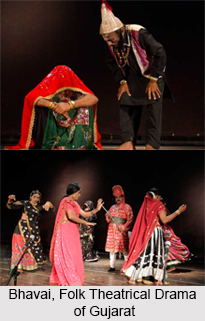
Bhavai - Folk Theatre of Gujarat
Bhavai is a popular folk theatre form of Gujarat that belongs to the tradition of theatre of entertainment.
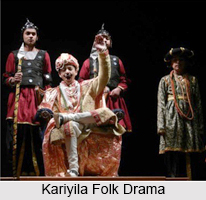
Kariyila Folk Dance
Kariyila is one of the most appealing and popular folk drama forms of Himachal Pradesh, portraying social satire with the accompaniment of folk dance...