About Charvaka Philosophy
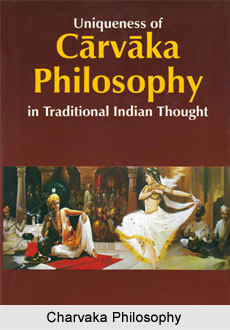 Charvaka Philosophy is a fanatical effort made to rid the age of the weight of the past that was oppressing it. It is a system of Indian philosophy that adopted numerous forms of philosophical agnosticism and religious impassivity. The branch is also known as Lokayata philosophy, as is stated in the Rig Veda. Named after its founder, Carvaka, (also known as Charu or Brhaspati) author of the Barhaspatya-sutras, the Charvaka Philosophy is an atheistic, acquisitive and wild thought. It is also known as `Lokayata` because it admits the existence of this world (loka) alone. Materialist philosophers who are referred to as Charvakas are also known as Lokayatas or Laukayatikas, because they act like ordinary people. The name `Lokayata` can be found in Kautilya`s Arthasastra that refers to the three `anviksikis` or logical philosophies - Yoga, Samkhya, and Lokayata. This very term was restricted to the school of the `Lokyatikas`. In 7th century, the philosopher Purandara had used the term `Charvaka` for the first time. The 8th century philosophers Kamalasila and Haribhadra had also used the same term.
In the outlines of Indian philosophy, Charvaka is classified as a "heterodox" (nastika) system, the same classification as is given to Buddhism and Jainism. While this branch of Indian philosophy is not considered to be part of the six orthodox schools of Hinduism, it is a remarkable testimony of the materialistic movement within Hinduism.
According to research by eminent scholars it has been found that Charvaka philosophy is co-eval with Buddhism and in 500 B.C. it meant `scepticism`. Apart from the account of Charvaka philosophy found in the Rig Veda, certain amount of material is also contained in the Chhandogya Upanishad, the Mahabharata, Vatsyayana`s Nyayabhasya (2.1.37; 3.2.35), Sridhara`s Nyayakandali, Jayanta`s Nyayamanjari, Udayana`s Nyayakusumanjali (1.15), Prabhachandra`s Nyayakumudachandra, Shankara`s Sharirakabhasya (1.1.1; 2.2.2; 3.3. 53-54) and Vachaspati`s Bhamati (3.3.53). Further research has proved that during the Mauryan period the Charvaka philosophy had grown out of generic skepticism but at the same time the exact date of Charvaka philosophy cannot be ascertained before the 6th century. It has also been found that the Brhaspatya Sutras were written during the reign of the Mauryas.
The Charvaka Philosophy is called the Lokayata because the philosophy believes that only this world or the `lok` is the truth. They believe that whatever is arrived by the means of direct perception is the ultimate truth. Whatever is not perceivable is non-existent because of the simple reason that it cannot be perceived. The proponents of this school of thought believed that since sense perception is the only form of knowledge therefore in that case matter becomes the only reality. It is only matter that is cognizable with the help of senses. According to the philosophy the ultimate principles are the four elements. The four elements are earth, water, air and fire. These elements according to them are eternal and can explain the development from a protozoan to a philosopher. In fact they said that intelligence is also the modification of the four elements and intelligence is perished when the element from which it rises gets dissolved. Even consciousness says the Charvaka philosophy is produced after combining the four elements. Thought is also the function of matter. They believe that there is no world other than this. There exists neither hell nor heaven. For them religion is a foolish aberration and God is not necessary to account for the world. Thus with an audacious dogmatism the Charvaka philosophy has swept the world clean of all its values and has put down belief in the Almighty as a symbol of mendaciousness, weakness and cowardice.
The Charvakas have emphasised that pleasure and pain are the central themes of life and it is not possible to separate life from all these. They have also claimed that virtue is nothing more than a delusion and enjoyment is the only reality. The Charvaka School of Thought believed that life is the end of life. Unlike the Upanishads the Charvaka or the materialist philosophy asserts the doctrines of uncontrolled-energy, self-assertion and reckless disregard for authority.
Charvaka philosophy strictly believes in perception as the one source of valid knowledge. Hence, everything is pivoted according to this principle. Metaphysics or the knowledge of being and knowing is also rigidly adhered with perception as the source of knowledge. According to Charvakas, atman is not a separate entity, as one can never `see` atman. It is consciousness that makes one grasps the reality of everything worldly. Hence, the mind, the physical body, or the world one dwells in - everything depends on perception and the realisation by the consciousness.
Charvakas believe not in the notion of stringent philosophy, but in liberal beliefs. Hence, they refute most of the already-established rules in the context of Indian philosophy. The prime importance is laid on the likes and dislikes of humans. As a result, Charvakas believe in the perceived knowledge of the present life, and not in rebirth and past life. According to them good deed is not much necessary to perform in one`s lifetime, as is instructed by the crafty priests. The basic thought of the Charvakas is to obtain worldly pleasure by making merry, as there is no hell where one can be hurled.
Hence, it can be concluded saying that the materialist philosophy had a lot to do with regard to the repudiation of old system of religion and custom of magic. The Charvaka Philosophy is in fact a man`s return to his own spirit and rejection of all those which are external and foreign. It also says that nothing needs to be accepted by an individual which do not find its place in the way of reason.
Theory of Knowledge in Charvaka philosophy
Of the three crucial sources of knowledge accepted in common by all the orthodox schools (perception, inference, and verbal testimony), the Charvakas accepted only perception as the valid source of knowledge and disapproves both inference and verbal testimony. They are of faith that, whatever one experiences through perception is rightful and existent.
The Charvakas at first seem not to have been mindful of the difficulties in accepting perception as a valid source of knowledge, which were pointed out later by the Buddhist and Vedanta logicians. The later Charvakas expressed that they were aware of the difficulties, but they did not discuss the significances of this question and maintained a realistic position.
It is interesting to notice here that, in their examination of inference, the Charvakas foresaw the European sceptics. They said that inference was not a valid source of knowledge, because the major premise of an inference cannot be proved. For instance:
Wherever there is smoke, there is fire (Major premise);
This mountain has smoke (Minor premise);
There is fire in the mountain (Conclusion).
This is the classical example of inference in Indian epistemology. The Charvakas ask - (i) `How can we formulate the major premise unless we have seen all the instances of smoke? If we have not seen all the instances, how can we logically be justified in using the word `wherever`? If we have seen all the instances, we must have seen the present case, viz. the mountain also. (2) Then what is the use of making an inference when we have already perceived that there is fire in the mountains?` Hence the Charvakas say that inference is either impossible or unnecessary. Inference cannot generate truth.
However, causal statements like `Fire causes the bodies to expand` are also regarded as truth. And they are universal propositions like the major premise. The Charvakas state that these causal laws also are bound to be false. If one is able to apply causal laws and find them to be true, it is only just a chance event. In fact, the Charvaka theory of knowledge speak that there is no existence of causal laws. Every event is a chance; everything comes into existence and passes out of it according to its own nature. Even this nature is not a universal law; it too is subject to change.
The Charvakas make a strong attack on verbal testimony. Verbal knowledge is only knowledge of words and their meanings are based upon inference. One can say that: `The orange is red`. Now, through the established meanings of the four words, one infers that the object before the mind of the observer is an orange and that it is red. But it has already been pointed out that inference is a dicey source of knowledge. One can never be sure of the reliability of the observer of orange. For either reason, verbal testimony is not a reliable source of knowledge. The Charvakas perhaps make their strongest attack on the authenticity of the Vedas. The Vedas are not reliable at all, because they are self-contradictory. They propound thus in their theory, `At one place they enjoin on us not to commit any injury; but at another place they ask us to sacrifice animals to gods. How can one believe that the killing of animals in sacrifices brings one merit?`
Charvaka theory of knowledge also does not believe that the word-sounds are eternal. There is no sound, when no one utters it. And it stays only when produced by the vocal organs. If it is said that its timelessness can be proved by inference, it has already been established that inference is not reliable. And perception does not show that the word-sound can be eternal.
The Charvaka theory of knowledge is not exactly scepticism or agnosticism, but a fairly thoroughgoing positivism. They accept the reality of whatever one can perceive with one`s senses and refute the reality of whatever one cannot perceive. However, it should also be noted that they did not deny the formal validity of inference, because they used the very laws of inference to show that one cannot obtain material truths about the world through inference. They questioned only on the premises regarding how one can obtain the major premise. But they never stated that, even if one had the major premise, inference was wrong. They did not criticise the structure of the syllogism, but only wanted to prove that it was absolutely useless for obtaining any new truth about the world. In fact, they used the law of contradiction in disproving the doctrines of their rivals.
Metaphysics in Charvaka philosophy
According to the charvakas, there is no such thing as atman. one does not and cannot perceive atman, establish its existence with help of inference, because inference a valid source knowledge. charvakas state that consciousness due when man dies, his her goes away prove it vanishes exists somewhere else. being conscious peculiar quality living human body. can keep back so long physical parts are healthy stay together in certain form. thus an emergent coming specific proportions. for example, yeast blended juices, they turn into wine. property wine new which juices obtain blended. therefore, according charvaka metaphysics, life also only configuration matter. nothing but matter real.
Therefore the atman or self-awareness is only the physical body with a new emerging quality. But one always says that, `I have a handsome body, a tall body` and so on. If the `I` is not different from the body, how can it say: `I have such and such a body`? To this the Charvakas answer by saying that the use of `have` in these expressions is only conventional, created by the false impression that the `I` is different from the body.
The Charvaka metaphysics speak of the mind (manas), which is different from the atman. But the Charvakas appear to think of mind as the consciousness in its knowing function, which of course is not separate from the body. The body together with its consciousness is the atman and consciousness in its experiencing function is the mind. Mind knows the external world through the senses.
The world is the material world only. According to the Charvaka metaphysics, it does not consist of five elements. Earth, water, fire, air, and ether are the usual five elements corresponding to the qualities smell, taste, colour, touch, and sound, and also corresponding to the five sense organs, nose, tongue, eye, touch, and ear. Excepting ether, the first four elements are perceivable. Hence the Charvakas deny the reality of ether. It was believed that the cause of sound in the ear was the all-pervading ether. But the Charvakas say that sound is caused by air touching the ear. Sound occurs due to the movement of air, not of ether. The other four elements make up the world. They consist of tiny particles. The particles accepted by the Charvakas are visible particles; they could not accept the reality of anything that could not be comprehended with the senses.
Charvaka metaphysics are of the faith that there is no external cause for the four elements coming together and obtaining the qualities of life and consciousness. It is their inherent quality to come together and to have those qualities. However one cannot generalise on this process and establish a law that, whenever these four elements come together in certain ratio, life and consciousness will emerge. The elements may alter their nature any time. One cannot, therefore say that Nature comprises some eternal laws. Every event is a probability, and if it develops into something, then it develops according to its own peculiar nature. One may conclude that, according to the Charvaka metaphysics, the existence of everything is a chance, and that there are no laws of nature, but every object possesses its own nature.