 The remarkable blossoming of the feminine talent working in Mumbai is really impressive. These groups of directors are immensely talented and some of their works are still appreciated for realism. From the time of Fatima begum, Mumbai has been witnessed to the rising of the women directors.
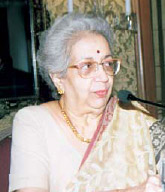
One of the early women filmmakers was Vijaya Mehta. She had been acting on the Marathi stage for long and brought changes in the theatre by introducing Brecht and Ionesco. Most of her films are television adaptations of her stage productions though she did make two noteworthy feature films, which are considered examples of New Cinema. Her television debut was with Smriti Chitre (1983) based on the memoirs of the wife of the philosopher, NV Tilak, relating the woman`s disillusionment with Hinduism and her conversion to Christianity. Rao Saheb (1986) is a fine and powerful film on the dilemma of a man weighed down by traditions and caught between two cultures. Her next film was Pestonjee (1987) is a refined psychological portrait of friendship with an introspective quality that is rare in Indian cinema. It is also a rare introspection of the Parsi community. The film starred Naseeruddin Shah and Shabana Azmi.
Sai Paranjpye became a well-known playwright and director in the Marathi stage, before beginning, in 1965, the teleplays and television series that have been her principal activity for so long. At least four films made by this talented director are characterised by their salutary humour are worthy of attention. The director was awarded the Padma Bhushan by the Indian Government in 2006. In 1979 she made Sparsh based on her own screenplay. The cast comprised of Naseeruddin Shah, Shabana Azmi and Om Puri. It is a limpid and touching account of the encounter between two people, each overcoming pride and pain as they come together. The next film to release was Chasme Buddoor (1981) is a lively comedy dealing with the labours of love of three very close friends. But these people are of different temperaments and share an apartment. The film starred Farooq Shiekh and Deepti Naval in the lead. The film borrows several ingredients from the commercial films which made it a reasonably box office hit.
Katha (1982) illustrates the parable of the hare and the tortoise through the escapades of an unscrupulous, charming young man who takes his inherently decent friend for a ride. He is finally unmasked but not before causing a lot pain and tribulations to his friend.
In a more serious vein, Paranjpye made Disha (1990), on the migration of the rural people, uprooted by drought. They come to the city in search of work, a favourite theme among the directors of `New Cinema "Paranjpye`s film is a well constructed and remarkably enacted melodrama set in the vast recesses of rural Maharashtra. The film stars Nana Patekar and Raghuvir Yadav. This film received international reorganization at the Cannes Film Festival. Her other films include Saaz (1997), Bhago Bhoot (2000) and Chaka Chak (2005).
Kalpana Lajmi, literally, has films running in her veins. She is the niece of the legendary Guru Dutt. Her first film was Ek Pal (1986). The film portrays a complete different picture of the Indian woman who is capable of expressing her sexuality without regret. Actors like Naseeruddin Shah and Shabana Azmi were part of the cast for this film.
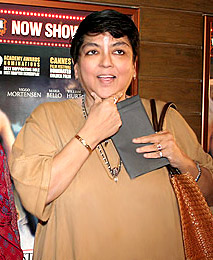 Lajmi will always be remembered for Rudali (1992). It is a realistic and captivating melodrama in which the folk tunes and songs of Rajasthan blend with Bhupen Hazarika`s music against a backdrop of beautifully filed Rajasthani landscape. Her later films include Darmiyaan (1997) and Chingari (2006).
Mira Nair is one of the women filmmakers who straddle and the high seas. Her filmography includes Salaam Bombay (1988), Mississippi Masala (1991), Kamasutra: A Tale of Love (1997), Monsoon Wedding (2001), Vanity Fair (2004) and The Namesake (2006).
Other female directors in her league are Deepa Mehta and Gurinder Chadha. Apart from them new age directors, such as, Farah Khan, Meghna Gulzar, Tanuja Chandra, Pooja Bhatt, Zoya Akhtar, Tanuja Chanda, Sonali Gulati and others.
Tanuja Chandra began her career in 1995. She made her directorial debut with the TV series "Zameen Aasmaan". This was starred by Tanvi Azmi. She directed another television serial along with Shabnam Sukhdev, called Mumkin in 1996. Later in 1997, she wrote the screenplay for Yash Chopra`s blockbuster hit commercial film "Dil To Pagal Hai".
In later years Tanuja Chanda went on to work with Mahesh Bhatt. There she wrote the screenplay for Mahesh Bhatt`s critically acclaimed picture, Zakhm (1998). She also made her cinematic directional debut with his "Dushman" in the same year. She made her next film Sangharsh in 1999.This film was produced by Mahesh Bhatt. She made a lot of films but some are not commercially hit. These are "Sur - The Melody of Life" (2002), Film Star (2005), Zindaggi Rocks (2006) and Little Sugar (2006)
Sonali Gulati is an independent filmmaker, a feminist and social activist. Gulati grew up in New Delhi and she had directed several short films that have screened at over three hundred film festivals worldwide like Hirshhorn Museum, the Museum of Fine Arts in Boston and the National Museum of Women in the Arts, and at film festivals such as the Margaret Mead Film Festival, the Black Maria Film Festival and the Slamdance Film Festival. Gulati`s award-winning documentary, Nalini by Day, Nancy by Night, was aired on television in the U.S., Canada, Europe, Australia, New Zealand, The Middle East, South Asia and North Africa. She was mostly acclaimed for her recent film I Am. She had received 12international awards and she continues to exhibit the her films in different film festivals.