


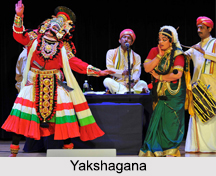
 Bayalata is a popular folk theatre of Karnataka. Bayalata is an open air theatre and is demotes to almost all the forms of long-established Kannada theatre. The term Bayalata, as its etymology indicates ‘bayalu’ means open-air field and ‘ata’ means theatre. In southern Karnataka, both the eastern and western varieties of Yakshagana are termed Bayalata, whereas in the north several other distinct genres are also included under the name. The Bayalata has taken its form from religious ritual of which the most important aspect is the imitation of the divine. All folk performances are part of a ritual festival conducted in the name of the local deity as well. Bayalata is a popular folk theatre of Karnataka. Bayalata is an open air theatre and is demotes to almost all the forms of long-established Kannada theatre. The term Bayalata, as its etymology indicates ‘bayalu’ means open-air field and ‘ata’ means theatre. In southern Karnataka, both the eastern and western varieties of Yakshagana are termed Bayalata, whereas in the north several other distinct genres are also included under the name. The Bayalata has taken its form from religious ritual of which the most important aspect is the imitation of the divine. All folk performances are part of a ritual festival conducted in the name of the local deity as well.
History of Bayalata It is believed that Bayalata forms were existed in the 19th century. The Bayalata has taken its outward appearance from the religious practice in which the most important characteristic is the imitation of the divine. Bayalata form of Yakshagana had originated from a holy religious ritual in a temple. Themes of Bayalata The plot is generally a well-known local myth and the manners displayed are all straight forward and recognizable. The theme of the drama is usually based on epic poetry, Puranas or mythological stories from the Ramayana and the Mahabharata. 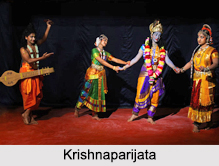
Types of Bayalata There are five different types of Bayalata which have developed since the earlier period centuries. These are as follows: Sannatas: Sannata or the small play is an improvised form of Dasarata. The sannata has a full length story which lasts for about six hours. The dances in this act are simple. The Sannata can be classified into three types and these are the Vaishnava, the Shaiva and the social plays. The introduction to each one differs. In the Vaishnava, Radha and Krishna are invocated, whereas in the Shaiva, it is Shiva and Parvati who make an outward show. The social plays start with the Kathabija and the story is then woven around it. Krishnaparijata: Krishnaparijata is based on one of the popular mythological tales in Karnataka. This art form portrays the rich and vibrant culture of the land. The belief and customs of the people are reproduced in these art forms. Krishnaparijata is a folk theatre that heavily draws from the ancient religious books. Doddatas: The Doddata starts with a prayer to Ganesha. The Sarathi offers prayers to the deity before the story begins. The composition of the play is a mixture of verse and prose. The performances are on an intricate scale with rich costumes, wide stage and a number of characters. Yakshagana: Yakshagana like all the others is presented during the night. The first character which enters on stage is the comedian. He has huge freedom to make fun of any character. The stories are taken from the Ramayana and Mahabharata. An eye-catching feature of Yakshagana is the Rakshas. Dasarata: Dasarata is the earliest type of Bayalata art. It dated back to the Dasas of the 12th century. The Dasarata is performed by a group of men and women. The Dasarata style has become very popular which has been adapted to the Marathi stage under the name of Tamasha. |
| |||



Home > Movies & Entertainment > Indian Drama & Theatre > Indian Theatre Companies > Theatre Companies in Karnataka > Bayalata
Bayalata
| Bayalata is an open air theatre and is a popular folk theatre of Karnataka. Bayalata refers to nearly all forms of traditional Kannada theatre. |
| ||||||||||||||||||||||||||||

