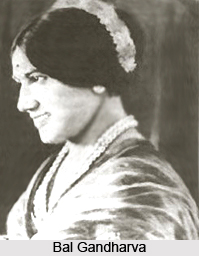
 Bal Gandharva was a famous Marathi theatre artist who got popularity for his acting in the female roles. His actual name is Narayan Shripad Rajhans. Bal Gandharva got his name after a performance in Pune District as an aspiring singer.
Early Life of Bal Gandharva
Bal Gandharva was born in the year 1885. But there is some controversy between 1885 and 1886. He was born Narayan Shripad Rajhans in Pune. He had a sweet cherubic face and divine voice. He started singing at public functions as a boy, and, heard by nationalist leader Bal Gangadhar Tilak. Bal Gangadhar Tilak was felicitated by him as Bal Gandharva as `young celestial singer`. He joined the Kirloskar Natak Mandali in 1905 and breathed new life into it with the roles of Kirloskar`s established heroines Shakuntala in Shakuntat and Subhadra in Sanbhadra, and created the brave-yet-coy part of Bhamini in Khadilkar`s Manapaman i.e. `Honour and Dishonour` in 1911.
Professional Life of Bal Gandharva
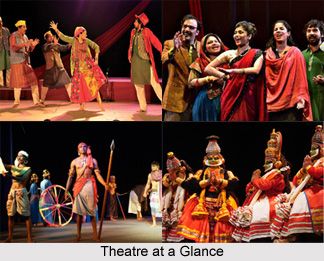
In 1913 Bal Gandharva established his own Gandharva Natak Mandali in partnership with Govindrao Tembe and Ganesh Bodas, who trained him in acting, and playwrights Khadilkar and Deval. The range of his characters was wide, from mythological to historical and social, but always emotionally expressive. His classical roles include Subhadra, Shakuntala, and Devyani or Khadilkar`s Vidyaharan, his domestic ones are Bhamini, Sharada i.e. Deval`s Sharada, Revati i.e. Deval`s Samshaykallot, Sarojini i.e. Shripad Krishna Kolhatkar`s Mukanayak, and the unforgettable, self-sacrificing Sindhu in Gadkari`s Ekach pyala i.e. `Just One Glass` in 1919. The elegance of his female impersonation made middle-class women emulate his style and costume, particularly the fashionable coiffures and drape of his saris. His posture epitomized the classical tribhangi i.e. thrice bent` pose of head and legs gently angled to the body, looking with three-quarters profile at the spectators. He influenced and set standards of aesthetic sensibility even for movies. But after entering into cinema he portrays the male saint-poet Eknath in Dharmatma i.e. `Soul of Dharma` in 1935. But he soon rejected film acting as he was uncomfortable.
Bal Gandharva learnt Indian classical music from Bhaskarbuwa Bakhle and employed it in evoking various rasas with unsurpassed dramatic intensity. He popularized Hindustani and Carnatic classical by basing his songs on authentic forms such as khayal, thumri, dadra, and ghazal, thereby reaching classical music from the concert halls into kitchens and women`s rooms. He founded a vocal idiom conducive to acting with his clear, melodious voice, sense of rhythm, and endearing modulations. According to Tembe, he managed to achieve an impossible synthesis of organ and sarangi i.e. instruments completely diverse in nature and in his singing. Gandharva Natak Mandali also launched such great vocalists as Pandharpurkar Buwa, Vinayakrao Patwardhan, and `Master` Krishnarao, and accompanists like Ahmadjan Tirakawa in tabla and Kadar Baksh in sarangi. Unfortunately, Bal Gandharva`s extravagant tastes in personal and professional life led him into heavy debts. He was too proud to accept a purse of Rs 1.5 lakh collected by his rich fans. His company was famed for lavish sets such as arches and staircases, carpets, and period furniture, drapery of satin, velvet, and gold, the stage sprayed with perfume, and production budgets up to Rs 75,000. It carried on the work started by Kirloskar in popularizing Sangitnatak and eventually dominated the genre.
However, after the emergence of realistic Marathi theatre it gradually lost its hold. Ironically, Bal Gandharva left it in 1944 to perform elsewhere. He married the singer-actress Goharbai in 1955, and lived in retirement in Mumbai. This famous theatre personality died in the year of 1967.