 Commencing with the interest in human nature to capture and save self and familial images for the rest of their life, photography has since come a long way in its evolvement. Beginning with the pinhole camera, which gradually came down to the first permanent black and white image; inventors were fervent to witness more.
The coloured era brought with it the magic of unrealism to realistic pictures. The later ages were fast observers to the even more mind-boggling development in photography and digital cameras. Photography is seen today as a serious living, with more and more enthusiasts getting into it as a profession.
Etymology of Photography
The word "photography" was created from the Greek roots and the meaning is "drawing with light". Sir John Herschel had introduced the term to the public.
History of Photography
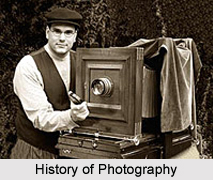
The term `photography` came to be known from the very early years of the 19th century, with the invention of the camera obscura, which was used the mechanism of a pinhole camera to capture images. Since then, man had become obsessed with fine-tuning the long photographic process and eliminates the drawbacks associated with the early photographic versions.
With passing time, the film developing process became more sophisticated and men like Nicephore Niepce and Louis Daguerre experimented with the arrival of a permanent photographic image. From then onwards there was no looking back. A worldwide furore arose once more with the advent of colour filming and photography came to be understood in a completely new light and meaning.
Photography in India
Indian photography had received colossal impetus during the East India Company`s advent in the early 18th century. In fact, it was chiefly due to the Englishmen that the country saw the mounting interest and curiosity in photography among the `natives`. The coinage was gradually becoming a household name. `The Bombay Photographic Society` was formed in 1854 with the 200 members and the similar bodies were formed in Chennai and Kolkata in 1856 tied to the majestic government.
Camera in Photography
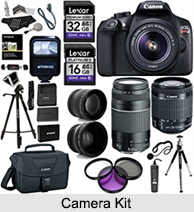
A camera essentially consists of a lightproof box which lets in a bit of light at just the right instant. Once the light enters the camera, it creates an image by causing an element response on photo film. A camera lens is an optical lens of lenses used in combination with a camera body and instrument to make images of objects either on photographic film or on other media proficient of storing an image chemically or by machine. Video and digital cameras utilize an electronic image sensor which is typically a charge coupled device or a CMOS sensor to capture images which can be shifted or stored in a memory card or other storage within the camera for later playback or processing.
 A digital single-lens reflex camera which is also called a digital SLR or DSLR is a digital camera which joins the optics and the devices of a single-lens reflex camera with a digital imaging sensor, as opposed to photographic film.
Types of photography
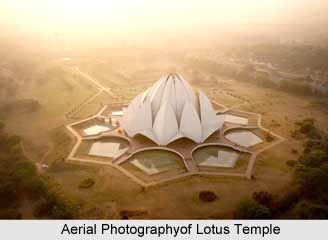
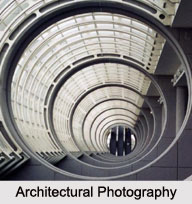
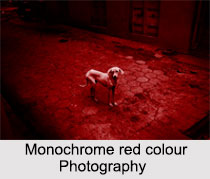
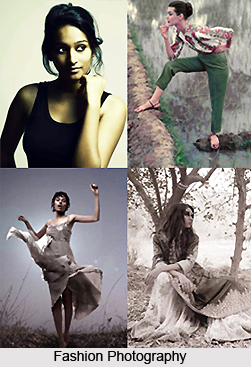
Photography is one of the best ways to save the memories, to treasure the long gone moments. There are different types of photography like - Fashion Photography, Wedding Photography, Landscape Photography, Black and White photography, Ariel Photography, Wildlife Photography, Colour Photography, Action/Sport Photography, Food photography, Portrait Photography, Macro Photography, War photography, Night Photography, Architectural Photography, Erotic/ Nude Photography, Urban and Rural photography, Travel photography.
Photojournalism in India
Photojournalism includes appliance of photography talents and aesthetics to the region of news reporting and journalism. It is the custom of creating images in order to tell a news story. Photojournalists are optical reporters who click photographs at events which make news. Photojournalists with a keen sense of the inner feel and flair for photographing anything and everything exciting to the viewer are under great demand. Photojournalism in India is indeed quite lucrative, provided one is determined to make it to the top.
Photography as a career in India
Photography is a rapid promising well-liked career choice amongst all the age groups. Photography is both a science and an art. It is an artistic means of appearance where the camera is replacing the pen or the paintbrush. As a career in photography, India`s educational future looks exceedingly promising. Already looked at as an esteemed option after completing one`s basic schooling, an individual with that extra edge and passion to move to the top, is sure to become a promising and famed photographer. The rewards at the end of the tunnel are worth a wait.
Photographers of India
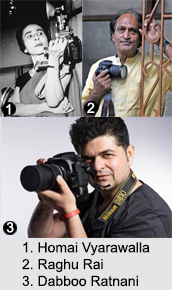
Some of the renowned Indian Photographers are Homai Vyarawalla, Raghubir Singh, Ashok Salian, Lala Deen Dayal , Raghu Rai, Vikram Bawa, Victor George, Gautam Rajyadhyaksha, Jatin Kampani, Daboo Ratnani, Sharad Haksar, Rathika Ramasamy, Swapan Mukherjee, Varun Aditya etc.
 Indian Photographic Studios
Since the arrival of photography and camera in India in the passing years of the 19th century, there has been substantial and path-breaking changes worth mentionable. Photosutra, Weddingnama, AJ Photography, Photo Tanta, Jodi Clickers, Manoharan Photography, Weva Photography, Crystal Visual Media, Foma Digital Studios, KD Studio etc are the famous and popular photographic studios of India.
Awards in Photography
Some of the few Indian photography awards in the listings include:
The India Habitat Centre Photography Fellowship Awards
Ramnath Goenka India Press Photo Awards
The Kingfisher Airlines Tennis Open photography awards
TOTO FUNDS THE ARTS (TFA) Photography Awards
Wills Lifestyle Fashion Award
TPOTY Awards (primarily awarded to travel photographers) Sports Journalists Federation of India (SJFI)`s Indian Sports Journalism Awards
Federation of Indian Photography
The current contact officer is Barun Sinha. Federation of Indian Photography (FIP) is the Indian national body of The International Federation of Photographic Art. Federation of Indian Photography was produced in 1952 with the persistent attempt of Dr. G. Thomas, Mr. B.K.Mukherjee, Mr.S.H.H.Razavi, Mr. O.C.Edwards and Mr. G.Arunachalam.
Photography Institutes in India
Photography is a wonderful medium of self-expression. With the blast of the communication network, Photography has now become a profession with huge business value. There are so many certificate and diploma courses in photography in India. Beside these, very few colleges offer the bachelor degree in fine arts and photography. Some of the institutes of Photography are as follows:
Asian Academy of film and television.
National Institute of Photography Mumbai: They offer all kind of courses from crash course to advance course.
Centre for Research in Art of Film & Television (CRAFT), Delhi.
New York Film Academy, Greater Noida.
The Indian Institute of Digital Art and Animation, Kolkata.
International school of photography.
Film and Television Institute of India.
Fergussen College.
MCRC, Jamia Millia Islamia.
National Institute of Design.
Satyajit Ray Film and Television Institute.
St. Xavier`s Institute of Communication.
The Film and TV Institute of Tamil Nadu.