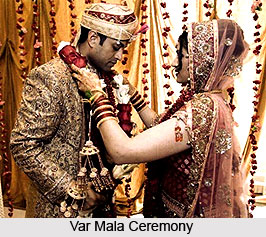
 Also called the Jaimala ceremony, the Var Mala ceremony is a significant main wedding day ceremony. It is also known as Jaimala ceremony and basically involves exchange of garlands between the bride and the groom. Alike all other customs and rituals, this Var Mala ceremony is also a significant ceremony which finds a position even in the Vedic literature. It is an ancient practice and is still conducted in India. The var mala ceremony takes place after the groom reaches the venue for the wedding, along with the baraat.
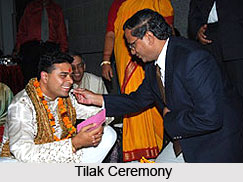
After reaching there, the mother of the bride welcomes him on the doorstep with a pooja thali. She applies tilak and performs aarti in order to bless him and ward off any evil. After this the groom proceeds towards the main stage, where he awaits the coming of the bride. After a while, the bride reaches the mandap with a garland in her hands. Seeing this, the groom also stands and is offered a garland. All the close relatives, friends and family members flock around the couple and shower the couple with flowers, for the ceremony.
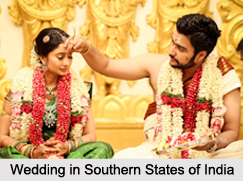
The Var Mala ceremony starts with the bride trying to put garland around the neck of the groom. Groom`s friends prevent this, in order to tease the bride. To enable the bride complete the ritual, the friends on her side help her to do the same. This is one of the most awaited moments of the wedding as everyone present enjoys the tussle between the two parties as well as the couple. Finally, the groom also puts the garland around bride`s neck. This ceremony indicates that the bride has accepted the groom as her loving husband.
In a Hindu wedding the main day function involves various rituals and jaimala is one of the most significant ones. The main day ceremony itself is a compilation of rituals, which are performed by the bride, bridegroom and their individual parents and close relatives. The Brahmin or priest in the presence of the family members and relatives performs the var mala ritual.
The priest chants mantras from the Vedas that were actually written in Sanskrit. For the occasion different items are required some of the important are fresh flowers, kumkum (vermilion), rice, coconut, jaggery, different kinds of grains, ghee, etc. The main ritual starts with Ganeshji`s puja, thus receiving divine grace and blessings to complete the ceremony successfully.
In the ritual of Var mala the bride welcomes and greets her broom by putting garland around his neck. This ritual denotes that she accepts him as her husband. This is also associated a fun moment as the groom is lifted high up when the bride tries to put the garland around his neck. The bride`s mother performs a small welcome puja and then she tries to pinch the groom`s nose. This ritual symbolizes that the groom has come to ask for their daughter`s hand at their doorstep by rubbing his nose on the doorstep. Grooms friends try to protect his nose with handkerchiefs. Different region of the country celebrate this ritual according to their own custom and traditions.
More on Steps in a Indian Marriage Ceremony
More on Indian Wedding Accessories
More on Indian Religious Weddings
More on Types of Marriages
See also