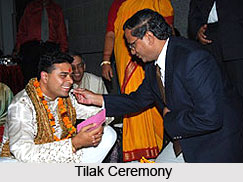
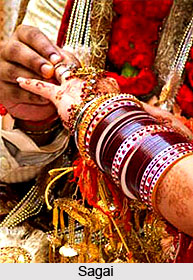
 Sagaai or engagement ceremony is mainly conducted to fix the marriage date. The Engagement Ceremony deals with the exchange of rings between the bride and the groom. The pujari conducts the ceremony. Merriment and entertainment to their best extent is seen to get actually started from the event of engagement. This is the main attraction of Indian weddings. Here lies the spirit of Indian customs and traditions. Extremely ritualistic, Indian Hindu Marriages still follow the Vedic rites and Purana Philosophy.
Marriage is a sanctified bonding which unites together two souls through marital bliss. Avowing to be together through all the happiness and sorrows of life, the couple starts a new journey steeping into a vast arena of marital relationship. In the Indian custom, the newly shaped relationship of the two souls together must also be reinforced by the absolute blessings of the Almighty. The rings those are exchanged denote a sacred bondage that require great amount of commitment and loyalty. This Engagement Ceremony follow up to Marriage and so is considered as a blessed omen of conjugal relationship and marital bliss.
In few parts of South Indian States, the Engagement Ceremony existed as a regulation; but it was earlier absent in North India or East India. Eventually the culture spread far and wide and people started to think using the same ideas in their family marriages as well. The Punjabis and Marathis religiously follow this tradition with zest and style.
Known by different names, Engagement Ceremony in other parts of India is called Misri, Ring Ceremony, or even Ashirbad. In some parts of the country, the name is Mangni. Like any other pre wedding ceremonies, the engagement emblematizes the matrimonial relationship that is sustained by communal faith and understanding. Indian marriages mean more than presentation, engagements, gifts and fineries. This institution unifies two different families. Engagement Ceremony is one of the important Wedding Ceremonies in India.
The Engagement Ceremony is one of the most important pre marriage ceremonies in the Indian society. It is the event, which marks the beginning of the wedding ceremonies. An Engagement Ceremony is usually held few months before the wedding ceremony. It is known by different names in different regions of the country like misri, Ashirbad, mangni or ring ceremony. In case of an Ashirbad, it is held before few hours of the marriage time or "lagna".
The family members, relatives and friends of both the would-be bride and the groom come face to face on the day of the Engagement Ceremony. The bride and the groom are gifted with various items like jewellery and clothes from each other`s family. They also receive gifts from the other guests. Often the bride`s family stands the expenses of the ceremony. The groom`s side also receives gifts from the bride`s side for the important family members, like the mother, father, brother and sister of the groom.
The main part of the Engagement Ceremony is when the would-be bride and the groom come close and exchange their rings. These rings are particularly chosen and are made of precious metal like gold or else platinum. After exchanging the rings, the would-be bride and groom receive blessings from the elders of both the families and eat sweets. In many communities the would-be bride and groom would exchange garlands after the exchange of rings. After the rings are exchanged all the relatives and friends come and attend the dinner party. In many a cases the auspicious date of marriage is also fixed by a `pandit` on the day of the Engagement Ceremony.
Nowadays people also have royal arrangements of music and dance at the Engagement Ceremony floor. Bands and DJs are called upon to play different kinds of music that will entertain the guests and the entire crowd dance and enjoy the evening to tunes being played. People cut cakes to celebrate the event too.
More on Indian Wedding Accessories
More on Indian Religious Weddings
More on Types of Marriages
See also