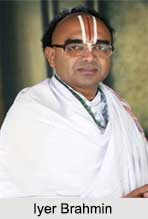
In the past excessive orthodoxy and conservatism characterized Maithil life but after the 13th century there was a significant change. King Harisimha Deva introduced Kulinism by which the Maithil Brahmins were divided into four subclasses: Srotriya, Yogya, Panjbadh and Jaibar and the Kayasthas. The latter was further divided into two-- Kulina and Grahastha. Around this time the system of `Panjiprabandh` came into use. According to this a collection of the genealogical data of each individual was maintained and these panjis were collected and consolidated by 1313 AD. It is said that the system was introduced to protect the "purity of blood" by making people record their ancestry, which would help in avoiding the forbidden degrees of relationship in contracting marriage.
Marriage could not be contracted without the authorised marriage clearance certificate issued by the Panjikaras. This custom is followed till date. It caused considerable rigidity in society as polygamy was widely practiced by the Kulins. As a result a new group known as the Baikaus or vendors group came into being. This new community could marry as many as fifty or sixty women at a time. The condition of women worsened and often they were sold by their parents for a few coins. It was only in the early part of the 20th century that polygamy was banned and the status of women improved somewhat.
The first available piece of literature in Mithila, Varna Ratnakar, contains a description of the daily life of the kings. This was written by Jyotirishwar Thakur during the reign of the Karnata kings.
The most profound literary influence was that of Vidyapati who belonged to the 18th century. King Sivasimha was his patron.
He wrote in 3 languages - Abhatta (Apabhramsa), Sanskrit and Maithili. In Abhatta he wrote two books, Kirtilata and Kirtipataka. Among his many Sanskrit works are Purusha Pariksha, and Vibhaga-Sara. His Padavali songs and lyrics stirred all of eastern India. He was a warrior, minister, historian and commentator on religion. It is said that Rabindranath Tagore was also influenced by him.
Mithila still maintains age old traditions in the sphere of the folk arts which the women practice as an ordinary, domestic affair. Even the poorest decorate the home and compound with beautiful designs, geometrical patterns and representations of gods and human figures. Among the arts practised today, many of which show the Tantric influence, are sikki, sujani, kashida, the famous Madhubani wall paintings and alpana. Women make use of indigenous materials such as vegetable colours and gum and in place of a brush use thread, match sticks or thin bamboo sticks wrapped in cotton for these paintings. Mithila arts and crafts are alive because of the vital relationship between them and the festivals observed. Special pujas like Chhinavasta, Kali, Kameshwari, Matangi, Teru and Vaneshwari keep alive the tradition of these colourful arts and crafts.
Almost every month has its special Puja or festival. A few large fairs are held in different parts of Mithila on many occasions. Rajnagar, Banaili, Singheshwarsthan, Raghopur, Kapileshwar and Janakpur are some of the sites where melas or fairs and many other events take place on Vijayadashmi, Shivaratri and Ramanavami.
 The Maithils believe in early marriage and even today, in the villages, a girl is usually married by the time she is 14 or 15. Marriages are arranged through the `marriage market`. Marriages take place any time of the year on an auspicious tithi or date. The `barat` does not eat any salt in the bride`s house till the marriage rituals are completed when the guests are served with rice and salt and other food.
The marriage over, the baratis are given `vidayee`- a gift consisting of a pair of coloured dhotis, a sacred thread, a handful of betel nut and double the amount of cash that each member of the party had earlier given the bride. The money is not accepted but the other things are. The bridegroom remains at the bride`s place. Next come the Chaturthi rites, during which the bridegroom observes Brahmacharya, does not eat salt and does not oil his hair. He then leaves for home but the bride goes to his home only after the `dwiragaman` (second marriage) is celebrated. It may take place 2 or 3 years later.
Maithils rarely marry outside their community. Darbhanga, the centre of Mithila, has a Sanskrit university and an institute devoted to historical and cultural research on Mithila. The All-India Maithili Mahasabha looks after the interests of Maithils. In Patna, the Chetna Samiti, a leading organisation of Maithils, promotes the cultural life of Mithila and the Maithili Sahitya Sansthan promotes literary activities.