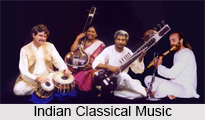
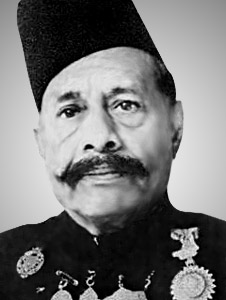
 The elaboration and development of a chosen raaga forms the heart and soul of a Hindustani classical concert. Song-text and rhythm do not occupy as important a place as the raaga. Neither can vocal prowess, nor technical finesse invokes the spirit of a raaga. Every seasoned musician knows that a raaga is more than the sum of its notes. Many a time there exists only a minute difference between two raagas. Such raagas derive their specificity from discernible melodic movements, development of broad characteristic phrases, the sculpting and beautification of the tonal centers that go to give it its unique raagabhaava. These performers attempt to delineate gradually and consistently in slow, medium and fast tempi during the course of a recital. Creativity, pointless to say, is of supreme importance while elaborating. Ustad Faiyaz Khan once stated, `a raaga is like a text and the musicians have to explain and interpret it.` This enlightening statement connotes that a raaga as such is only a melodic frame, which the artist embellishes and permeates with the resources of his or her imagination. Indeed, raagas are like sleeping beauties ever waiting to be roused by the kiss of imagination and creativity. The one who wakes them has almost absolute claims over their hearts and their souls.
The notes of a raaga, like a tender plant, must be nourished and watered; only then will it become a sprawling tree. In fact, the raaga and the artist share a reciprocal and organic relationship. The extent to, and the manner in which a raaga blossoms, depends on the fertility of the artist`s imagination, flexibility of expressive emotions, subtlety of mind and the range and drive of voice. Indian raaga music, as presented in a recital, is not a pre-packaged parcel. Rather, it comes alive in the live intermingling between the artistic consciousness and the receptive consciousness of the listener to the extent that the two become a creative and dynamic confluence.
The listener becomes a witness, a collaborator, a corroborator, a participator and an enjoyer (bhokta) of the aesthetic processes of the rasa-creation and rasanubhava.
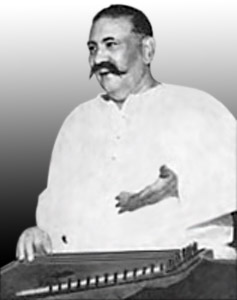 Some of the greatest musicians of the 20th century have been interpreters of raagas. When one hears recorded versions of certain time-bound raagas, what one feels is the presence of their vibrant personalities. Raaga Malkauns, an ocean of endless melodic possibilities, reminiscent of the enigmatic allure of the night as of its haunting depths, has become one of the arenas where some of the finest Hindustani performers of this century have proved their grit. Ustad Bade Ghulam Ali Khan`s recorded renderings evoke the tender poignancy associated with the desolation of a love-lorn lady, awaiting her lover. The mood is essentially lyrical. Tender sorrow alternates with anxious expectancy in the vilambit section of the aptly chosen bandish (Eri kab aave sajan). Pt. Omkarnath Thakur`s vilambit is wrenching, as it is glaringly romantic. The customary bandish, Pir na jani balma, becomes a torrential downpour of mighty emotions, all executed in that mesmerizing voice capable of covering and displaying wide tonal ranges. The drut text, Pag ghungaru baandh kar naache, a well-known Meera bhajan, becomes the vehicle for dramatizing the cathartic act of devotional ecstasy. The cup of poison sent by the Rana turns in Meera`s hands the chalice of nectar. The overwhelming sense of the tragic gives way to the uncontrolled joy of self-surrender made evident by the final dance of rapture mimetically recaptured by Thakurji in the rhythmic phrases arranged at the conclusion. The quivering romantic sense of self-projection and identification are clearly evident in this unforgettable Malkauns. Ustad Amir Khan`s rendition displays the characteristic introspective calmness that has become his trademark. He sings the popular vilambit composition penned by Tulsidas, Jinke man Ram Biraje with the peacefulness and repose of a naadayogi, wholly absorbed in the deep unearthly magic of swaras. His drut section displays a complete shift in mood and rasa from that of his vilambit - from one of karuna ras to shringar ras. The nimble, brisk and energetic movements reveal the joy of fulfillment of desire and love. Pandit Nikhil Banerjee`s Malkauns has set a standard on the sitar, whch remains unsurpassed in the realm of recorded music. The crystal-clear notes of his marvelously tuned instrument convey the sublime cosmic grandeur and dancing movements, inherent in this mystic raaga. The vilambit is modest and luxuriant in turns; the drut is pure magic, revealing the maestro`s weakness for complex figures, exquisite sapat and other intricate taans.
It may be apparent from this discussion that the raaga maestros were essentially creative interpreters, who evoked astonishing images and portraits of varying moods and an array of emotions using the hues of swaras and the brush-strokes of musical craftsmanship. There is a popular saying in North India that the loops and twists of a pugree (turban) never come the same way twice. Similarly, no two performances of a raaga are exactly the same, especially when a gifted artist executes them. Like all organic forms in nature, the raaga is ever reincarnated each time an imaginative artist gives it the touch of life and fires it with a spark of creativity. Ustad Faiyaz Khan`s remarks on the raaga cited earlier, thus stand justified.