
In 1947, when India was partitioned, thousands of homeless and destitute Hindus and Sikhs came into an independent but truncated India among whom were the Pothohari Sikhs. Today they have become synonymous with ingenuity and hard work.
The Pothohari Khatris are subdivided mainly into the Dhai Gharas who include the Kapurs, Khannas and Malhotras; the Khukrains (Sethis, Suris, Sahnis, Sabharwals, Anands, Chaddhas, Bhasins and Kohlis); the Bahris who have twelve sub castes such as Kakkar and Chopra; and the Bowanjiwee Khatris who constitute a fraternity of 52 sub castes.
The plateau of Pothohar or Potwar covers 6,400-8,000 square kilometres of the Sind-Sagar Doab including the districts of Rawalpindi, the eastern part of the Jhelum District converging on the salt range, a major portion of the Attock District and the Haripur Tehsil in the Hazara District. The Murree Hills provide scenic beauty to the lowland plateau.
It was probably here that the Rig Veda was "revealed" to the sages. Panini is said to have lived here. In this area are the ruins of Takshasila, the great Buddhist University of ancient times.
At the beginning of the 16th century, Guru Nanak undertook a mission to Hasan Abdal in this tract. A number of tribes are said to have settled here during the many invasions from the Northwest till the reign of Ranjit Singh. Hindus and Sikhs became prosperous here.
Starting with nothing except their business acumen and adaptability in 1947, the Pothoharis captured the markets of east Punjab and Delhi and now dominate the bicycle, motor parts and radio parts industries and the cloth markets of Punjab, Haryana, Delhi and Mumbai. They have reached Singapore where they are shopkeepers and Africa and Indonesia, where they deal in the bicycle trade.
The Pothoharis started several educational institutions and their organisations like the Sikh Educational Conference and the Arya Samaj have created a new social awareness. Many eminent political leaders, dedicated educationists, legal luminaries, scholars, writers, artists, journalists, workers in industry and employees in the civil service and other professions, belong to this community.
Optimistic and dynamic, the Pothoharis possess an innate common sense for making the best of what comes their way and the community has a prime place in the commercial world of India.
Pothohar Community
Pothohar Community of Sikhs came to India after India was partitioned in the year 1947.
Recently updated articles in Religion in India
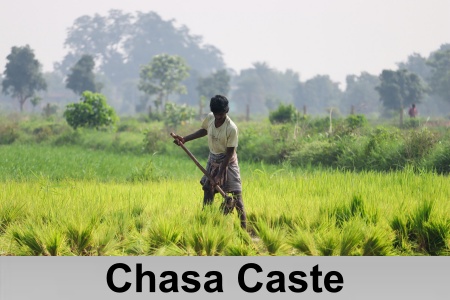
Chasa Caste
Chasa caste is a prominent agrarian community native to Odisha. Traditionally associated with cultivation and farming, Chasas have historically played...
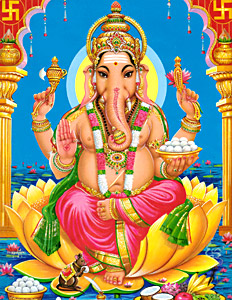
Vigneswara, A Form of Lord Ganesha
Lord Vigneswara is another form of Lord Ganesha or Vinayaka, prominently worshipped as the God of intelligence and good luck in the Indian subcontinen...
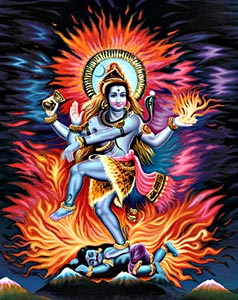
Maheswara
Maheswara, meaning “the Great Lord,” is a revered name of Lord Shiva in Hindu tradition. It represents Shiva’s supreme authority over creation, preser...
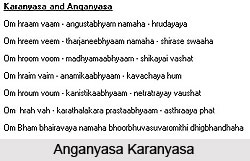
Anganyasa and Karanyasa
Anganyasa and Karanyasa are preparatory rituals in Hindu worship that sanctify the body and hands through the recitation of sacred mantras and symboli...
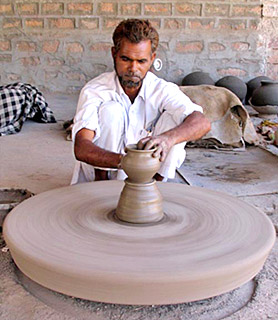
Kumbhakar / Kumhar Caste
Kumbhakar or Kumhar caste is a traditional artisan community in India known for pottery making. Derived from Sanskrit word Kumbhakar, meaning potter,...
Related articles in Religion in India
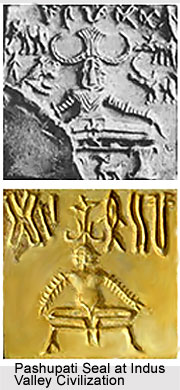
Religion in Indus Valley Civilization
Religion in Indus Valley Civilisation included Hinduism, Buddhism and Jainism. Details about the religion in Indus Valley Civilization have been gathe...
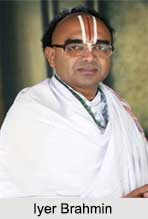
Iyer Brahmin
Iyer Brahmins are originally from Tamil Nadu of South India. They are known for their adherence to Advaita philosophy and Smarta traditions. Tradition...
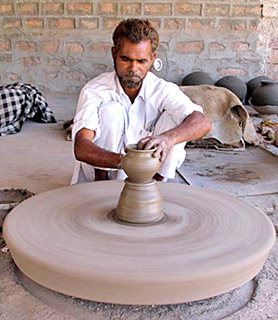
Kumbhakar / Kumhar Caste
Kumbhakar or Kumhar caste is a traditional artisan community in India known for pottery making. Derived from Sanskrit word Kumbhakar, meaning potter,...

Gujjars in Mughal Era
Gujjars in the Mughal era enjoyed great power. Further their power increased with the decline of Aurangzeb, Mughal emperor.
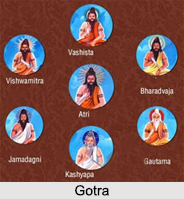
Gotra in Hinduism
In Hinduism, gotra refers to a lineage system tracing descent from ancient sages, primarily through the paternal line. Originating from Vedic traditio...