
 Kannada Catholic Community is largely settled in Karnataka. Soon after the capture of Goa in 1510, the Portuguese established factories at Honore, Barcelore and Mangalore in pursuance of their treaties with the chiefs of Sonda, the kings of Vijayanagar and the local chiefs. In a short period Christian (Catholic) settlements sprang up in these towns and several other places in the interior of Kannada.
Kannada Catholic Community
Kannada Catholic community constitute a considerable section of the Tamil speakers in Karnataka.
Introduction
Kannada Catholic Community is largely settled in Karnataka. Soon after the capture of Goa in 1510, the Portuguese established factories at Honore, Barcelore and Mangalore in pursuance of their treaties with the chiefs of Sonda, the kings of Vijayanagar and the local chiefs. In a short period Christian (Catholic) settlements sprang up in these towns and several other places in the interior of Kannada.History of Kannada Catholic Community
The record of Kannada Catholics in the freedom movement is creditable. Those who did not participate directly in the struggle helped the cause by sheltering the fighters and giving them moral and material support. Catholics have played a leading role over several decades at the village panchayat level and in the Mangalore municipality.
To prevent the newly-converted Catholics from practising Hindu customs, the Portuguese introduced the Inquisition in Goa in 1560. Rather than been declared heretics and be condemned to death, they left Goa to settle down outside the Portuguese dominion. Large numbers went to Kannada where they were welcomed by the Bendore kings of Kannada (1565-1760), given grants of land and recruited to their regiments. There they formed a large and important community as is clear from the clauses guaranteeing their interests incorporated in the treaties concluded between the Portuguese and the Bendore Kings in 1671, 1678, 1707 and 1714.
In the last quarter of the 18th century Tipu Sultan of Mysore, suspecting that the Catholics were supporting the British against him, placed almost the entire population (about sixty to eighty thousand) in captivity at Seringapatnam till 1792, when those who had survived went back to Kannada where they had to start afresh as their property had been appropriated by others.
To prevent the newly-converted Catholics from practising Hindu customs, the Portuguese introduced the Inquisition in Goa in 1560. Rather than been declared heretics and be condemned to death, they left Goa to settle down outside the Portuguese dominion. Large numbers went to Kannada where they were welcomed by the Bendore kings of Kannada (1565-1760), given grants of land and recruited to their regiments. There they formed a large and important community as is clear from the clauses guaranteeing their interests incorporated in the treaties concluded between the Portuguese and the Bendore Kings in 1671, 1678, 1707 and 1714.
In the last quarter of the 18th century Tipu Sultan of Mysore, suspecting that the Catholics were supporting the British against him, placed almost the entire population (about sixty to eighty thousand) in captivity at Seringapatnam till 1792, when those who had survived went back to Kannada where they had to start afresh as their property had been appropriated by others.
Society of Kannada Catholic Community
Brought up as Christians from infancy, they are characterised by their honourable principles and exemplary conduct and enjoy a high reputation among the Hindus and Muslims with whom they live. In the past they were land-holders, merchants and tradesmen and for their superior-intelligence and fidelity were employed in offices of trust under government in preference to others.
They are governed by a caste system which is akin to that of the Hindus which came from Goa with the early immigrants. The castes are Bamon (Brahmana), Charodi (Kshatriya and Vaishya), Sudra (artisan) and Gaudi (comprising local converts from the original fisher caste). Superimposed on this is another artificial division - that of the `refined` and the `rustic`. The members of the former, consisting of about two hundred families, live in the city, speak English and have adopted western dress and customs.
In the rural areas, they are deeply attached to farming either as tenant farmers or labourers. They have hardly any social life. Except for some parochial functions and weddings, christenings, Christmas, Easter and the parish feast are the only occasions when they have celebrations.
They eke out a frugal living on their farms and often have to supplement their income by petty trading and by sending their family members to cities for employment.
The urban members of the community are concentrated in Mangalore and are often called Mangalorean by outsiders. With the establishment of British rule, many claimed and got their property rights in the city and the district confirmed.
The prosperity of the dominant Catholic families of Mangalore since the latter half of the 19th century owed itself to the tile industry, coffee plantations and trade in plantation products. The tile industry was first introduced in Mangalore by German missionaries who kept their technology a secret and bought an entire village which had suitable clay for the manufacture of tiles. In course of time the Mangaloreans learnt the secret and so was born the famous Kannada tile industry. The tiles were so much in demand that the Portuguese from Goa would exchange gold for them.
Mangaloreans have helped set up colleges, schools, hospitals, leprosaria, T.B. sanatoria, and asylums and so on. An expansion of education without a corresponding expansion of employment opportunities combined with pressure on land in the rural areas led to the emigration of many Kannada Catholics to cities like Mumbai.
Many have been successful as trade unionists, taxi drivers, domestic servants, writers, caterers, and managers in different spheres.
They are governed by a caste system which is akin to that of the Hindus which came from Goa with the early immigrants. The castes are Bamon (Brahmana), Charodi (Kshatriya and Vaishya), Sudra (artisan) and Gaudi (comprising local converts from the original fisher caste). Superimposed on this is another artificial division - that of the `refined` and the `rustic`. The members of the former, consisting of about two hundred families, live in the city, speak English and have adopted western dress and customs.
In the rural areas, they are deeply attached to farming either as tenant farmers or labourers. They have hardly any social life. Except for some parochial functions and weddings, christenings, Christmas, Easter and the parish feast are the only occasions when they have celebrations.
They eke out a frugal living on their farms and often have to supplement their income by petty trading and by sending their family members to cities for employment.
The urban members of the community are concentrated in Mangalore and are often called Mangalorean by outsiders. With the establishment of British rule, many claimed and got their property rights in the city and the district confirmed.
The prosperity of the dominant Catholic families of Mangalore since the latter half of the 19th century owed itself to the tile industry, coffee plantations and trade in plantation products. The tile industry was first introduced in Mangalore by German missionaries who kept their technology a secret and bought an entire village which had suitable clay for the manufacture of tiles. In course of time the Mangaloreans learnt the secret and so was born the famous Kannada tile industry. The tiles were so much in demand that the Portuguese from Goa would exchange gold for them.
Mangaloreans have helped set up colleges, schools, hospitals, leprosaria, T.B. sanatoria, and asylums and so on. An expansion of education without a corresponding expansion of employment opportunities combined with pressure on land in the rural areas led to the emigration of many Kannada Catholics to cities like Mumbai.
Many have been successful as trade unionists, taxi drivers, domestic servants, writers, caterers, and managers in different spheres.
Profession of Kannada Catholic Community
The Christians who left Goa were for the most part skilled agriculturists who abandoned their irrigated fields in Goa to achieve freedom. The remainder were skilled carpenters, goldsmiths, artisans and merchants.
Recently updated articles in Religion in India
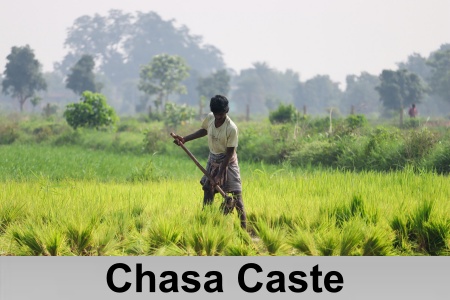
Chasa Caste
Chasa caste is a prominent agrarian community native to Odisha. Traditionally associated with cultivation and farming, Chasas have historically played...
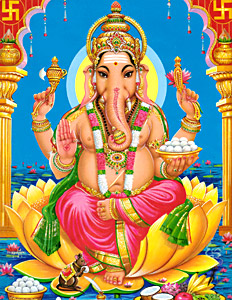
Vigneswara, A Form of Lord Ganesha
Lord Vigneswara is another form of Lord Ganesha or Vinayaka, prominently worshipped as the God of intelligence and good luck in the Indian subcontinen...

Maheswara
Maheswara, meaning “the Great Lord,” is a revered name of Lord Shiva in Hindu tradition. It represents Shiva’s supreme authority over creation, preser...
Anganyasa and Karanyasa
Anganyasa and Karanyasa are preparatory rituals in Hindu worship that sanctify the body and hands through the recitation of sacred mantras and symboli...
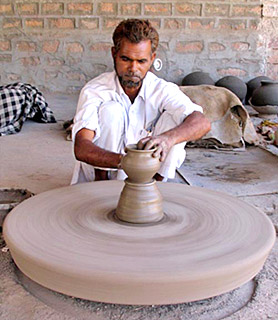
Kumbhakar / Kumhar Caste
Kumbhakar or Kumhar caste is a traditional artisan community in India known for pottery making. Derived from Sanskrit word Kumbhakar, meaning potter,...
Related articles in Religion in India

Religion in Indus Valley Civilization
Religion in Indus Valley Civilisation included Hinduism, Buddhism and Jainism. Details about the religion in Indus Valley Civilization have been gathe...

Iyer Brahmin
Iyer Brahmins are originally from Tamil Nadu of South India. They are known for their adherence to Advaita philosophy and Smarta traditions. Tradition...

Kumbhakar / Kumhar Caste
Kumbhakar or Kumhar caste is a traditional artisan community in India known for pottery making. Derived from Sanskrit word Kumbhakar, meaning potter,...

Gujjars in Mughal Era
Gujjars in the Mughal era enjoyed great power. Further their power increased with the decline of Aurangzeb, Mughal emperor.

Gotra in Hinduism
In Hinduism, gotra refers to a lineage system tracing descent from ancient sages, primarily through the paternal line. Originating from Vedic traditio...