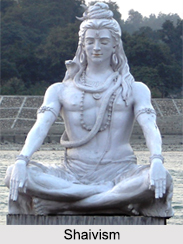
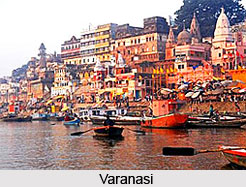
 In the Holy Scriptures and the great epics like the Mahabharata and in the Indian Puranas numerous passages are dedicate to eulogize the glorification of the holy places. Kashi in Varanasi is considered as one of the Hindu sacred places. It is the most celebrated and had acquired importance as a sacrosanct in later Vedic ages. It is primarily a Shaiva centre and has existed as the religious and intellectual capital of Hindu for at least a period of two millennia. It is considered with veneration that to die in the heart of Kashi (Varanasi) and be cremated on the banks of the River Ganga is extremely providential and such individual attain Moksha.
Rameswaram temple is another Shaiva centre, and is considered immensely sacred as the Hindu religious center. There is a popular belief related with Kashi and Rameswaram. The belief runs that Kashi must be visited first and after water has been procured from the Ganga, the pilgrimage should be made to Rameswaram to wash the lingam there with that water. According to the Shaiva tradition, there are many kinds of lingams among which significant are those which represent the five elements. Some of the important centers which are associated with these lingams are Srisailam, Kalahasri and Chidambaram, which are considered immensely sacred.
The confluence of rivers is especially sacred according to the Hindu religious beliefs. Following this belief, many sacred placed seem to have sprang up in the confluence of the sacred rivers in India. The most famous is Prayag among the sacred places, which grew up in the confluence of the sacred rivers like Ganga River, the Yamuna River and the mythical Saraswati. Great gatherings are held here periodically (particularly on the Makar Sankranti day in the month of Magha) in order to offer worship to the Lord. The Hindu religious belief dictates that it is providential if a bath is taken at the confluence on the sacred religious occasions.
Haridwar is another ancient place sanctified as a pilgrimage.
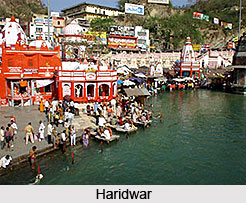 The hallowed spot is associated with Daksha (one of the primeval progenitors). Gaya and Nasik are among the sacred places preferred for performing the rites for departed relatives. Moreover according to the Hindu Shastras one may perform a Shraddha for oneself at the sacred spot of Gaya. Kurukshetra, Mathura and Vrindavan are associated with the life of Lord Krishna; hence these are revered as the sacred religious centers. Puri is famous for the car festival of the Lord Jagannath. Kamakhya temple is a traditional Shakta centre. Kanchipuram, Gokama, Dwaraka and Sringeri are other important centers of pilgrimage.
The temple of Venkatesvara in Tirupati, Andhra Pradesh attracts more pilgrims than any other shrine in India. Pandharpur, Maharashtra, Bhadrachal, Andhra Pradesh, Tiruchendur and Pazhani, Tamil Nadu and Guruvayur temple and Sabarimala, Kerala are popular centers of worship.
However a large number of religious centers belong to the different communities in India. Some are the famous Shaiva centers, while some sacred places are dedicated to Lord Vishnu or other. Whatever the fact is, the panorama of the traditional Hindu religion is immensely vast and it contains different communities. Hence the sacred religious centers are meant for different communities.