


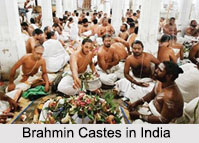
 Brahmin Caste in India refers to the class of educators, law makers, scholars, priests and preachers of Dharma in Hinduism. The concept of Brahmin caste had started from the Vedic times. Brahmins are the members of the highest of the four varnas. According to Hindu mythology, Brahmins are the creations of Lord Brahma, God of knowledge and education. Brahmin Caste in India refers to the class of educators, law makers, scholars, priests and preachers of Dharma in Hinduism. The concept of Brahmin caste had started from the Vedic times. Brahmins are the members of the highest of the four varnas. According to Hindu mythology, Brahmins are the creations of Lord Brahma, God of knowledge and education.
Types of Brahmin Caste in India The Brahmin caste in India has been broadly divided into two divisions based on regions. They are ‘Pancha-Gauda Brahmins’ from North India and ‘Pancha-Dravida Brahmins’ from the South India. The Pancha-Gauda Brahmins have further been divided into five classes. They are; 1. Saraswat Brahmins 2. Kanyakubja 3. Maithili Brahmins 4. Gauda Brahmins 5. Utkala Brahmins The Panch Dravida Brahmins are also divided into five classes. They are; 1. Andhra 2. Dravida 3. Karnataka 4. Maharashtra and Konkan 5. Gujarat 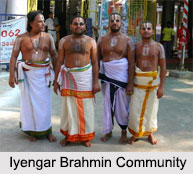 Various Brahmin Castes in India Various Brahmin Castes in India
In different states of India, the Brahmin caste appears with individual names and individual practices. Some of the well known Brahmin castes in India are Anavil Community, Andhra Brahmin Community, Ayyangar Brahmin, Ayyar Brahmin, Chitpavan Brahmins, Deshastha Community, Karhada Community, Kashmiri Brahmin Community, Madhava Community, Mohyal Community, Nagar Brahmins, Rarhi Brahmins, Barendra Brahmins, Dhadich Brahmins, Bhumihar Brahmins and a lot more. Anavil Community: This community of Brahmins date back to era of Ramayana. They claim that their lineage is linked to the sages of the Yajur Veda. They were mostly concentrated in South Gujarat and have flourished in administrative services. Andhra Brahmin Community: The origin of the Andhra Brahmins can be traced back to the 2nd Century BC. This erudite community proved to be a lot of help as counsels to the ruling class. Today they are concentrated in Andhra Pradesh. The cultural contribution of Andhra Brahmins has been immense. Ayyagar Brahmin Community: They are the followers of Ramanuja’s principles. This sage advocated Visistadvaita. This community has also been witness to the Bhakti cult. They are generally quite orthodox about their religion and social set up. They are also considered one of the most talented Brahmin communities. Ayyar Community: The biggest Brahmin community in South India constitutes of the Ayyars. They are mainly concentrated in Kerala and Tamil Nadu. They are in love with their age old traditions and customs. Indian literature is indebted to this community for their literary contribution. Chitpavan Brahmins: This particular community belongs to Maharashtra. Their origin is steeped into legends. Historically it was during the Maratha rule that they came into prominence. They are also popular for their contribution in the nationalist struggle. 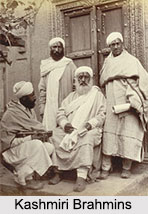 Deshastha Brahmins: The region around the Krishna and the Godavari rivers and plateau of the Sahyadri Hills are hailed as the birth land of the Deshastha Brahmins. Today they have settled in the states of Maharashtra, Andhra Pradesh and Karnataka. Deshastha Brahmins: The region around the Krishna and the Godavari rivers and plateau of the Sahyadri Hills are hailed as the birth land of the Deshastha Brahmins. Today they have settled in the states of Maharashtra, Andhra Pradesh and Karnataka.
Kashmiri Brahmins: As their name suggests they have originated from the valley of Kashmir. Till date they have successfully stuck to their Vedic Aryan root. India has always had some Kashmiri Brahmin or the other to serve her in the form of poets, scholars, statesmen and diplomats. Madhava Brahmins: Madhava community is the follower of Lord Vishnu or simply, Vaishnavites. They are settled in Karnataka, Tamil Nadu, Andhra and parts of Maharashtra and are also known as Tuluva Brahmins. They have been influenced greatly by the principles of Madhavacharya and his Dvaita Philosophy. |
| |||



Home > Society > Indian Religion > Types of Religion in India > Hinduism Religion > Brahmin Castes in India
Brahmin Castes in India
| Brahmin Castes in India have been divided in different communities. The two popular divisions in India are the North Indian Brahmins and the South Indian Brahmins. |
| ||||||||||||||||||||||||||||

