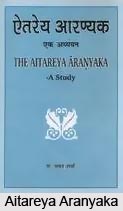
 Aitareya Aranyaka has five chapters, each of which is even considered as a full Aranyaka. The explanations given in Aitareya Aranyaka are both ritualistic as well as absolute. The first three Aranyakas are dedicated to Mahidasa Aitareya, the fourth is a collection of Mahanamni verses and the fifth Aranyaka is attributed to Ashvalayana.
The first one deals with the schedule known as `Mahaavrata` and saman stotras which are to be sung daily. The second chapter of it contains six episodes of which the first three are about `Prana vidya`. Here, the Prana means the vital air that constitutes the life-breath of a living body is also the life-breath of all mantras, all Vedas and all Vedic declarations. The specific statements about how one who follows the Vedic injunctions and performs the sacrifices is found in this part of the Aitareya Aranyaka. It also explains how these sacrifices go to the God of Fire or the Sun or Air. This part of Aitareya Aranyaka describes that who transgresses the Vedic prescriptions is born into lower levels of being, namely, as birds and reptiles. The third chapter constitutes Samhita Upanishad. Several sages of the Vedic periods have been mentioned.
The fourth Aranyaka has Mahanamni verses. The fifth Aranyaka deals with Nishkevalya shastra which is recited during Mahavrata rite. The Aitareya Aranyaka recommends Prana to be worshipped in the form of Rishis. Prana is said to be Vishwamitra because the entire universe or `vishwa` is the object of experience of this Prana deity. This Aranyaka describes the Prana as `Atri Maharishi` because the word `traayate` in Atri indicates the Prana that protects from sins. The Aitareya Upanishad constitutes the 4th, 5th and 6th chapters of this second Aranyaka.
This article is a stub. You can enrich by adding more information to it. Send your Write Up to content@indianetzone.com