Most of the Hindu customs have rational bases behind them and consequently do not deserve to be brushed aside as useless and born of ignorance and superstition. Hindu customs are both rational and acceptable. All can say this as starting from their mode of dress to the performance of elaborate sacrifices, festivals, rites and ceremonies. These are acceptable from the simplest to the most complicated customs of the Hindus.
Though the mode of dressing of the majority of the present day heterodox Hindus has completely changed. Yet there are a few orthodox Hindu men and women in remote corners of obscure villages far away from the din and bustle of modern civilization. They still adhere to the old habits of their forefathers even in the mode of their dress. The ladies, though poor, would not wear a cloth unless it contains at least a small percentage of silk thread in it. The men struggling hard to make both ends meet, would not wear a cloth devoid of borders of silk thread. One may be tempted to ask that why do they cling to this custom with tenacity worthy of better causes. The answer from the simple-minded wearer would fill the mind of the questioner with wonder at the profound wisdom of the ancients and serve the purpose of an eye-opener. The case is reconsidered if it is not thoroughly prejudiced, beyond the possibility of easy openness and flexibility.
The explanation for the custom may be highly scientific verging on the question of the preservation of human magnetism and so on. These forces are invisible and not tangible. Ordinary people could not understand the invaluable benefit which a few threads at least of silk in a piece of woven cloth would confer on its wearer.
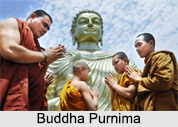
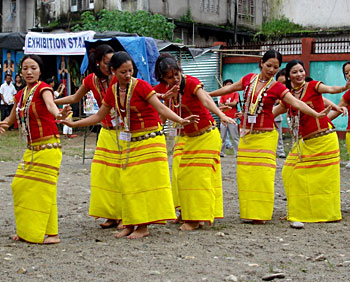
The use of the Birkenhead filter could not be understood by the laymen. It is not understood even by many of the educated, unless and until the sediment left after the process of filtration. It opens their eyes to the quantity of dirt swallowed and taken into the system, by men using water considered satisfactorily pure. A doctor would never use the ordinary water from the tap to prepare his mixture for his patient, since he knows how impure it is. Similarly the sages of old knew the nature of the invisible forces of nature and their effect on men, animals and plants. They designed the various customs to serve the purpose of utilizing these forces as best as they could for human advantage. So the process can be forwarded on the assumption that the yellow colored robes worn by Brahmacharis and newly married couples of the Hindus can disclose certain set purpose. Why the yellow dye is selected to colour the robes out of all the dyes. It is because yellow colour symbolizes intellect and a Brahmachari and a Grihasta begin to develop it after Upadesam or initiation in the way of doing it.
Each of the cosmic centres is responsible for the flash of a certain colour in the solar light or human bodies, both visible and invisible. Human will is the switch-board to connect or disconnect the circuit of micro-cosmic centres or the centres in man with the micro-cosmic ones. One switch colours the human body formed of finer invisible stuff yellow, another rosy-red, and so on. This is mentioned in the Upanishads of the Hindus. So the yellow robe worn symbolizes the fact that the individual has just been instructed in the use of a particular switch in the switch-board, if he is a Brahmachari. The yellow robes worn by married couples symbolize the fact that they together are beginning to tread the pathway of wisdom or knowledge of the Supreme.
Further, colours in flowers serve the purpose of attracting insects to facilitate the process of seed formation, bringing about the union of the `pistil` and the `pollen`. Similarly, colours serve the purpose of attracting desirable or undesirable beings of the super-physical worlds. The yellow robes attract denizens of the finer worlds to those wearing them. Their presence and the vibrations radiating from them, help such in the attempts they make at the progress towards the goal of attaining supreme knowledge. What is now considered beyond human ken, was within the experience of lads of six and seven in bygone spiritual age. The reflux of the materialistic wave is sure to bring in its wake the old order of things when every Hindu custom will be revived and welcomed as a boon conferred on humanity by the wise sages of old.