Practice and detachment develop four types of samadhi - self-analysis, synthesis, bliss, and the experience of pure being.- this very truth gains a dimension in the seventeenth yoga sutra
Vitarka analytical thinking or analytical study, argument, inference, conjecture
Vicara reason, meditation, insight, perfect intelligence where all logic comes to an end
ananda elation, bliss, felicity
asmitdrupa consciousness of being one with oneself
anugamat by accompanying, by following, comprehending,
grasping
samprajndtah distinguish, know actually, know accurately
Practice and detachment develop four types of samadhi - self-analysis, synthesis, bliss, and the experience of pure being.
Four types of awareness develop through practice and detachment. Absorption of the consciousness, achieved through engrossment in conjecture, inference and analytical study; synthesis, consideration and discrimination; bliss or elation; and a state of pure being, make up samprajnata samadhi.
Here a distinction is distinguished between the seer and the seen. Samprajnata samadhi consists of vitarka, engrossment in analysis, vicar - engrossment in reasoning, ananda - experiencing a state of bliss, and asmita - experiencing the state of `I`.
Vitarka is an act of involvement by calculated thinking and study, which leads to the ultimate point or root cause. It is an attempt to differentiate the cause from the effect, a process of astute experimental research from the gross to the subtle. Intellectual analysis, vitarka samprajnata, being a function of the brain, generates relative and conditioned knowledge. It is crass and is deficient in refinement. It is further divided into deliberation, savitarka and non-deliberation, nirvitarka.
Vicara stands for differentiating knowledge. It is a process of investigation, reflection and consideration through which the straying conjectural brain is silenced and the sadhaka develops mental depth, acuteness, refinement and subtlety. Vicara too is sub-divided into reasoning, savicara and non-reasoning, nirvicara.
As the growing body of experience conveys maturity, fulfilment is reached and a state of ecstasy, ananda, results, liberating the sadhaka from the mechanism of study, investigation and fulfilment and leading him to dwell in the self alone. This state is called asmita riipa samprajnata samadhi. Therefore, all six gradations of sabija samadhi (samadhi with support or seed) - savitarka, nirvitarka, savicara, nirvicara, ananda and asmita - are explained.
There is a 7th stage of samadhi, virama pratyaya, so called asamprajhdta samadhi, and an 8th, called dharma megha or nirbija samadhi.
As external objects are vulnerable to change, deliberation might not be pure. One should go from the fringe to the source. Vicara is beyond vitarka, ananda is beyond vitarka and vicara, and asmita is beyond vitarka, vicara and ananda. This is the steady progress from the gross body towards the subtle mind, and from the subtle mind towards the source, the nucleus of being.
Savitarka and nirvitarka samadhi belong to the function of the brain, and are achieved by rumination on gross elements and objects cognisable through the senses. Savicara and nirvicara samadhi belong to the territory of the mind and are achieved by contemplation of subtle elements, and ananda belongs to the territory of mature intelligence. Ananda must be assigned not to the senses, but to pure wisdom. Contemplation by the self of the self brings one close to purusa. Here, the self is free of ego.
It is assumed that the front of the brain is the analytical part (savitarka), while the back of the brain is the old, reasoning area (savicara). The base of the brain is the seat of ananda, and the crown of the head of the individual self, asmita. Sabija samadhi is accomplished by drawing these four facets of the brain towards its stem.
When this synchronisation has been attained, a passing state of quietness, manolaya, is experienced. Then, from the stem of the brain, consciousness is made to fall towards the source mind, the seat of the heart. Here it unites into a mindless, beginningless, endless state of being - amanas-katva, or nirbija samadhi (samadhi without seed or support). It is the conquest of the spirit.
In between sabija and nirbija samadhis, Patanjali traces an intervening state, virama pratyaya, which others call asamprajnata samadhi. It is a spiritual plateau (manolaya), a passing state or a resting place before one dives into nirbija samadhi.
Through practice and renunciation each and every part of human - the skin, the cells, the breath, the motions of thought, intelligence and reason become acquainted with the self. This is known as samprajnata samadhi. The sadhaka`s intelligence spreads equally within and around his body, similar to the surface of a lake without ripples. Then he perceives things clearly. In this samprajnata samadhi or contemplation, the disparity between the seer and the seen stays on.
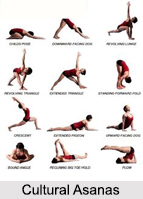
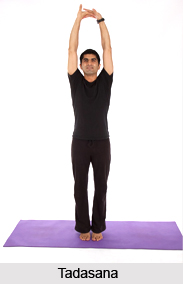
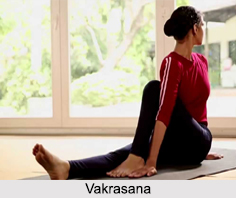
For instance, the performance of an asana, or movements of breath pranayama at the outset, these are done at a physical level. As understanding intensifies, the body is imbued internally, its movements are connected with the intelligence, and the asana is apprehended as a single unit for all directions - front to back, top to bottom, side to side. It is absorbed and withheld by the body`s intelligence for the soul to perceive. One learns that one`s body is the bow, the asana is the arrow, and the target is the soul. When the asana is perfected, the target is hit - the field and the knower of the field are unified. The logic and reasoning of the asana are gratified, the sadhaka, having lost the consciousness of the asana and of his body, is one with himself. His asana, his breath, his effort and his very being are one with the millions of cells in his body. He has accomplished sasmita - the auspicious state of asmita.
Patanjali generally addresses at several levels at once, therefore it is not unreasonable to explain vitarka, vicara, ananda and asmita in relation to asana.
When one begins to practise asana, the general method is largely hit or miss - `let me try this; let me try that`. It is a process of trial and error based on hypothecation. That is the nature of vitarka. It is adventurous rather than calculating, but it does not forget its faults; one then evolves to the stage one might call vicara - where a body of experience has been built up from investigation, mature consideration and dawning discrimination. As one`s asanas mature, he or she reaches a stage when skin-consciousness proceeds towards the centre of being, and the centre radiates towards the fringe. Movement is both centripetal and centrifugal. This integrity fetches bliss - ananda. Eventually, when the conscious mechanism by which one considers and performs asana comes to an end, the process reaches a resting point. The asana then rests only in the inner self which is in poise - the only support is asmita.