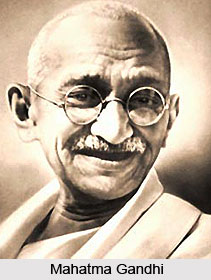
 This movement was popular as `do or die`. The evening after the Quit India Resolution was passed, Gandhiji addressed some memorable words to the Indian people. The words were very electrifying as, "Every one of you should from this moment onwards consider yourself a free man or woman and act as if you are free. ... I am not going to be satisfied with anything short of complete freedom. We shall do or die. We shall either free India or die in the attempt."
The next morning Gandhiji and all other important Congress leaders were arrested. The government hoped this would stifle the movement. But the rulers had not correctly gauged the changed mood of the people. Spontaneous acts of protest hartals, strikes, processions followed the arrests. Students played a major role in organizing these demonstrations, which at first were mostly non-violent. The police replied with more arrests, lathi-charges, and firings. In widespread areas of the country such as in Bihar, Bombay, the United Provinces, the Central Provinces, Madras people began attacking symbols of the oppressive foreign government. Post offices were burned, trains were derailed and telegraph lines were properly cut. Factories were closed and the production of war materials was suspended.
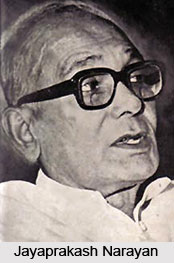
With the breakdown of communications, parts of the country were cut off. British rule virtually ceased to exist in these areas. For a while `parallel governments` functioned in Midnapur in Bengal, Ballia in UP, and in some other towns and districts. Groups like Jugantar, Anushilan, and the Hindustan Socialist Republican Army took advantage of the general chaos to engage in revolutionary activities. Members of the Congress Socialist Party tried to co-ordinate these operations into a regular guerrilla campaign. They did it under the direction of Jayaprakash Narayan.
 The government`s `leonine violence` had given rise to a popular violent reaction. As always, this led to more violence. Since the Punjab crisis of 1919, for the first time, the authorities sent soldiers against the civilian population. The British had all the death-dealing machinery of modern warfare at their disposal, and they used it mercilessly. Thousands were killed and wounded in military operations, which included machine-gun firing and bombing from airplanes. The Indian police made tens of thousands of arrests, and resorted to bestial methods to quell the uprising. By the end of September the British were again in control of the country. The last embers of revolt were extinguished in 1943.
There followed two years of ominous silence. During this period Bengal and parts of Orissa, Bihar, and Madras suffered a terrible famine. It was the repetition of a familiar story of the nineteenth century. But at this time in presence of modern transportation, such a tragedy was impossible. The government provided belated relief operations. More than three million men, women and children died in that famine.