 Lahore Resolution had been the pioneering step of the Muslim League towards the creation of Pakistan. Also known as Pakistan Resolution, the Muslim League adopted a formal resolution in the three day session held from 22-24th March 1940 regarding their claim for a separate state with Muslim majority. While the resolution was presented by A.K. Fazlul Haq, the name Pakistan was initially suggested by Choudhury Rehmat Ali in his Pakistan declaration. The Lahore Resolution remained relevant in the history of India as with this for the first time a formal resolution was passed claiming for division of the United India on the basis of religion. This marked the growing disbelieve of the Muslims living in India on the efforts of Indian National Congress. Though such a division had taken place during the partition of Bengal, the repetition of the same on the western side was treated to be more alarming as the number of people affected was much larger.
Background of Lahore Resolution, 1940
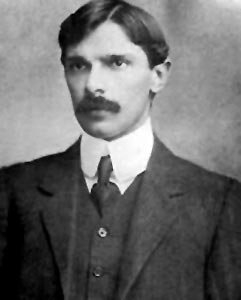
With the onset of the Second World War and forcible entry of India in the war, the sense of insecurity on the part of the Muslims was increased. The League heavily criticised the British government as well as the Indian National Congress. As such it now decided to get separated by from the Congress. Jinnah was more concerned by the results of general elections of 1937 elections where the league failed immensely in all the Muslim majority areas. With this background Jinnah`s main concern was to secure the interest of the Muslim community for the future.
Proceedings of Lahore Session and Jinnah`s Two Nation Theories 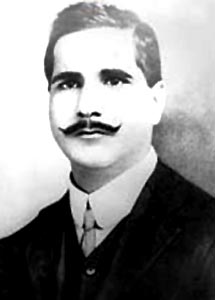
The Lahore session began with the welcoming speech of Nawab Sir Shahnawaz Mamdot. During this session Jinnah criticized the Congress and the nationalist Muslims and recounted that he problem of India being dragged in the war is no more an internal crisis but is of international interest. Within this session Muhammad Ali Jinnah propounded his famous Two Nation Theory in which he claimed the Hindus and the Muslims were two separate entities and that it was a mistake to assume that Muslims were a minority; rather they were a nation by any definition. He further claimed that the Hindus and the Muslims belong to two different religious philosophies, social customs and literature. They neither intermarry nor interdine. As such it was viable that these two communities get separated and form two nations. It was rather not sensible to put these communities under one political roof. This formed the base of the new nation called Pakistan which continued till the end.
The Lahore session was originally drafted by Sikandar Hayat Khan, the Unionist
Leader. The resolution text unanimously rejected the concept of United India on the ground of inter-communal disorder and creation of a separate Muslim nation. The Lahore Resolution was then placed in the general session of Muslim league clearly stating the causes for the demand for a separate state. Immediately it was supported by the heads of Punjab, North Western Frontier Province, Sindh and Baluchistan. The formal resolution for Pakistan was first passed by the Sindh Assembly. The Lahore formally came into existence on 23rd March 1940 and it was formed the constitution of Muslim league from 1941 which finally took its formal shape in the form of Pakistan on 14th August 1947.To commemorate the day League established a 60mts tall Minar -e - Pakistan at the place where the resolution was passed. Further 23rd march was also celebrated as the republic day of Pakistan.
Overall it can be said that the Lahore Resolution carried the germs of the communal difference which formally took the shape of a new state made on the based on religious differences leading to the creation of anew independent state of Pakistan.