


 The tasmin sati svasa prasvasayoh gativicchedah pranayamah sutra speaks in minute details about the matured effects of pranayama, the elementary step towards inhalation and exhalation. Pranayama is divided into two distinct words - prana and ayama. Prana constitutes the basis of the universe, it is a self-energising force. It is the fundamental basis of every type of energy - mental, physical, sexual or intellectual. The entire universe and its gravitational force acts in accordance with prana. Ayama stands for everything that can be prolonged, expanded, or stretched. When both the prana and ayama embrace each other, pranayama is successfully created. Prana is permeated all through the body like electrical force is generated from turbine water. Thus, by practicing pranayama, the five elemental compositions of the universe fuses with the senses within, and a free flow of energy is produced. The tasmin sati svasa prasvasayoh gativicchedah pranayamah sutra speaks in minute details about the matured effects of pranayama, the elementary step towards inhalation and exhalation. Pranayama is divided into two distinct words - prana and ayama. Prana constitutes the basis of the universe, it is a self-energising force. It is the fundamental basis of every type of energy - mental, physical, sexual or intellectual. The entire universe and its gravitational force acts in accordance with prana. Ayama stands for everything that can be prolonged, expanded, or stretched. When both the prana and ayama embrace each other, pranayama is successfully created. Prana is permeated all through the body like electrical force is generated from turbine water. Thus, by practicing pranayama, the five elemental compositions of the universe fuses with the senses within, and a free flow of energy is produced.
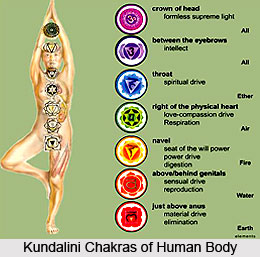
tastnin on this sati being accomplished svasa inbreath, inhalation prasvasayoh outbreath, exhalation gati movement, motion, path, course, way vicchedah cessation, stoppage, interruption pranayamah (prana = breath, vital force; ay amah = ascension, extension and expansion or length, breadth and circumference) regulation of breath, expansion of the life force or vital energy by regulation of breath. Pranayama is the regulation of the incoming and outgoing flow of breath with retention. It needs to be practised only after perfection in asana has been attained. Pranayama, the fourth constituent of yoga, is what the heart is to the human body. It is fascinating to note that Patanjali expressly advises the sadhaka to perform pranayama only after attaining perfection in asana. For the first time, he demonstrates a distinct step in the ascension of the ladder of yoga, whereas he has not specified progression for the other aspects. Normally the flow of breath is unrestrained and irregular. Observing these variations, and conditioning the mind to control the inflow, outflow and retention of the breath in a regular, rhythmic pattern, is pranayama. Prana is an auto-energising force which creates a magnetic field in the form of the Universe and plays with it, both to maintain, and devastate for further creation. It interpenetrates every individual, as well as the Universe at all levels. It acts as physical energy; as mental energy, where the mind gathers information; and as intellectual energy with a discriminative faculty, where information is examined and filtered. This same prana acts as sexual energy, spiritual energy and cosmic energy. All that vibrates in the Universe is prana - heat, light, gravity, magnetism, vigour, power, vitality, electricity, life and spirit are all forms of prana. It is the cosmic personality, powerful in every being and non-beings. It is the prime mover of every activity. It is the wealth of life. This self-energising force is the principle of life and consciousness. It is the creation of all beings in the Universe. All beings are born through it and live by it. When they die, their individual breath dissolves into the cosmic breath. Prana is not only the nucleus of the wheel of life, but also of yoga. Everything is established in it. It pervades life, creating the sun, the moon, the clouds, the wind, the rain, the earth and all forms of matter. It is both being (sat) and non-being (asat). Each and every thing, or being, including man, takes shelter under it. Prana is the elementary energy and the source of all knowledge. Prana (energy) and citta (consciousness) are in constant contact with each other. They are like twins. Prana becomes focussed where citta is, and citta where prana is. In yogic texts, it is said that as long as the breath is still, prana is still, and hence citta is still. Every type of vibration and fluctuation comes to a standstill when prana and citta are steady and silent. The prudent yogis studied this correlation between breath and consciousness and recommended the practice of pranayama to stabilise energy and consciousness. The word pranayama consists of two components - prana and ayama. Prana is energy, when the self-energising force encompasses the body. Ayama means stretch, extension, expansion, length, breadth, regulation, prolongation, restraint and control. When this self-energising force encompasses the body with extension, expansion and control, it is pranayama. In the Srimad Bhagavatam, the story is told of how 'the nectar of immortality' was produced by churning the ocean. This story, as will be understood from the interlacing explanation, symbolises what takes place in the human body - during the practice of pranayama. The might of the asuras (demons) had appalled the devas (angels), who, fearing that vice would dominate virtue, approached Lord Shiva, Lord Brahma and Lord Indra, who in turn approached Lord Vishnu, protector of the Universe, for help. Lord Vishnu suggested the churning of the ocean to bring out the nectar (amrita) of immortality hidden within it. He advised the devas to discuss with the demons the effects of the nectar, and to convince them to jointly churn the ocean. Lord Vishnu assured that he would do the rest. The angels and demons decided to use Mount Meru as the churn-staff for the churning, and Lord Adisesa, the serpent, the couch of Lord Vishnu, as the rope for twirling the mountain. Plants, creepers, various grasses and herbs were gathered together and thrown into the ocean as raw materials so that they might be churned to produce the nectar of life. According to ayurveda, the body is made up of seven constituents (dhatus) and three permeating humours (dosas). The seven elements are so-called because they nourish the body. They comprise - chyle (rasa), blood (rakta), flesh (mama), fat (meda), bones (asthi), marrow (majja), semen (sukra). They keep the body resistant from infection and diseases. They are churned together in pranayama for the creation of the nectar of life. Mount Meru symbolises the spinal column; it acts as a whisk to churn the breath to produce energy. Lord Adisesa symbolises susumna - it is the rope which dashes or controls the spine in respiration. The head and tail of Adisesa symbolise the pihgala and ida nadis (energy channels) or the upward and downward course of the in- and out-breath. Ida also corresponds to the parasympathetic nervous system in western medical terminology, pihgala with the sympathetic nervous system and susumna with the central nervous system. As Adisesa was used as a rope for churning, therefore inhalation and exhalation are the two ends of the central nervous system, the rod that churns to create the energy that is then stored in the seven chambers (cakras) of the spine. Together they churn the inbreath and outbreath to generate the vital energy known as prana. To return to the story - as the churning began, Mount Meru sank deep into the ocean. Lord Vishnu incarnated as Kitrma (tortoise), crawled underneath the mountain and lifted it from the floor of the seabed so that it might float and the churning could continue. Several gems were generated as a result of the churning. The last to spring out of the ocean was the amrita - the nectar of immortality. (Purusa or the soul symbolises Lord Vishnu and the body represents prakrti, or nature. The body becomes the fountain for production and the Lord of the body is its generative force. Atman acts as a tortoise to lift and keep the diaphragm floating upwards, allowing the breath to come in contact with the inner elements of the body (earth, water, fire, air and ether) and its seven constituents (chyle, blood, flesh, fat, bones, marrow, semen), as well as the ten types of vital energy - prana, apana, samana, udana, vyana, naga, kurma, krkara, devadatta and dhanamjaya. Through the contact of these seven constituents and ten vital energies, and with the help of the seer, the spine and the breath, the elixir of life-force is produced in the body. This prana is now known as bio-energy. As prana is a self-energising force, it generates more power through the process of pranayama. The first thing to spring from the ocean was the poison called halahala. This was swallowed by Lord Shiva, who alone was capable of imbibing it. This halahala symbolises the toxic output of exhalation. The life elixir is produced by the five primary elements, which are its raw material. Earth is the base for production and ether acts as a distributor of energy. Air is active in the processes of breathing in and out. This stirs and creates a fusion of the elements of water and fire, which by nature are opposed to one another, resulting in the production of electrical energy, known as life force. In Sanskrit, this is called ojas, spiritual lustre. The generation and distribution of prana in the human system may be compared to the production and functioning of electrical energy. Stored water is stale; running water has a vibrant life-giving force. Water running with minimal force cannot generate electricity. Through the construction of a reservoir, water falls on turbines which whirl with speed and force for the production of energy. The energy of falling water or rising steam is made to rotate turbines within a magnetic field to generate electricity. The power is stepped up or down by transformers which regulate the voltage or current. It is then transmitted along cables to light-up cities and run machinery. Prana is like the falling water or the rising steam. The thoracic area is the magnetic field. The practice of pranayama makes the spindles act as turbines and transmits the drawn-in energy to the remotest cells of the lungs for yielding energy. Energy is accumulated in the cakras which are situated in the spinal column and act as transformers. This energy generated in the thoracic cavity is like electricity. It is stepped up or down by the cakras and is spread throughout the body through the transmission lines of the circulatory and nervous systems. The yogis discovered pranayama for making full use of this drawn-in energy, so that it might maintain the whole human system, comprising the respiratory, circulatory, nervous, digestive, excretory and reproductive systems with optimum efficiency and harmony. In pranayama, the carpet of the mucous membrane of the nostrils filters and cleanses the breath as it enters in inhalation. Upon exhalation, adequate time is given for the system to absorb the drawn-in energy so that the breath may mingle with the blood. This purified blood, filled with chemical properties and hormones, is called 'a constituent full of jewels' or 'the jewel of blood' (ratna purita dhatu). Full use of this absorption and re-absorption of energy will allow one to live a hundred years with perfect health of body, clarity of mind, and equipoise of spirit. That is why the practice of pranayama is considered a great science and art. |
| |||



Home > Health > Yoga > Patanjali Yoga Sutras > Sadhana Pada > Tasmin sati svasa prasvasayoh gativicchedah pranayamah
Tasmin sati svasa prasvasayoh gativicchedah pranayamah
| This is the forty-ninth yogic sutra, which is contained within the second phase of the Patanjali Yoga Sutras. |
| ||||||||||||||||||||||||||||

