Introduction
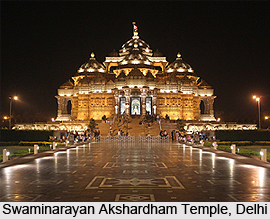 Hindu temples in India are regarded as sacred places for the people following Hindu religion, where man can forget all his sorrows and connect himself with almighty God. In most of the temples there is the presence of `murtis` or idols of the Hindu deity to whom the temple is dedicated. They are usually dedicated to one primary deity, called the presiding deity, and other subordinate deities associated with the main deity. Some of the temples are dedicated to several deities, whereas some have symbols instead of a `murti`.
Architecture of Hindu Temples in India
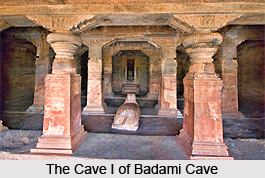
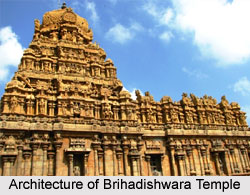
The main focus of temple architecture in Vedic India was to blend the temple with its natural surroundings. A major consequence of this style of temple design was the construction of several cave temples across the Indian subcontinent. Most of the early Hindu cave temples were carved out of a single large rock. A prominent feature of these cave temples was the elaborate sculptures of various Hindu deities. Hindu temples are built on the principles of Vastushastra. The Vastushastras describe temple as a symbolic, miniature representation of the outer space. A typical Hindu temple consists of the following major elements - an entrance, often with a porch; one or more attached or detached mandapas or halls; the inner sanctum called the garbagriha, and the tower build directly above the garbagriha.
Iconography in Hindu temples
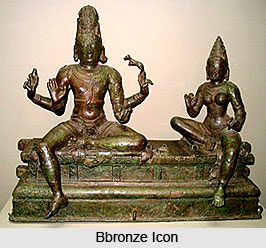 The temples are built as per Hinduism to keep the image of the deities. Therefore, the images and icons of deities are must to be found in a Hindu temple. Iconography in India is a very ancient science and art.
The references of icons and images of gods and goddesses in the temples were found in the Rigveda and in the Atharvaveda. Many ancient works also have reference of the same. The images in the Hindu temples can be grouped under three main categories: Saiva, Sakta and Vaishnava, respectively belonging to the three cults of Siva, Sakti and Vishnu. Again, the icons of the temples can be divided into `achala` or `dhruvabera` (immovable) or `chala` (movable). The previous icons are typically made of stone and are permanently fixed. While the latter icons are usually made of metals like bronze or panchaloha (alloy of five metals) and are used for taking out in procession on festive occasions for bathing, for ritualistic worship etc. A third category of icons called `calachala` (both movable and immovable) is added at times.
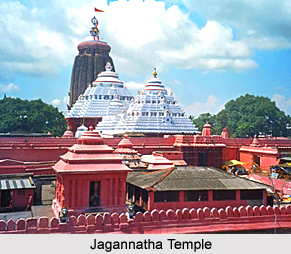
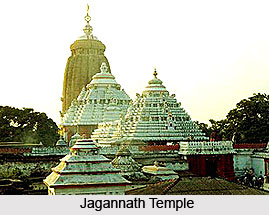
An icon is called `calachala`, when the same image that is kept and worshipped in the garbhagriha is also taken out on the ratha (temple car) like in the case of the temple of Lord Jagannatha at Puri (Orissa). Again, these icons can be seen in three postures: `sthanaka` (standing), `asana` (sitting) and `sayana` (lying down). The only icon, which is seen in the sayana posture also, is that of Lord Vishnu.
Deities have their own particular mudra (position of the hands and fingers), asana (posture of legs and feet), cihna (symbol), vasana (dress) and abharana (ornaments). These deities can be recognised by their particular forms. The dhayamudra (assuring protection), varadamudra (granting boons), padmasana (lotus posture) and yogasana (meditation posture) are most common mudras and asanas of the deities in their icons. The icons of all deities carry a particular symbol and vahana. Saiva and Sakta images have damaru (drum), trisula (trident), pasa (noose), arikusa (goad), bana (arrow), khadga (sword) and so on, as their symbols. Chakra (discus), sankha (conch), gada (mace) and padma (lotus) are symbols of icons of Vaishnava.
The dress and ornaments also have different variety in these icons. There are elaborate rules guiding the sculpturing of the icons. The height or length, width girths are also given a particular proportion. The limbs of these icons are fixed according to the tala mana system. A `tala` is the measurement of the palm of hand (from the tip of the middle finger to the wrist) and is equal to the length of the face. The navatala system is the total length or height of the image is nine times (`nava` means nine) the length of the face, is recommended for the icons of gods. These rules and regulations are sometimes changed by the sculptors for the sake of showing his creativity and skill.
Arts and Crafts of Hindu Temples
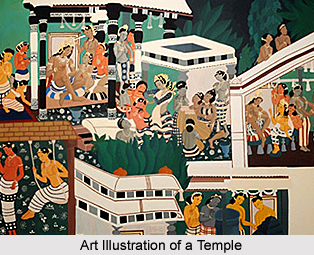
Arts and crafts of Hindu temples lays bare religious fervour mixed with artistic explorations. The >Hindu temples in India were mainly constructed and developed by various kings and rulers. Most of these kings were well known for their encouragement to arts, crafts and artisans.
Necessity thrives to be the watch word when one considers some basic aspects of the Hindu worldview. The notions are not only overarching and camouflaged under girding worldview concepts, to see how they form the background of specific sacred buildings in India. Those who are unfamiliar with Hinduism may hardly expect a simultaneous complex of ideas expressed in a massive structure. One might expect a single motif in a sacred structure a temple in the shape of a chariot, or a church shaped like a ship with an up-pointed prow and such one-theme structures do exist. But there are also Gothic cathedrals with designs that include a forest of spires, a floor plan which is cross-shaped, a rose window above the main altar and many other forms statues and symbolic art works displaying a combination of themes.
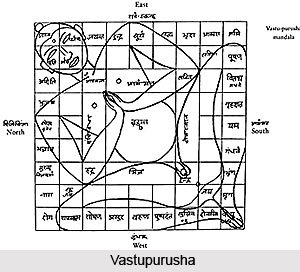
The Hindu temple typically involves a multiple set of ideas. Perhaps Hindu traditional architecture has more symbolic meanings than other cultures. It certainly is highly articulated. The temple is oriented to face east, the auspicious direction where the sun rises to dispel darkness. The temple design includes the archetypal image of a Cosmic Person spread out yogi-like; symmetrically filling the girded space of the floor plan, his navel in the centre, and it includes the archetype of the cosmic mountain, between earth and heaven, of fertility, planets, city of the gods, deities, etc.). One encounters these simultaneous archetypal themes and meanings conveyed (and hidden) in the semi-abstract forms in many Hindu temples. The temples were considered as the houses of the King of kings` i.e., of gods and goddesses. Hence, the kings could not keep the temples devoid of any art and crafts. The Hindu temples used to be very big in size and also acted as the biggest employers of the artists and the craftsmen. The Hindu temples provided the greatest security and encouragement to the artisans and artists.
There are a number of symbolisms combined in the Hindu temple. In fact the Hindu temple is a fusion of archetypes consciously combined and skilfully crafted into structures of abstract geometry and specific numbers. It is a grand synthesis which solves architectural problems using concepts from the characteristically Hindu religious vision of cosmic order. The temple is a visible sign of that mystery, an access point designed to solve life`s problems.
These artists and craftsmen made various art works and crafts within these temples and kept there for exhibition. Besides these, the other arts and crafts associated with the temples were music, dance, preparation of musical instruments, embroidery work on cloth, tailoring, preparation of perfumes and scents, making of flower-garlands, cooking of special dishes, astrology, building the ratha, etching or embossing on metal plates used in various ways, making of lamp-posts and stands, as also puja vessels in brass, bronze and copper, painting, gold and silver smithy, ivory craft and so on.
These art works flourished in these temples and later became a good trade due to these temples. The traces of those beautiful artworks and crafts can be seen till today in several Hindu temples.
"As from a blazing fire thousands of sparks fly forth, each one looking self-similar to its source, so from the Eternal comes a great variety of things, and they all return to the Eternal finally." Mundaka Upanishad. Indian Temples echo the similar attitude.
Vital parts of a typical Hindu Temple
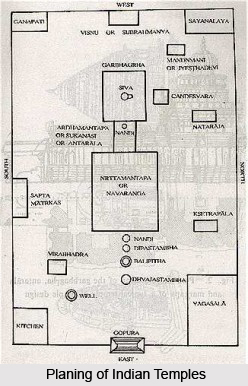 A Hindu temple consists of various parts and these are built keeping in mind those parts. The most important part of a temple is the `garbhagriha` or sanctum sanctorum. This part of a temple is usually of square shape with a low roof and with no doors or windows except for the front opening.
The temple contains the image of the deity in the geometrical centre. The whole place here is fully dark, except for the light that comes through the front opening. There is a small tower over the roof of the whole shrine. In the North Indian temples, this tower is quite high and it is of low or medium height in the South Indian temples. In some of the temples, a pradaksinapatha (a circumambulatory passage) is provided just round the garbhagriha, to enable the devotees to go round the deity. This passage is not available in the vesara temples.
In front of the garbhagriha and contiguous to it is the mukhamantapa, sometimes called sukanasi or ardhamantapa, depending upon its proportion relative to that of the garbhagriha. This is also used to keep the articles of worship including naivedya (food offerings) on special occasions. The other part of a typical temple is the `antarala`, a narrow passage connecting the garbhagriha and the mukhamantapa to the mantapa (pavilion or hall). But, in most of the temples, the antarala is identical with the mukhamantapa or sukanasi. The mantapa is also called nrittamantapa or navaranga and it is a big hall, which is used for congregational religious acts like singing, dancing, recitation of mythological texts, religious discourses and so on.
Another vital part of a temple is the dhvajastarhbha, which is in front of either the garbhagriha or antarala or the mantapa. It is said to represent the flag post of the `King of kings`. The lanchana (insignia) is another part of a temple, which is made of copper or brass fixed like a flag to the top of the post. It varies according to the deity in the temple. The lanchana has a figure of the vahana (carrier vehicle) of the residing deity. It is the figure of Nandi bull in case of Siva temples while it is the lion that finds its place in Devi temples. In Visnu temples Garuda gets that honour.
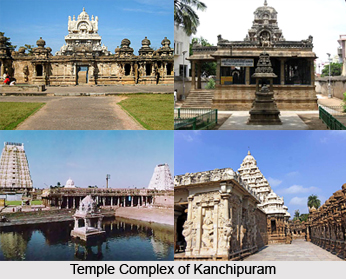 The balipitha (pedestal of sacrificial off ermgs) with a lotus or the footprints of the deity is one more vital part of a temple. It can be seen fixed near the dhvajastarhbha, but nearer to the deity. Red-coloured offerings like rice mixed with vermillion powder, are kept on this at appropriate stages during the performance of rituals. This is an indication of the feeding of the parivaradevatas (attendant and associate deities). A high wall (prakara) surrounds the temple with one main and three subsidiary gates, opening in the cardinal directions. These gateways are decorated with gopurams having high tower, which are sometimes called as the Cow-gate.
A typical Hindu temple contains minor temples or shrines inside the prakara, which are meant for the minor deities, connected with the main deity. For example, in a Siva temple, the minor shrines are dedicated to Ganapati, Parvatu Subrahmanya and Candesvara. Again in a Vishnu temple, Laksmi, Hanuman and Garuda find a place as minor deities. In a Durga temple, Siva, Ganapati and subrahmanya can be found.
Besides these, a typical Hindu temple include a yagnasala, (sacrificial shed), pakasala (cooking shed) and kitchen, place for the utsavamurti (processional image carried during the car festivals), well or a puskarinl (tank), flower garden, stores and other essential structures linked with the management of the temple as also the rituals. Another vital part of a Hindu temple is the `dipastambha` (lamp post), which often can be found in South Indian temples. It is situated either in front of the balipitha or outside the main gate. The top of this post has a bud shaped chamber to receive the lamp.
Symbology of the Hindu Temples
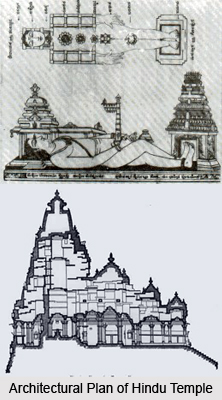 The temples are link between man and God between the earthly life and the divine life. Hence, it needs to be symbolic. The symbolic word `devalaya` used for temples frequently actually means `the house of God`. It is considered to be the place where God dwells on earth to bless mankind.
The term `Prasada`, which means a palace with a very pleasing appearance is also sometimes used to denote the temples. The dhvajastarhbha symbol represents the flag post on which flies the insignia of the deity. The outer walls, prakara, are the walls of the fort. The gopuram (high tower at the entrance) of the Hindu temples is one of the symbols, which represent the main gateway.
Another word `Vimana` is often used to denote a temple in general, and the `garbhagriha` (sanctum sanctorum) in particular. The simple etymological meaning of the word is a `well-proportioned structure`. It also means an aeroplane of the gods landed on the earth to bless mankind. In Hinduism, temples are regarded as a place for pilgrimage. A place of pilgrimage is called a `tirtha` and hence the temple is also called a tirtha. The temple is believed to help in crossing the ocean of samsara (transmigratory existence). The more significant is the conception of the temple, its plan and elevation. The `garbhagriha` horizontally represents the head and the `gopuram` represents the feet of the deity. Other different parts of the temple building complex are recognised with other parts of the body. For example, the `sukanasi` or `ardhamantapa` (the small enclosure in front of the garbhagriha) represents the nose of the deity, the `antaralai` (the passage next to the previous one, leading to passage next to the previous one, leading to the main mantapa called nrittamantapa) is supposed to be the neck of the deity. The various mantapas are said to be the body and the `prakaras` (surrounding walls) are the hands of the deity.
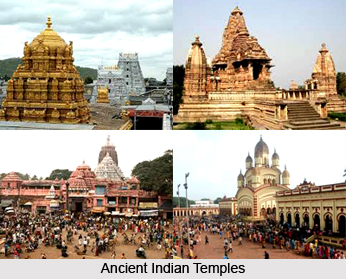 Again, vertically, the `garbhagriha` of the Hindu temple symbolises the neck; the `sikhara` (superstructure over the garbhagriha) identifies the head, the kalasa (finial) the tuft of hair (sikha) and so on. The Hindu temples also represent God in a cosmic form, with the various worlds located on different parts of His body. His feet are symbolised by the bhuloka (earth) and Satyaloka (also called Brahmaloka) forms His sikha, with the other lokas (bhuvarloka, svarloka. maharloka, janaloka and tapoloka) forming the appropriate parts of His body. The worlds bhuvah, svah, mahah, janah, tapah, and satyam are symbolised by the adhisthanapTtha (the base-slab below the image), the starhbhas (pillars), prastara (entablature, supported above the pillars), sikhara (superstructure over the garbhagrha), amalasara (lower part of the final) and the stupika (topknot or the finial) respectively. The Hindu temples also represent the `Meruparvata`, the mythical golden mountain described in the puranas (Hindu mythological literature), as the central point of the universe.
The Hindu temples symbolise this world in all its aspects, the actual and the ideal. The magnificent `gopurams` at the entrance symbolise the grand majesty of the external world. The animal world and the dull life of the ordinary human beings including the absurd side and the abnormalities are symbolised by the wall paintings and the sculptures on the external walls of the temple proper. These are followed by the scenes from the epic and mythological literature as also religious symbols and icons of gods and goddesses, to remind the onlookers of our great cultural and religious heritage.
As the temple symbolises the body of God on the macrocosmic plane, in the same way it also symbolises the body of man on the microcosmic plane. The names of the various parts of the temple are also the very names used to symbolise the various parts of human body. For example, the technical names of different things of the Hindu temples like the paduka, pada, carana, anghri, jarigha, uru, gala, grlva, kantha, sira, strsa, karna, nasika, sikha are symbols of different parts of human body. Gala or griva (neck) is the part between mouldings which looks like the neck. Nasika (nose) is any noseshaped architectural part of the temple and so on. The garbhagriha of the temple symbolises the heart and the image, the antaryamin (the sitting deity). This symbology tries to impress upon the devotees to seek the Lord within their own heart and not outside.
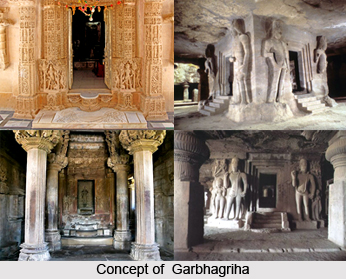 The Hindu temples also represent the delicate body with the seven psychic centres or chakras. The anahata cakra (the fourth psychic centre in the region of the heart) is symbolised by the `garbhagriha` and the topmost part of the kalasa point to the sahasrara (seventh and the last centre situated at the top of the head). The first three centres (muladhara, svadhisthana and manipura situated respectively near the anus, sex organ and navel) are below the ground level. The fifth and the sixth (visuddha and agna chakras, situated at the root of the throat and in between the eyebrows) are on the sikhara area.
The ground plan of a Hindu temple is often a `mandala`. A mandala can also be extended to the temple itself, which is a geometric diagram with occult potentialities. The main feature of a mandala is its symmetry. The movement of the devotees in the mandala is from the outer details to the inner centre, which is a point symbolising the one creative Principle, the deity from which everything has evolved. The devotee starts from outside, passes through roundabout routes and successive stages to come to the centre.
In the same way, a devotee who enters the temple has to pass through several gates, courtyards and passages, leaving the grand externals, and progress towards the garbhagriha, the very heart of the temple complex, housing the one cosmic Principle. All these features are the symbology a Hindu temple in India.
Steps of constructing a Hindu temple
 During earlier times, construction of temples was considered to be an extremely pious act, which could bring great religious merit. Therefore, rich people having enough wealth would spend their money in building several temples.
All these steps involved in constructing a Hindu temple are performed either as religious rite or with religious overtones. A proper guide or sthapaka or acharya is first chosen by the `yajamana` (means the sacrificer; here, the financier and builder) for overall guidance and supervision. This particular acharya must be a pious brahmana, with a sinless life. He must be an expert in art, architecture and rituals. The sthapati i, e, the chief architect was then selected by the acharya and he was also given the charge of the whole construction. The sthapati is given an equal status and respect to that of the acharya. The sutragrahin (surveyor), the taksaka (sculptor) and the vardhakin (builder, plasterer and painter) assist him in the construction process. After the day of `sankalpa` (religious resolve), the `yajamana` and the acharya need to take some specific religious vows and lead a very strict life in accordance with those vows.
The next step for constructing a temple is the selection of a suitable site situated in or near a holy place and endowed with natural beauty and peace. Then the site should be cleared of all its vegetation. The place is then purified and evil spirits are disposed of.
The detailed designs and engineering drawings are done earlier. The next work is the `vastuvinyasa`, which includes the drawing of the vastumandala on the site of the temple construction at an appropriate auspicious time. The mandala, which is a geometrical drawing of 64 squares represent the `vastupurusa`. Vastupurusa is the cosmic man embodying the whole creation including the different deities of the Hindu pantheon in the different limbs and parts of his body. After drawing the vastumandala ceremonially, it becomes `alive` with the vastupurusa fixed on it. Later, the image or the symbol of the deity is installed in the centre of this mandala at the appropriate time.
 `Ankurarpana` i, e, the rite of the seeds and their germination is another important religious ceremony linked with the various stages of construction of Hindu temple. The main purpose of it is to facilitate the completion of the work without obstructions and obstacles. It is done before starting the construction of the temple even before laying the last brick or stone (murdhestaka) into superstructure and prior to the installation of the main image, before the opening of the eyes (aksimocana) of the image and so on. This particular rite of temple construction includes placing of the seeds of different varieties of rice, sesamum, mustard etc in 16 copper vessels in front of Soma (the lord of germination). They are offered to the concerned deity after germination.
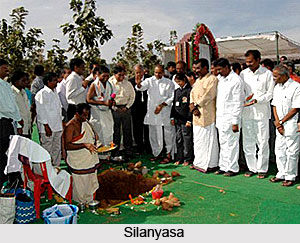
The next step of a temple construction is the `silanyasa` or foundation stone laying ceremony. In this step, the first stone (square in shape) or brick signifying the start of construction is laid. Usually, this brick is laid in the north-western corner of the building plan, drawn on the ground after excavating the foundation to the required depth. The construction of the foundation is started after this. The foundation is built and the ground is filled up to the platform level, except in the middle portion of the garbhagriha which is filled up to three-fourths only.
The adharasila (a base stone) is placed in the centre of this place. Various articles like a pot (called nidhikurhbha), a tortoise and a lotus, all made of stone, a tortoise and a lotus made of silver, a tortoise and a lotus made of gold are placed above this adharasila. From there, a funnel-shaped tube called yoganala, made of copper leads up to the plinth. Then the entire thing is covered by another stone slab called `brahmasila`. One more important step of a temple construction is the `garbhanyasa` (`insemination` of the temple site), which is a very significant rite. Then, on an auspicious night, a treasury or tray of copper, whose dimensions are proportional to the dimensions of the temple, is ceremonially lowered into the ground after filling its 25 squares with various articles and duly worshipping it. The Mother Earth is represented by it and the ceremony itself is done with the intention of achieving the smooth consummation of the temple project.
The necessary materials for construction of temple like the stones, bricks and wood are bought newly from their sources. There are also guidelines for them, like the all the tools and implements used in the construction should be worshipped first. After building the foundation up to the basement level, the superstructure is constructed either with pillars or with walls or a combination of both. The next step of constructing a temple is adding the doors, openings, niches, windows and porches with suitable decorations at the appropriate stages, ending finally with the sikhara (the crest or the finial).
The preparation and installation of the image of the main deity as also the images of the subsidiary deities is the most important part of temple construction.
Religious rites and ceremonies in Hindu temples
 The rites and ceremonies are celebrated all round the year in the Hindu temples. Some of these religious rites and ceremonies are discussed here:
Consecration Ceremony (partisthavidhi):
This ceremony is performed after successful completion of constructing a Hindu temple. After the temple building is completed, it is sanctified formally with proper rites and ceremonies. For this purpose, a separate pandal is erected in the north-eastern corner of the main structure and the important religious ceremonies are performed there.
At first a usual puja and homa are performed for the vastupurusa. Then, nine balis (offerings) are given to the minor (and usually fierce) deities, by placing the balis all round the temple. Thereafter, the minor deities are requested to leave the place permanently.
This religious rite of the temple then allows the acharya, the yajamana and their assistants to enter the yagasala. Now, they establish kalasas (ceremonial pots filled with water, the number being up to a maximum of 32) all round the place. They perform particular preliminary rites and homas in the several homakundas to appease the main deity of the temple and other associated deities. In the meantime, the image of the main deity is taken in the ratha to a nearby source of water like a river or a pond and immersed in it for the first of the three adhivasa ceremonies (adhivasa=abode), called jaladhivasa.
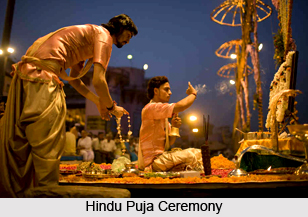 This is performed only after the ceremonial opening of its eyes, i, e, netronmilana. After three days, the image of the deity is brought in the ratha to the yagnasala and then put in grains for another three days, which is called `dhanyadhivasa`. From there, it now taken out and put on a specially prepared bed for three days more and this rite is called `sayyadhivasa`.
This ceremony of the Hindu temples continue by placing a yantra in the centre of the garbhagriha, (a gold plate with occult designs) along with some precious stones, minerals and some seeds. The next ritual of this ceremony is the `astabandha`. Above this yantra, a paste of butter or oil and other eight materials like conch, whitestone, lac, perfume is smeared. The image is then fixed above this. The next rite is to connect a gold wire or a long thread, to the main homakunda in the yagnasala. This is called `nadisandhana` whereby the nadis or internal passages will become opened up as it were, to receive life. Thereafter, the deity is invoked into the image by `pranapratistha` (a simple ceremony for infusing life-force) and a simple worship is performed.
The image of the deity is then bathed with the water from the main kalasa of the yagasala. This is called kurhbhabhiseka. An elaborate worship follows then with offerings and waving of lights. Now, the acharya, the yajamana, the sthapati and their assistants needs to take a ceremonial bath (called avabhratha-snana). This bath thereby indicates that they have successfully completed a great and meritorious act. After this, the devotees and poor people of the place are fed lavishly and the daily worship (nityapuja) is performed.
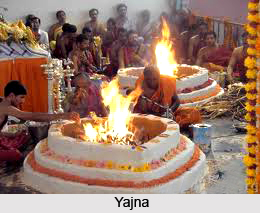 After the construction of the temple and the ceremonial consecration is done, daily worship must be done regularly. This daily worship should be done from a minimum of one time to a maximum of six times. It should be performed before sunrise, after sunrise, between 8 and 9 a.m., noon, evening and night.
During the performance of worship, all the dress and ornaments of the deity are removed and the image should be bathed successively with oil, ghee, milk, water and scented water. Then the image is dressed again and smeared with sandal paste as well as decorated with ornaments. Now, the ceremony continues with the offering of food articles to the deity. These rituals are performed after closing the doors of the garbhagriha.
Thereafter, the doors are opened, the lights are waved and several upacharas (items of special service) are done, including chanting of hymns and music. This ceremony also involves the ceremonial worship of the consort of the main deity and minor deities associated with it.
Occasional Worship (naimittika-puja):
The religious rites of the Hindu temples include the special pujas on particular occasions. These pujas performed mainly during Sivaratri, Vaikuntha Ekadasi or Dasara are known as the naimittika-puja. The occasional worships or ceremonies vary from place to place, or even from temple to temple. These are done in addition to the daily worship. The unique features of this type of worship include special homa, japa (repetition of the divine name), and abhiseka (bathing the image) as well as elaborate worship. The utsavamurti, which is taken out in procession, must be well decorated and exhibited to the devotees.
Rathotsava and Brahmotsava:
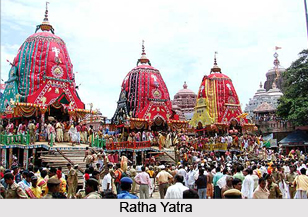
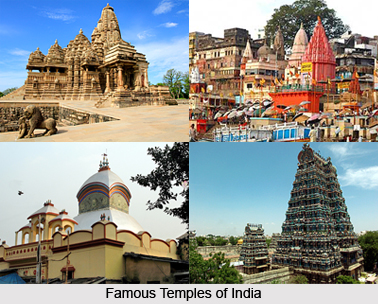
The religious rites and ceremonies may continue for several days during the special occasions. The Brahmotsava is the biggest among these festivals, which is also called rathotsava. It is called so because the utsavamurti is taken out in a procession in the temple car (ratha). This festival involves some other rites like beating the drum (bheritadana), hoisting the flag of the deity (dhvajarohana), inviting the deity to the yagnasala (avahana), establishing the kalasas and performing homa. Two days before the close of the festival, the temple car `ratha` is taken out. The `teppotsava` (boat-festival) is also performed on the next day of the `rathotsava` in those temples where there are facilities of a river or a big tank.
Hundreds of devotees take part in the `Rathotsava` and without any distinction of caste, creed or colour they draw the ratha, shoulder to shoulder. The deity is elegantly decorated on the festival day and the procession proceeds with music, lights and crackers.
Regulations of visiting a Hindu Temple
It is a general etiquette to observe certain, norms and decorum while a person meeting a person highly placed in life and in superior position. Hence, it is quite natural to observe a certain code of conduct when a devotee wants to visit the Lord of the universe in a temple.
A devotee willing to visit a temple must take bath and wear freshly washed clothes. This should be performed mainly in the Puskarini attached to the temple. The devotee should observe silence and try to withdraw the mind into the thoughts of God after entering the precincts of the temple. First, the devotee takes a darshan of the deity and then performs individual worship. Now, the devotee needs to circumambulate the main shrine three, five or seven times. As per the regulation of the Hindu temples, now the devotee bows down to the deity from a place outside the dhvajastambha. While doing so, the devotee should take care that his feet do not point in the direction of any of the minor deities.
 According to the regulation of the Hindu temples, the devotee should then visit the minor deities of the temple. The devotee should sit quietly in some corner and meditate there before leaving the precincts of the temple. Earlier, distributing the alms to deserving beggars in the vicinity of the temple was considered to be very meritorious, hence the devotees are recommended to do so.
Other than these general rules and regulations, the devotees should also be aware of the daivapacharas, modes of behaviour which will offend the deity in the temple. These regulations are considered very important as when a temple is built and the image is sanctified ceremonially, the power of the deity manifests itself through that image. This is technically called `archavatara`.
There are some other modes of behaviour which can offend the deity in the temple. This can bring misery and suffering upon the transgressor for not observing the rules concerning personal, environmental and ceremonial cleanliness, missing the important festivals of the temple, Even not bending ones head or not performing circumambulation, carelessly treating the things offered to the deity, not offering the best kind of things even though one can afford to do so, disposing of the offered articles to people who have no faith or devotion, engaging in purely secular and nonreligious activities in the presence of the deity, boisterous behaviour, observing caste restrictions, misusing the things belonging to the temple can enrage the deity. Therefore, the devotees should follow all the regulations when visiting a Hindu temple.
Hindu Temples in North India
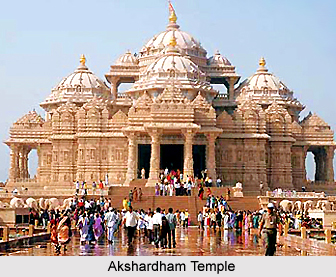
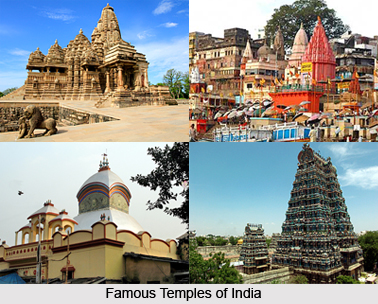
 Most of the Hindu temples in North India are the testaments of typical Nagara style of architecture. The constructions of these temples have followed specific rules and plans and are dedicated to various deities. Some of the temples however have also retained the local flavour and native styles. These form important sites of pilgrimage sheltering a sea of devotees. The traditions, beliefs and culture prevailing in the northern part of India can be aptly witnessed among the customs and rituals of these temples. Prominent Hindu temples in North India include Swaminarayan Akshardham, ISKON Temple, Baijnath Temple, Chintpurni Devi Temple, Amarnath Cave, Vaishno Devi, Baba sodal mandir, Kalpeshwar Temple, Nandaprayag Temple, Banke Bihari Temple and many others.
Hindu Temples in West India
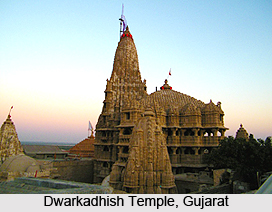
West India also hosts a number of Hindu temples characterized by flamboyant designs and magnificent architecture. Indian art and architecture have beautifully blended in these temples which stand gracefully among the architectural marvels of India. This region of the country houses some of the ancient temples of India through which captivating artistry peeps out beautifully. These temples also exhibit unique customs which reflect the prevailing traditions in the West Indian states. Some of the important Hindu temples of West India are Dwarkadhish Temple, Rukmini Temple, Sri Manquesh Temple, Ashta Vinayak Temples, Somnath Temple and others.
Hindu Temples in East India
Some of the most renowned Hindu temples of the country are located in Eastern India in the states of Bihar, Jharkhand, Odisha and West Bengal. They serve as the famed pilgrimage centres and are visited by the people hailing from all around the country. Outstanding craftsmanship of various architects can be witnessed in the Hindu temples in East India. Most of these temples have a tomb like structure which is a common architectural element. The modes of worship in these temples vary according to the cultural beliefs and presiding deities of the temple.
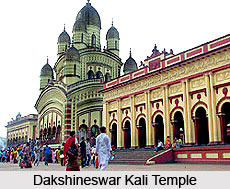
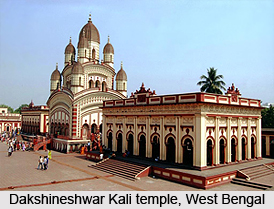 Famous Hindu temples of East India are Konark temple, Lingaraja Temple, Dakshineshwar Kali temple, Ajqaivinath temple, Jagannath temple, Mukteswara temple and many others.
Hindu Temples in South India
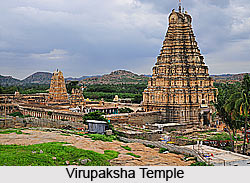
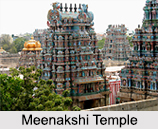
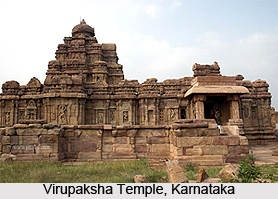
Hindu temples in South India provide the religious essence of south Indian states like Kerala, Karnataka, Tamil Nadu and Andhra Pradesh. The architecture of these temples follows different school of arts such as Chalukyan, Pandya, Holysala and Dravidian. Apart from signifying the traditions and beliefs of South India these temples also enrich the cultural heritage of the nation. Ancient rulers have contributed a lot in the construction of these temples and strengthening the religious beliefs of specific regions. Dedicated to different deities, these temples stand as the architectural marvels of India. Noted Hindu temples of South India include Tirupati Temple, Chennakesava Temple, Virupaksha Temple, Ettumanoor Temple, Meenakshi Temple, Ekambareswarar Temple and many more.
Hindu Temples in Northeast India
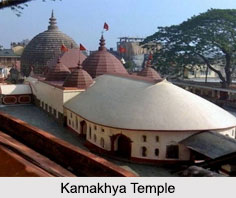
Hindu temples in Northeast India are known for their intricate carvings and mesmerising sculptures. Some of the finest testaments of architecture stand in northeast India as magnificent temples, especially in Assam. The embellishments of these temples are also immensely beautiful making them an addition to significant religious places, sites of tourist interest. Some of the prominent temples of Northeast India are Umananda Temple, Lankeshwar Temple, Tripura Sundari Temple, Shri Hanuman Thakur Temple, Thangal General Temple etc. Rituals of worship are unique in these temples following Northeast Indian traditions.
Hindu Temples in Central India
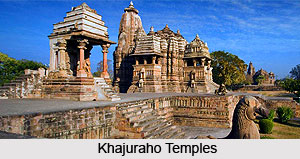
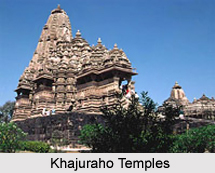
 The states of central India, Madhya Pradesh and Chhattisgarh, invites a huge number of pilgrims as well as tourists. These were mostly erected in ancient and medieval India and showcase some of the splendid artistry through their sculptures and architectural features. Various Hindu deities are worshipped in these temples. Profuse carvings are the most important features of these temples which reflect the prevailing architecture in different eras. Some of these temples are so ancient that they have been unearthed through archaeological excavations and have revealed cultural phases of bygone eras. Prominent Hindu temples of central India include Khajuraho Temples, Sas-bahu mandir, Omkareshwar Temple, Chintaman Ganesh Temple, Gandheswar Temple, Adbhar Ashtbhuji Temple, Vishnu Temple, Bhoramdeo Temple etc.