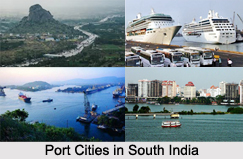
Nagappattinam is a town of Nagapattinam District in the Indian state of Tamil Nadu.
History of Nagappattinam
Nagappattinam was known from very early times as a trading centre and even today it is a minor port. During the Chola period, it was the headquarters of a region and was a pride of the Cholamandalam coast. This place is also known as Cholakula Vallippattinam. As per the Burmese historical text of 3rd century B.C., this place has the evidence of a Buddha vihar built here by the emperor Ashoka the Great. Nagappattinam has got mention in the travel accounts of the Chinese traveller Hiuen Tsang. The ancient Buddhist literature names it as `padarithitha`. Avurithidal, the name of a part of Nagappattinam might have been derived from padarithitha, the name of a fruit tree common in this region. Buddhist monks of Sri Lanka had close connection with this place. According to the Anaimangalam copper plates of Kulothunga Chola `Kasiba-thera`, a Buddhist monk renovated this Buddhist temple in 6th century A.D. It is also said that Pallava king Rajasimha (695-722 A.D.) allowed a Chinese king to be buried in a Buddha vihar in Nagappattinam. The Anaimangalam copper plate also exposes that Vijayathunga Varman of Sri Vijaya kingdom built two Buddha vihars in the names of Rajaraja and Rajendra. They were then named respectively Rajarajap-perumpalli and Rajendrapperumpalli.
Geography of Nagappattinam
Nagapattinam lies at 10.77 degree North to 79.83 degree East. The town is bounded by Bay of Bengal in the east, Uppanar River in the south, Thiruvarur district in the west, Thanjavaur district in the North West and Karaikkal and Puducherryin the north. The town lies in the sea level.
Administration of Nagappattinam
The municipality of Nagappattinam covers an area of 14.92 km2 (5.76 sq miles).
Economy of Nagappattinam
The main occupation of Nagapattinam is fishing in the waters of Bay of Bengal. The fishes are sold in the daily and weekly fish markets in the town. There are a large number of ice factories for preserving the fish. The industry suffered a setback after the tsunami that struck the coast on 26 December 2004.
Tourism in Nagappattinam
Tourism in Nagappattinam plays a key economic role for the town, even though fishing is the major occupation. Nagapttinam is a base for heritage and historic points like Nagore, Velankanni, Sikkal, Kodiyakkarai, Vedaranyam, Mannargudi and Tharangambadi.