





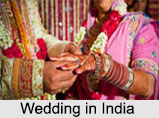
 Wedding in India and its various traditions are vast. They differ with the different regions of the country. This special social ceremony includes several elaborate rituals. The customs and rituals play a significant role in Indian marriages, be it a Hindu marriage ceremony or a Muslim marriage ceremony. The customs and rituals followed during an Indian wedding reflect the rich culture and heritage of this diverse country. Indian weddings have charming characteristics of their own. Wedding in India and its various traditions are vast. They differ with the different regions of the country. This special social ceremony includes several elaborate rituals. The customs and rituals play a significant role in Indian marriages, be it a Hindu marriage ceremony or a Muslim marriage ceremony. The customs and rituals followed during an Indian wedding reflect the rich culture and heritage of this diverse country. Indian weddings have charming characteristics of their own.
History of Wedding in India Indian weddings have a rich history associated with them. In the ancient times, Hindu weddings took place in 8 different ways and the entire procedure was based upon the Shastric ideas. Each and every caste has its own norms that hold special significance when it comes to weddings. The history of ancient India also has references of polyandry and polygamy. In earlier days, falling in love before wedding was considered as a sin. Indian culture principally favoured the concept of arranged marriages. In the medieval period, the concept of ‘Swayamwaras’ came into being. It was arranged by the kings exclusively for their daughters, where the prospective brides used to select grooms after judging the presentation of their capabilities. With passing time, though most of the traditions and rituals have survived, but the stance towards marriages has largely altered. The rituals and rites have been made short and very precise. Classifications of Wedding in India There are six major classifications of Indian weddings. These are Arranged Marriages, Arranged -Love Marriages, Love Marriages, Love - Arranged Marriages, Inter Caste Marriages and Court Marriages. Arranged marriages are the most prevalent category. 
Traditions of Wedding in India In a traditional Indian society, marriages are given utmost priority. The basic rituals involve almost all the colours of merriment and enjoyment. Hindu wedding, Sikh wedding, Muslim wedding, etc. are all different from one another. The common tradition about Indian weddings is that after the marriage of a couple, the bride has to live with the groom's family and not with her parents anymore. It is the groom who is supposed to look after the bride for the entire life. Indian Wedding Feasts The feasts, which are a grand part of this ceremony, also differ as per the different regions. Indian weddings remain incomplete without songs, music, heavy jewelleries and lavish dresses. These are all basic necessities of marriages. Marriages in Different Regions of India Each and every region of India has its rituals and traditions as far as weddings are concerned. Weddings of different regions of India differ in terms of rituals and rites including the post marital rituals. In India, weddings are considered as the bonding of not only two souls but also of two different families and their cultures. Indian religious weddings in different parts of the country follow their own norms and rituals. India has enormous cultures and ethos and that is why the marriage traditions of its states differ tremendously. But it is the spirit of weddings that binds two different people, their families and culture together. Marriage Laws in India Marriage laws in India hold special significance as they provide a legal entity to the unification of two people. In India, marriage rules and regulations are different for different clans and religions. The different marriage acts meant for the Indian citizens are Hindu Marriage Acts, Christian Marriage Acts, Muslim Marriage Acts, Special Marriage Acts and Parsi Marriage Acts. Registration of weddings in India is mandatory. Wedding in India displays a mixture of the rich and vibrant ethnicity and linguistic diversity of India. Marriage is a sacred institution and is the mean through which a man and a woman enter into a relationship for performing the duties of spiritual growth and procreation. |
| ||||||||||||||||||||||||||||

