


 The temples are built as per Hinduism to keep the image of the deities. Therefore, the images and icons of deities are must to be found in a Hindu temple. Iconography in India is a very ancient science and art. The temples are built as per Hinduism to keep the image of the deities. Therefore, the images and icons of deities are must to be found in a Hindu temple. Iconography in India is a very ancient science and art.
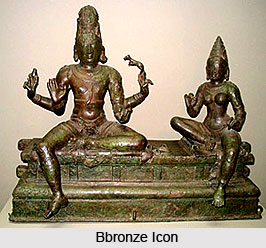
The references of icons and images of gods and goddesses in the temples were found in the Rigveda and in the Atharvaveda. Many ancient works also have reference of the same. The images in the Hindu temples can be grouped under three main categories: Saiva, Sakta and Vaishnava, respectively belonging to the three cults of Siva, Sakti and Vishnu. Again, the icons of the temples can be divided into 'achala' or 'dhruvabera' (immovable) or 'chala' (movable). The previous icons are typically made of stone and are permanently fixed. While the latter icons are usually made of metals like bronze or panchaloha (alloy of five metals) and are used for taking out in procession on festive occasions for bathing, for ritualistic worship etc. A third category of icons called 'calachala' (both movable and immovable) is added at times. An icon is called 'calachala', when the same image that is kept and worshipped in the garbhagriha is also taken out on the ratha (temple car) like in the case of the temple of Lord Jagannatha at Puri (Orissa). Again, these icons can be seen in three postures: 'sthanaka' (standing), 'asana' (sitting) and 'sayana' (lying down). The only icon, which is seen in the sayana posture also, is that of Lord Vishnu. Deities have their own particular mudra (position of the hands and fingers), asana (posture of legs and feet), cihna (symbol), vasana (dress) and abharana (ornaments). These deities can be recognised by their particular forms. The dhayamudra (assuring protection), varadamudra (granting boons), padmasana (lotus posture) and yogasana (meditation posture) are most common mudras and asanas of the deities in their icons. The icons of all deities carry a particular symbol and vahana. Saiva and Sakta images have damaru (drum), trisula (trident), pasa (noose), arikusa (goad), bana (arrow), khadga (sword) and so on, as their symbols. Chakra (discus), sankha (conch), gada (mace) and padma (lotus) are symbols of icons of Vaishnava. The dress and ornaments also have different variety in these icons. There are elaborate rules guiding the sculpturing of the icons. The height or length, width girths are also given a particular proportion. The limbs of these icons are fixed according to the tala mana system. A 'tala' is the measurement of the palm of hand (from the tip of the middle finger to the wrist) and is equal to the length of the face. The navatala system is the total length or height of the image is nine times ('nava' means nine) the length of the face, is recommended for the icons of gods. These rules and regulations are sometimes changed by the sculptors for the sake of showing his creativity and skill. |
| |||



Home > Reference > Indian Temples > Indian Temples > Hindu Temples in India > Iconography in Hindu temples
Iconography in Hindu temples
| The icons of deities are must to be found in a Hindu temple and are made by following some rules and regulations. |
| ||||||||||||||||||||||||||||

