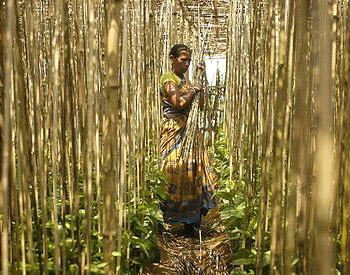
Agriculture is dependent on the five basic elements of nature. The principles of Vastu Shastra can be conveniently put to use for choosing agricultural land, for building a farm-house or while sowing the seeds. It is believed that it will lead to an impressive result as far as agricultural production is concerned.
•If the advises of the Vastu Shastra are to be followed then the agricultural land with a road on the South should be avoided.
•Passages linking two agricultural lands should not be constructed.
•Agricultural land should have slope towards the East or the North directions. But it should not be towards the West or South direction.
•The agricultural land should never be multilevel. It is necessary that that the plot is leveled. However if it has multileveled blocks the slope should be slanted towards the East or the North sides. If the land blocks have a downward slope towards the South or the West expenditure at the residences exceeds the income.
•The agricultural plot should be square or rectangular in shape. It should not have a cut in the South-East or the South-West direction. By building a soil or brick wall that is a raised boundary of at least two to three feet or a compound wall this should be removed to make the plot regular in shape.
•On the West or the South sides of the agricultural land tall trees can be planted as these will prove beneficial.
•While sowing any crop it should be in the East-West direction. Here the plants will receive adequate sunlight.
•Underground water storage, tanks boring and other structures should be located in the North-East direction of the North or the East sides. Wells should not be situated in the North-West, South-East or the South-West directions as it will lead to huge losses. Drainage for supplying water to the crops should be built from South to North.
•The farm house or the hut in the field should be in the South-West side. The farm houses generally belong to the land owners.
•The huts or residences for the agricultural laborers should be in the South-East or the West directions.
•The cattle pen should be in the West or the North-West directions. This will give a boost to the income of the family.
•While tying the pet animals their faces should be in the Northern direction. If it not possible then they should face the East.
•Pet animals should never be tied in the South, North-East, or the South-West direction.
•A high thick compound wall 10 to 20 feet in length and 6 feet in height should be in the South and West sides of the South-West direction of the field. A full fledged wall compound or a raised platform in the West and the South directions will also prove beneficial. There should never be a compound wall or a raised platform in the East or the North directions as well. A wire compound is also permissible.
•New seeds should be sowed on an auspicious day with the chanting of hymns. Sowing should not be done on Tuesdays or Saturdays. While sowing a new crop the recitation of Gayatri Mantra or Surya Mantra can be very helpful. It is always fruitful to invoke the blessings of god before setting out for an important task.
•The process of sowing should start from South-East direction and then move onto the South, South-West, West, North-West, North-East and East in a clockwise direction. The reaping of the crop should start from North-West, North, North-East, East, South-East, South, South-West and then West. This, too, should be done clockwise.
•A sacred fire pit should be prepared in the South-East direction and some grains of the first reaping should be offered to Lord Agni. Some of the grain should be given to the pet animals as well. Some ears of the new crop should be kept in the East and worshipped with Tamarind and kunku. If a New Moon day occurs during the reaping season then a coconut should be broken in the field while facing the east. This needs to be done in the evening. The pieces of this coconut should be kept at the centre of the field and the four major corners of the field. The following day these pieces should be collected and thrown on the dung hill.
•If possible on all the New Moon days a marking nut, lemon, seven chillies and a lemon should be tied on the main entrance of the field and the farm house to ward off evil powers.
•The equipments that are used in the field should always be kept in the South-West corner or the Southern direction. Never keep them in North-East, North or East directions. The ideal place for the thrasher machine, the bullock cart and other vehicles is the North-West or the North direction. These should not be kept in the North-East corner.
•When the ready crop is taken out to the market for sale it should be taken out from either the North, East or the North-West directions. This will result in quick sale and good income. If the crop is taken out from the North - East gate both the sale and the payment will be delayed. If the crop is taken out of the South-West gate it will not get a good price. If the crop is taken out of the South-East gate it leads to loss and troubles.
•The fodder is to be kept in the South or South-West direction of the field. Dung cakes or the ash should be kept in the South-East direction while the fertilizers and chemicals, important for the crops, should be kept in the Western corner.
•If subsidiary crop is to be taken along with the main crop the subsidiary crop should be grown in the West or the South direction.
•While ploughing the field for a new crop it will be beneficial if it begins from the South-East and then clockwise move onto the North-East direction.
•If the agricultural business is done on a large scale the heaps of grain are to be raised in the West direction. The packing and dispatching office can be located in the North-West part of the West side. Tractors, trucks etc. which carry the grain should be parked with their faces towards the North or the East.
•Proper worship should take place before the first sack of a crop is kept.
•As far as floriculture is concerned Red and Pink flowers should be planted in the East; White and Yellow flowers in the North, the Dark Blue and Blue-Black flowers in the South while the Blue and Violet flowers should be planted in the West.
•There should never be a mound at the centre of the field. Tall trees, flowers or crops should not be planted here.
•As for as possible there should not be any pits in the field. In case they are, they should be located in the East or the North direction.
•Mounds on the South or the West direction are permissible.
•To the East of the field a row of black basil plants should be planted. These are good for the crops.
•For horticulture the short trees should be planted in the East or the Northern blocks and tall trees in the South or the West block. Amla, tamarind, lemon or thorny trees should be planted in South block; guava in the east; custard apple in the North; Pomegranate in the West and mango, coconut, jamblum (Indian berry), Kauth and others in the South.
•While taking a banana crop in the field on the eastern side or the Northern Side of the North-East direction at least ten feet should be kept vacant. It should also be remembered that in a square field of 9x9 feet bananas should not be planted at the center.
•If grapes seeds are planted then they should be from South to North directions. While sprinkling water the same direction needs to be followed.
•Fire for warming should never be set up at the centre, the North-East and the North directions.
•While working in the field, reaping or giving manures to the field one must face towards the East or the North. Never face Southwards.
•Scare crows should be placed in the South and the West directions.
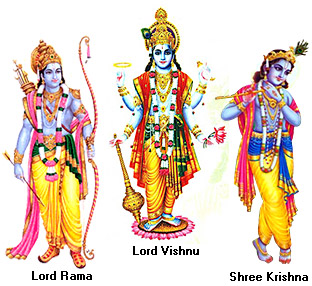
•Temples should not be constructed in the field. In case it is there it should be in the West. The idol should face the East. Idols of Maruti, Shani, Mhasoba, Munjya, Pirbaba and Asra should not be installed in the field. According to Vastu Shastra the idols of Ganesh, Shivpind, Gurudatt, Shri Ram, Shri Krishna, Vishnu and Laxmi can be consecrated here. However, all the rituals should be followed properly and regularly.
•Only the fields on the North or the East side should only be purchased for agricultural purposes. Adjacent fields on the South or the West of an existing agricultural land should not be purchased under any circumstances. However if it is necessary it should be purchased or taken in somebody else`s name. The field owner should not purchase it in his own name. If some part of the field is to be sold, the part lying on the West or the South should be sold.
•The plot with river or canal on the North or East sides should be purchased. If the river or the canal is on the South side economic loss is imminent. If the well is in the South-West corner of the field there are chances of the field owner`s accident, illness or suicide. A well in the South-East block can make the field owner go bankrupt. If the well is in the North-West block grain can be stolen or it may also lead to enmity.
•A well in the West is acceptable. But here a wall should be built in the East of this well. The height of the wall should be slightly more than the height of the well. If a motor or pump is installed on the well it should be installed in the South-East direction. Instead of covering it completely some space for the passage of air and light should be kept. The drains or the tanks built near the well has to be in the Northern section. Tanks built for drinking water for animals should be in the Western block.
•The stairs or ladder for entering the well should be in the West or the South directions.
•If an overhead tanks is built for water to drip or sprinkling of water in the field, it should be built in the West direction. Overhead tanks, well and electric pole should not obstruct the main entrance of the farm house.
•Electrical appliances like generator, transformers or electric poles in the field should be in the South-East corner or in the West direction. The electric poles of the government should not pass through the centre of the field.
•The modem laboratory of the big farm houses should be situated in the West side.
•If fisheries are to be set up in the field, it should be in only half the field and in the East or the North direction. But do not build it in the Southern block.
•If Goat farm is to be set up it should be in the West or the South block.
•Poultry farms should be set up in the Western block of the field.
•If nursery is to be set up in the field it should be in the East or the West directions.
•As far as the watchman of the field is concerned he should live in the North-West of the West or South-East of the East or South directions. Residence for the watchman should not be given a room in the South-West direction. It can incur huge losses for the owner of the farm.
•When a new farm is purchased proper Bhoomi Puja should be done. Navgraha Pooja is advisable too.
•No work should be done after sunset in the field. Even the animals should not be put to any work.
•Cactus or other plants giving out white liquid should not be planted in the East or the North directions.