The eighteenth century represented an intellectually stagnant society. By this time the British had already strengthened their colonial policy. The traditional system of education had greatly suffered during the political convulsions and instability of the period. The new Renaissance spirit of scientific enquiry, scepticism, humanism and aggressive materialism, which was rapidly transforming the West, had not reached India. The political confusion of the 18th century, by which the European intervention further accentuated, delayed the penetration of progressive ideas and thoughts in India.
The Christian missionaries of Serampore Carey, Ward and Marshman, were first to open the schools for the Indian children. Their educational endeavors were just a means to their higher aim of converting the Indian Hindus to Christianity. Compulsions of administrative organizations, commercial penetration and need for the cheaper clerks in the lower level of administration motivated the British Government to provide a clause for educational upliftment in the Charter Act of 1813. According to the Clause, it had been made obligatory that the East India Company should annually set apart a sum of one lakh rupee on the improvements of the education in India. Some progressive Indians like Ram Mohan Roy urged the government to spend this fund on instructing the Indians mathematics, natural philosophy, chemistry, anatomy, natural sciences etc. The Company`s authority delayed for two decades before a final decision was taken by the Committees of Public instruction in 1835 under Lord Macaulay. However Lord William Bentinck adopted the notable step regarding the educational development in India. Macaulay declared in clear terms that their aim was to create a class of persons who would be Indians in blood and color and English in tastes and opinion.
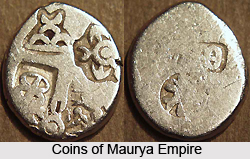
Some Europeans also devoted themselves in the study of the traditional Indian subjects like Sanskrit, philology, Indian history etc. Many European had deciphered the Indian inscriptions and the coins of the ancient kings. In this way they assimilated in the Indian form of culture and civilization. This opened a new chapter in the history of ancient India. The efforts of William Jones, the founders of the Asiatic Society, Jonathan Duncan and other orientalists rekindled the interests in the study of the Indian literatures. With the patronage of the Europeans, the traditional Indian literature was flourished side by side with the rational scientific theories of the Europeans.
However it had been opined by the eminent historians that the European heralded the Indian Renaissance. It shads also been said that the modern political thought and scientific advances of eighteenth and nineteenth centuries would not have reached India, unless the British established their Imperial rule in India. India had cultural links both with East and West from time immemorial.
The British over-emphasis on education with English as the medium of expression limited the spread of education to an elite class. Eventually the process of education became so complicated that the common masses were denied of proper education. Hence there was a gulf between the English educated class and the common masses in India. The British Government even turned its face against the spread of higher education towards the last quarter of the 19th century. Further over emphasis on liberal education and utter neglect of technical education produced the phenomenon of educated unemployed.
The British pattern of liberal education and educational policies contained some inner contradictions. The emergence of modern political consciousness, political organizations and political agitations was much because of the result of the British educational policies. However the British educated intelligentsia exposed the true nature of the British imperialistic policy. They also provided leadership to the modern political movements. In this way Macaulayian scheme of education provided the framework of the modern education system in India. It at the same time induced the spirit of Renaissance in the so-called stagnant society of the eighteenth and early 19th century.