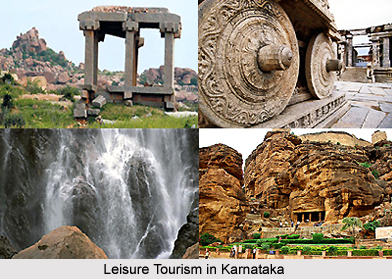
 One needs to spend time in Karnataka to savour its many delights. For sheer beauty, there are few places that can excel the string of lakes that constitute the Sharavati system or the confluence of the Hemavati River and the Kaveri River, just above the Krishnaraja Sagar. River Kaveri River is the lifeline of Karnataka.
One of the major attractions of tourism in Karnataka is the sea beach. The western part of Karnataka lies close to the Arabian Sea. As a result, this place is blessed with a beauty that is indescribable. Lying there, on a moonlit night, amidst the gathering sounds of the waves scudding against the black basalt shore, and listening to the whisper of winds through the casuarinas, or sitting in the shade of a coconut grove, sipping the tender-coconut water, time flows untroubled.
The coastline of the state stretches to a whooping 320 kilometres. From Karwar in the north to Ullal in the south, it is one long stretch of sparkling white. The beaches in Karnataka are located at Karwar Beach, Kurumgad Beach, Maravanthe Beach, St. Mary`s Island, Malpe Beach, Kaup Beach and Mangalore.
In the north of Karnataka is Hampi that was the capital of the old Vijayanagar Empire. These medieval ruins cover around 26 sq. km. Hampi is at a distance of 14 km from Tungabhadra Project and on the outskirts of Hospet, a town connected to other cities by an excellent train service. There are few but amazing hill stations in Karnataka nestled away from the din and bustle of city and amidst the unsullied beauty of nature, these are perfect spots to spend to spend time with family and friends. Agumbe Hill Station, Kemmangundi, Kundadri and Kodachadri Peak are easily accessible from Bengaluru.
This article is a stub. You can enrich by adding more information to it. Send your Write Up to content@indianetzone.com