 In Tamil Nadu, the earliest existing religious vestiges are the natural caves. These caves once served as the habitats of Jaina monks, found in some of the hills in Tirunelveli, Madurai, Pudukkottai, Periyar, Trichy and erstwhile South Arcot and North Arcot districts. The numbers of these vestiges have reached more than one hundred so far due to the tireless efforts of the archaeologists over the last five decades.
These early caves were found amidst picturesque surroundings. These were the residence of mendicants who resolved to spend their lives in splendid isolation and engaged themselves in contemplation and religious pursuits. These Jaina caves in Tamil Nadu are important for numerous reasons. The earliest lithic monuments of this region were represented by them. The earliest epigraphic records in Brahmi characters can be seen in these caves. These belonged to a period from the 2nd century BC to the 3rd or 4th century AD and above all they provide authentic evidence of the early spread of Jainism in Tamil Nadu.
These early vestiges were the resorts of the hermits. These caves were made suitable for habitation by cutting stone beds in them. The beds were chiseled smooth raising one side a little to serve as pillows. To prevent rainwater flowing into the cave shelters, the overhanging rock was cut in the form of drip-ledge. These caves were often provided with structural additions in front in the form of thatched roof, which was supported by wooden poles. This fact is proved from several holes cut into the open rock surfaces of the caves, which are well visible now. Most of these vestiges of Tamil Nadu were near springs of water, which served the basic needs of the austere.
The early Jaina caves were discovered from almost all the districts of Tamil Nadu. But most of them were recovered from Madurai. Approximately, twenty-six caves with not less that one hundred and forty stone beds were recovered from places like Anaimalai, Alagarmalai, Arittapatti, Tiruparankundram, Muttupatti, Vikramangalam, Tiruvatavur and Varichiyur. All these places are located within a radius of 20 miles from Madurai town. The 2nd to 1st century BC Brahmi records can be seen in these early vestiges of Tamil Nadu. These refer to the names of the resident monks as well as the laity who caused stone beds to be cut.
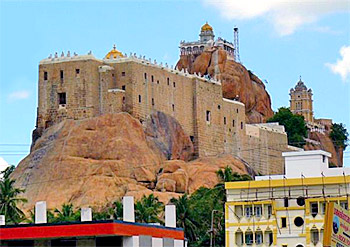
The next district of Tamil Nadu having maximum number of the vestiges is the Trichy district. The three pallis (Jain temples) at Pugalur, Sivayam and Trichy Rock Fort are among the important vestiges of Tamil Nadu. There are three caves found in South Arcot also. These are at Jambai, Paraiyanpattu and Tirunathankunru but they belong to a slightly later in date. There are two other places of Tirunelveli district of Tamil Nadu named Kutrralam and Marukaltali, where the two early Jaina centres with cave beds and Brahmi records can be found. Few other interesting lithic records can be seen in Pudukkottai, Pasumpon, Periyar and North Aroct districts of Tamil Nadu.
Besides these, Pudukkottai, Sittannavassal, South Arcot and North Aroct districts have about 30 more natural caves with a series of stone beds. But there is no sign of any early Brahmi inscriptions there. So, they cannot be rendered as a part of the early period. The available sculptural and epigraphic evidence from the above mentioned centres belong to the 8th and 9th centuries AD. The sculptures representing Tirthankaras, yakshas and yakshas were suppose to be added to the already existing Jaina foundation.