


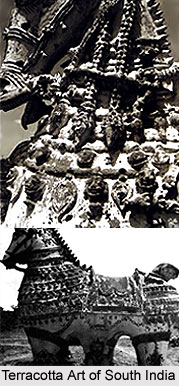
 The art of terracotta varies from region to region of various parts of India. Each region has its unique style terracotta sculptures and even clay color of different areas vary from each other. In various festivals and rituals, the clay sculptures play a very important part. The example of this terracotta art can be seen in the Salem and Pudduk-kotai districts. There can be seen large horses that were five metres high and there are also few smaller ones, which are made all over the state like Pondicherry, Dindigul and now in Chennai too. Some other figures such as of toys and pots, can be seen, which are used for various occasions. The art of terracotta varies from region to region of various parts of India. Each region has its unique style terracotta sculptures and even clay color of different areas vary from each other. In various festivals and rituals, the clay sculptures play a very important part. The example of this terracotta art can be seen in the Salem and Pudduk-kotai districts. There can be seen large horses that were five metres high and there are also few smaller ones, which are made all over the state like Pondicherry, Dindigul and now in Chennai too. Some other figures such as of toys and pots, can be seen, which are used for various occasions.
One can see a large terracotta horse at the entrance of every village and also in front of some village temples. These are believed to be of Aiyanar, the kavalkaaran or guardian of the village and protector of travellers. The villagers have a faith that Aiyanar guards them against evil, ill fortune and disease. The two major Hindu sects called Saivaities and Vaishnavites believe in Aiyanar as Aiyanar is identified with both Lord Shiva and Lord Vishnu. Most of the other village deities are also made of terracotta. The clays of the terracotta art look like bronze and are supposed to have great strength in South India. These art figures are made strong by adding rice, straw and horse or cow dung with the clay in Tamil Nadu. The clay is then molded to remove any kind of impurities and air bubbles. There are millions of terracotta potters and sculptors all over India and most of them claim to have descended from the Prajapati. Prajapati is believed to be the first potter created by Vishwakarma or the creator. The Kumhars and Velars living in different parts of South India hold a high position in the village. The terracotta pots and sculptures are made mostly during the summer season, as it is the most favorable time for pot making. At the time of festivals like Diwali, Pongal and Ganesh Chathurthi and marriage ceremonies, the demand of these terracotta pots and sculptures increases. The potters dedicate the monsoon season to farming. Now days, the terracotta sculptures are made on the basis of imagination. There are many designer clay sculptures of gods and goddesses and other decorative images can be seen during festive seasons. Even the foreign buyers were impressed by the terracotta arts of South India. The styles of making the sculptures have also changed according to the demand of these westerners. The traditional votive terracotta is also influenced by this affect. Earlier, these were made by single person but now it is being mass-produced. Utilitarian items of daily use are made in terracotta in Chittoor in Andhra Pradesh. |
| |||



Home > Art & Culture > Indian Sculpture > Indian Temple Sculptures > South Indian Temple Sculpture > Terracotta Art of South India
Terracotta Art of South India
| Terracotta art prevailed in South India which has been proven by the remains of vessels, sculptures and tools that have been by the archaeologists. |
| ||||||||||||||||||||||||||||

