


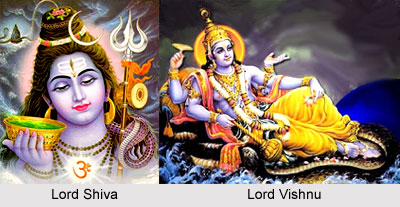
 There was a great growth of ceremonial religion which consequently resulted in the growth of priesthood. Idol-worship finds no mention here. There is only the building of the altar for sacrifice and for the sacred fire. Hindu gods like Lord Shiva and Lord Vishnu begin to emerge. The period was most remarkable for the development of philosophy as expressed in the Upanishads. There was a great growth of ceremonial religion which consequently resulted in the growth of priesthood. Idol-worship finds no mention here. There is only the building of the altar for sacrifice and for the sacred fire. Hindu gods like Lord Shiva and Lord Vishnu begin to emerge. The period was most remarkable for the development of philosophy as expressed in the Upanishads.
Philosophy in Later Vedic Period The central theme of the Upanishads is to seek unity in the midst of diversity. The Atman is co-existent with God. Soul, Nature and God form the principal themes of the Upanishads. In addition to the body, there is a soul distinct from all the organs, from the mind, from the vital force. It is indestructible. After death it goes to different worlds according to its past work and knowledge, and may return to this world. As long as we are in the state of Avidya Atman cannot be discovered. When by self-control and restraint we have purified ourselves, then by concentration and meditation we may realize the Atman which is identical with God. Truth is the dominating characteristic of the Upanishads. The Upanishads also show the acquisition of wealth and worldly goods is no comparison with the growth of spirituality in the concerned person. Harmony is emphasized as a basic necessity in life. The base of harmony is the spirit. The Upanishad held that the world is a manifestation of the Eternal, of Brahman and all here is Brahman. The contributions of Ajatashatru of Kashi, Janak of Videha and Asvapati of Xaikeya have made extraordinary contributions to philosophy of the time. The significance of 'Karma' or duty was wholly recognised during this period. It was advocated that 'Karma' of this life influences the life after, i.e., rebirth. By doing good 'Karmas' a man becomes free from the cycle of birth and rebirth, i.e., he can achieve 'Moksha' or redemption. Religion in Later Vedic Period Religion of the later Vedic Age was pretty complex. Vedic religion evolved into the Hindu paths of Yoga and Vedanta. These post-Vedic systems of thought, along with later texts like Upanishads, epics, have been fully preserved and form the basis of modern Hinduism. The ritualistic traditions of Vedic religion are preserved in the conservative Shruti tradition. The significance of Yajnas had increased substantially. As compared to simple yajnas of the Rig Vedic period, very complex and enormous yajnas had begun. The number of priests participating in a yajna had increased from 7 in the Rig Vedic times to 17 in the later Vedic Period. The priests had their helpers too. Thus it had become unmanageable for common man to perform yajnas. During later Vedic Period yajnas were performed to accomplish individual wants. Changes also had taken place in the status of the Gods. 'Rudra' of Rig Vedic Period was now worshipped in the form of Lord Shiva, Pashupati, and Mahadeva. Vishnu was worshipped in the five manifestations of Sun. Great significance was attached to 'Tapa', which was considered a means to sanctify the mind and soul. Therefore it can be seen that great many alterations had taken place in the religion of the Aryans during the later Vedic Period. Religious faiths and philosophical principles sought-after and developed in this period formed the source of religion and philosophy for the following ages. |
| |||



Home > Reference > History of India > Ancient History of India > Vedic Civilisation in India > Later Vedic Civilisation > Religion and Philosophy in Later Vedic Period
Religion and Philosophy in Later Vedic Period
| Religion and Philosophy in later Vedic period did see minute growth. However, rituals and traditions were religiously followed. |
| ||||||||||||||||||||||||||||

