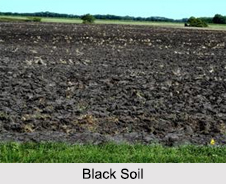
 Black Soil is black in colour and also known as "Regur Soil". Since it is perfect for growing cotton, it is also called "cotton soil". These soils are most characteristic of the Deccan trap (Basalt) region, spread over the north-west Deccan plateau and are made up of lava flows. It is believed that the climatic conditions along with the parent rock material are the important factors for the formation of black soil.
Distribution of Black Soil
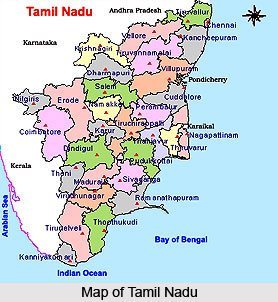
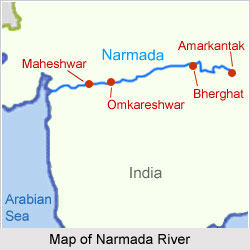
Black soil develops under semi-arid conditions specifically in the areas that are covered with basalt. They cover the plateaus of Maharashtra, Saurashtra, Malwa and southern Madhya Pradesh and continue eastwards in the south, along the Godavari River and Krishna River Valleys. In the southern region of Tamil Nadu, granites and gneisses with iron content also form black soil under the required semi-arid climatic conditions. Black soils are formed in Surat and Bharuch districts and also in the Narmada Valley and Tapti Valley. In these regions, humus is almost absent in the soil and black colour of the soil is because of the presence of certain salts. In the hilly region of the country, Black soils are usually thin, poor and sandy.
Characteristics of Black Soil
Black soils are exceptionally delicate. Owing to the high proportion of clay, Black soils are sticky when wet and consequently becomes difficult to plough. They are well-known for their ability to retain moisture. They develop thick fissures in the field during hot weather. This helps in their ventilation; hence their self ploughing eminence. This soil is viscous and unmanageable to work, unless tilled without delay, after the first or pre-monsoon showers.
Contents of Black Soil
Black soils or Regur soils are rich in lime. It is a rich soil in nature consisting of a mixture of sand, clay and organic materials. Moreover, this soil is highly retentive of moisture and is highly productive particularly in the plains and along the river valleys where it is clayey and deep. In addition, they are prosperous in soil nutrients, like calcium carbonate, magnesium carbonate and potash. However, nitrogen which is considered as useful for the growth of plants is not sufficiently found in the Black or Regur soil.