Introduction
 Sources of Ancient Indian History include coins, inscriptions and accounts of various foreign travellers. The division of the country into marked and diverse regions led to the distinctive history of each region, which remained roughly independent of other regions. Ancient history of India is hugely magnificent, affluent and diverse. But the rebuilding of an uninterrupted history of ancient India, introduces immense difficulties. It is not because there is lack of stuffs, but because chronological arrangement of events is seldom found. Indians had their own techniques of recording and dating events exactly and with conviction. Not a sole historical work can be found, which may be compared to those created by Herodotus, Livy or Tacitus. It is because of this lack that many critics have commented that Indians lacked the historical sense wholly and there is no book which gives the chronological history of ancient India. Some writers have even coined this period as the `dark age` on this account.
However, it would be incorrect to say that Indians wholly lacked the historical sense. It is evident from history of India that there were many chronological difficulties in delineating the events and dates of ancient Indian history, but these difficulties have been agreeably solved by scholars. Kalhana`s `Rajtarangini` visibly depicts that the Indians did not lack the historical sense and that they had the concept of scientific inclination towards historical study.
Literary Sources<
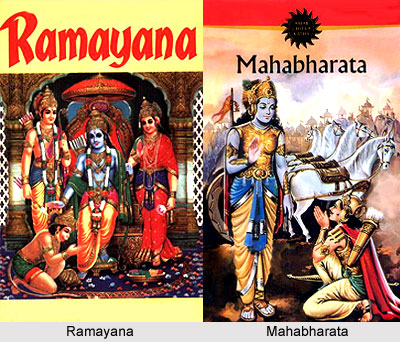 Most of the literary sources of ancient Indian history were predominantly religious and contain less factual data that can be considered as authentic historical source. Some of the oldest sources include the Puranas, the Vedas and epics like Ramayana and Mahabharata. These sources focus more on the civilisation and culture of that age instead of the political scenario. Rig veda, the earliest amongst the Vedas, provides information about the Aryans, their relocation to India, and their interaction with other clans. The Vedas generally offer detailed facts about the Aryan civilisation. The Puranas, which were prepared during the Gupta era, contain historical facts about the royal lineage and their reigns. Where as, the Upanishads notify about the religious part of the Vedic period. Furthermore, various Jain and Buddhist literatures and religious texts contain historical materials for reference. The Buddhist literatures, which were written in Pali, contained information about Lord Buddha and various kings of that era. The Jain texts, written in Prakit, provided facts about trade and traders in India. Buddhist Dwipavamsa, Mahavamsa and the Jain Parisistapravana are a few texts that supply some historical resources.
The Manu Smriti, Vishnu Smriti, Narada Smriti contained references regarding rules related to the law of the land and duties of kings and other bureaucrats. Arthashastra, a law book, written by Kautilya, states about the economic and legal issues present in the society, during the Maurya Empire. The grammar of Panini and Patanjali, Gargi Samhita also includes adequate historical sources.
Mudrarakshasa by Vishakhadatta gives a glance of Mauryan society. Malvikagnimitra speaks about the events of Pushyamitra Sunga`s era. Other important accounts that provide adequate historical information are, Gaudabaho by Bakpatiraja, which mentions the conquer of Yasovarman over Gauda, Banabhatta`s Harshacharita, that deal with the achievements of Harshvardhana, Ramacharita by Sandhyaakar Nandi, on the reign of Rampal, king of Pala dynasty, Vikramanka Charita by Bilhana, that states the history of Vikramaditya VI. Hem Chandra`s Dwasraya Kavya, Padmagupta`s Nabasahasanka Charita, Ballal`s Bhoja Prabandha, Nyaya Chandra`s Hammir Kavya are also worth mentioning. Rajatarangini written by Kalhana, is a valuable book which gives lot of information about the history of Kashmir and the kings of that period. Moreover works of the Sangam literature which is in Tamil provides information on economic and socio-political history during the period of the Pandyas, Cholas and Cheras.
Literary works by foreign visitors like Chinese, Romans and Greeks, who came to India, also act as Literary Sources of ancient Indian history. The Indica by Magasthenes, a Greek ambassador in the court of Chandragupta Maurya, includes various information of the era. A proper geographical account of India can be obtained from Ptolemy`s `Geography`. Naturalis Historia of Pliny gives an account of India`s flora and fauna and mineral resources and also mentions about trade relations between Italy and India. Where as, idea about India`s ports, harbours and trade and commerce conducted through the sea route can be obtained from Periplus of Erythraen. Moreover various texts by Chinese visitors like Hiuen Tsang, Fa Hien and others provide a detailed picture of Indian Buddhism.
Thus the various foreign or indigenous literary sources of ancient Indian history provide adequate knowledge on various aspects and thus provide support to reconstruct ancient Indian history.
Archaeological Evidence
 Archaeological Sources of Ancient Indian History refer to the sources which are obtained by the process of archaeological excavations. Fundamentals of ancient Indian history have indeed been available to Indians for thousands of years, however arrangement of all these in a chronological order is important. Archaeological Sources of Ancient Indian History therefore have played a major part in delineating history whilst telling the tales of the ancient Indians and constructing or reconstructing the history of a region.
Archaeological Sources of Ancient Indian History for identifying the ancient Indian history consist of coins, inscriptions, monuments and sculptures and other artefacts. Some of the Archaeological Sources of Ancient Indian History are as follows:
Monuments
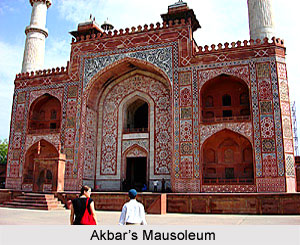
Methodical and systematic assessment of ancient monuments and buildings and other works of art generate archaeological evidence. General Sir Alexander Cunningham and Sir William Jones from Asiatic Society of Bengal, hold the credits for excavating the pre-Aryan era. The Indus Valley Civilisation and the Harappa and Mohenjodaro were discovered by Daya Ram Shahni in 1921. It was India`s oldest habitat which dates back to 400,000 and 200,000 BC, known as the second Inter-Glacial period. The excavation and scientific analysis of palaces, stupas, temples and residential houses and other religious and social buildings provide an estimation of the situation that existed in ancient epoch.
Inscription
One of the most trustworthy evidence can be attained from numerous inscriptions. These are writings principally engraved on stone pillars, copper, bronze plates, iron, gold, silver, rocks temple walls and bricks and are generally uncorrupted. Majority of the stone inscriptions, venerate certain events or record various dedications. Such documents include detailed Sanskrit poems and accounts of pilgrims. Inscriptions in Sanskrit, Telugu, Tamil, Prakrit, Pali and also Kharosti and Brahmi scripts have been discovered. The inscriptions discovered from the era of emperor Ashoka provide the most factual data of his period. Inscriptions of by Harisena, the court poet of Samudragupta, of Allahabad Prasasti, and Kharvela, emperor of Kalinga give significant facts for the restoration of Indian history.
 Coins
Coins
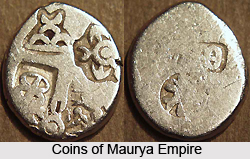
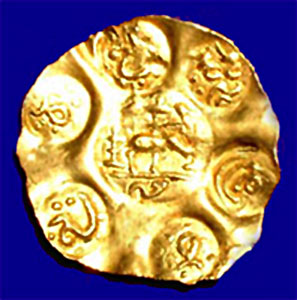
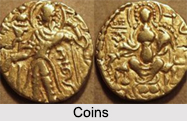
Numismatics or the analysis of ancient coins requires specialised skills and knowledge. Numerous ancient coins of Indian origin have been unearthed which gives an estimation of economic condition and currency structure of that time. Various types of coins from Samudragupta`s era give a detailed account of current conditions. Even the dates inscribed on the coins testify the chronology of events in ancient India. Various information and data have been obtained about the Indo-Greek, Indo-Parthian era from the coins prevalent in those times.
Paintings and Sculptures
Rock paintings of the period have survived in the caves of Buddhist and Jain monks. These were usually depictions of facts observed from their day to day lives; however there were many scenes from the life of the Buddha and tales from the Jataka and other such books. Sculptures show the state of artistic technique and it shows gradual refinement through the years.
Proper observations and inferences drawn from the study of various Archaeological Sources of Ancient Indian History provide a proper assessment and overview of ancient India. The Archaeological Sources give some knowledge of the life of the ancient people. India is rich with ancient ruins, remains and monuments.
Monumental Sources
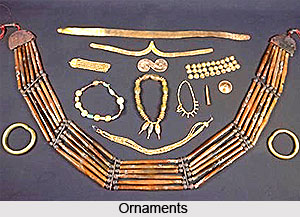
 One of the major archaeological sources which offer valuable and authentic historical information is the monuments of the ancient period. Buildings, including temples, statues, pottery etc., come under this category. These are more significant from the cultural point of view as compared to the political view point. Moreover, these also mirror the economic situations of the country. Other facts like design and architectural pattern, types of raw materials and construction expertise can also be obtained from Monumental sources of Ancient Indian History. Monuments are of two kinds- Indian and Foreign.
Indian Monumental Sources of Ancient Indian History
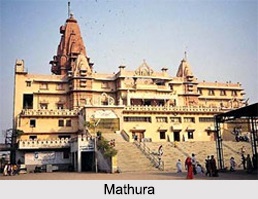
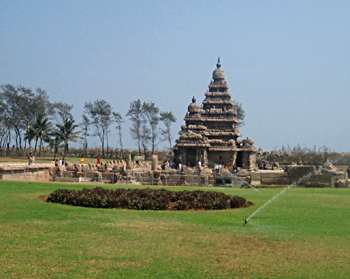
As regard to Indian monuments, they provide very constructive principle in restructuring the history of ancient India. Archaeological excavations in the North eastern part of India have brought to light the remains of a highly developed urban civilization in ancient India. The excavations of Harappa, Mohenjodaro, Kalibangan, Lothal and Taxila have furnished pretty valuable and authentic historical discoveries, which were so far unknown to the world. The discovery of the Indus Valley Civilisation has established the existence of a civilisation preceding the Aryans. The excavations of Taxila have generated a lot of information about the Kushans and the Gandhara School of Art. The wooden remains found in the excavations of Pataliputra depicts that in the prehistoric period, the use of wood was more popular and furnishes constructive historical material about the Mauryans. Moreover the various temples and stupas, like those found in Sanchi and Bharhut stupas, and other numerous temples in Southern India, provide an idea about the educational and social life.
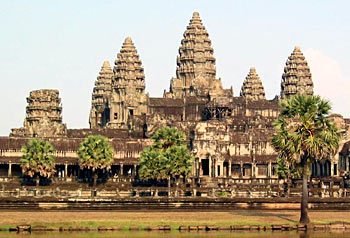 Moreover, various artefacts and the exquisite paintings like those found on the Ajanta caves, pictorial tablets and relics of Harappa, and those in Asokan era are also considered as useful resources. The Copper Statue of Buddha in Nalanda, Bricks Temple in Kanpur district and Rock Temple in Jhansi district, are some of the instances, which reverberates the progression of art and culture in ancient India.
Foreign Monumental Sources of Ancient Indian History
Besides this, monuments in foreign countries have also proved helpful in restructuring the history of prehistoric India. The illustrations of the development of Indian art and culture are seen in Java, Sumatra and Cambodia The Angkor-Vat in Cambodia, Borobodur and Shiva temples of `Dhinda Pathra` in Java are evidences that Indians had founded colonies in these places. A temple and some statues discovered in Malaya confirm that the dwellers of this place were Hindus and worshipped Shiva, Parvati, Ganesh and Nandi. Same is the case with the islands Bali and Borneo. These things are authentications of the fact that in prehistoric India, the country was very sophisticated in art and culture and had founded its colonies in far-off countries.
Numismatic Source
 Numismatic found so far which are cast of copper, gold and silver or alloys, generate priceless materials for the restructurisation of the history of ancient India. Without the coins, no knowledge could have been gained about the period from 206 B.C. to 300 B.C. The coins, large in number, helps one to know about the private habits of kings, the dates of their succession and conquests, the handwriting during that period and the political history of the respective periods. Some writers are of the observation that Indians had no experience of coinage and because this they owe a lot to the Greeks. But this view cannot be recognised because ancient literature cites words Nashka, Satman and Kastripas for coins. According to Smith and Rapson, these were private coins. But modern scholars have proved that these coins were regular coins and had been released by the individual monarchs.
The coins of Samudra Gupta illustrate him as an orthodox Brahman, a very erudite man and an admirer of music. The coins of Kanishka depicts that he was an adherent of Buddhism. Several coins discovered in Deccan, establish the fact that Indians had trade dealings with the Romans. Much is owed to the coins for restructuring of the Gupta period. Leaving the coins of Indian Kings, coins of foreign kings have also been found. The fact that the Greeks had reigned for several years over the Northwestern provinces and Punjab, is proved by their coins. Coins are the only assets through which one can obtain knowledge about the Greeks, Shakas and Parthians, who had come to India after the decline of the Mauryan Empire.
Chinese Sources
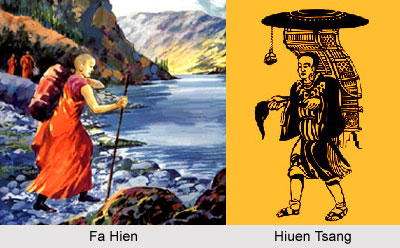 Chinese sources primarily comprise the accounts of travellers like Fa Hien, Hiuen Tsang and Using, who condensed into writings the experiences of their visit to India. Buddhism drew these travellers and they started coming to India from 399 A.D. The chronicles of these travellers sheds light upon the social, economic, religious and political conditions of India during that time. Fa Hien was the first Chinese pilgrim who came to India in 399 A.D. and remained here uptil 413 A.D. His chronicles render a graphic description of the government of the Gangetic territories during the reign of Chandra Gupta II.
However, the most important of Chinese pilgrims was Hiuen Tsang. who is also known as "Prince of Pilgrims". He came to India during the reign of Harshvardhana. His delineations of that period renders priceless information about the social, economic, religious and political conditions of India at that time. He had travelled a lot in India and stayed here for 15 years. From the historical point of view, his book `Si-Yu-Ki` is very essential for the history of that era. His book predominantly is useful for deciding the magnitude of Harshavardhana`s empire and about the knowledge that Buddhism was on the downslope and Jains and Buddhists lived serenely and in co-operation with each other. Tsang travelled within India from 671 A.D. to 795 A.D. Though he also furnishes contemporary records with dates, yet his accounts are chiefly religious in inclination.
Foreign Sources
The accounts of foreigners mostly attach to the knowledge of the history of ancient India and are immensely valuable as knowledge gained from indigenous sources can be ascertained by these accounts. The foreign accounts are important therefore to understand the ancient Indian history. Although they lack native understanding of the complex ethnicity of the ancient Indians, yet are indeed great source of knowledge. They do provide priceless documentation of the then period. Foreign sources may be classed into three groups- 1. The Classical, 2. The Chinese, and 3. the Muslim sources.
Buddhist literary source
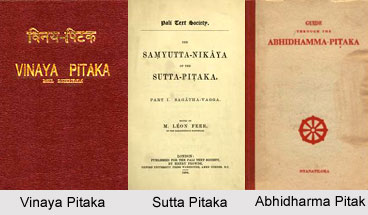 After Brahmanical literature comes the Buddhist literature, which is also substantial from the historical point of view. There are three branches of Buddhist literature-Jatak, Pitak and Nikaya. The most vital of Buddhist literature is known as Tripatika, comprising three divisions-Vinaya, Pitaka, Sutta Pitaka and Abhidharma Pitaka. These are written in Pali and contain religious philosophies of Buddhism. Other books of Pali literature which are also crucial from a historical point of view include- `Milinde Panha`, `Dipavamsa` and `Mahavamsa`. `Milinde Panha` comprises the conversation between Greek king Menander (king Milinda) and Buddhist saint Negsena. `Dipavamsa` and `Mahavamsa` which were composed in Ceylon, delineates not only the history of Ceylon, but also deals with the history of India, from 6th century B.C. to 4th century B.C. These religious books for the first time lets one to know about Chandra Gupta Maurya. One of the most substantial books of Buddhist literature is `Anguttara Nikaya` that illustrates the political, social and religious conditions of 6th century B.C. In addition to this, other important books include- `Mahvichasya` by Asva Ghosh, `Satasahasrika`, `Prajnaparamita` and `Madhyamika Sutras` by Nagarjuna, a grand teacher of Buddhism, `Mahayana Sutralamkara` by Asanga, `Abhidharma Kosha` by Vasubandhu etc. Asva Ghosh, author of `Buddhacharita` and `Saundarananda`, was a contemporary of King Kanishka. Much is owed to Buddhist literature, for furnishing loads of information about Ashoka, Kanishka, Pushyamitra Shunga, Chandra Gupta Maurya, etc.
Jatakas illustrate the birth stories of Buddha and are vital for furnishing information about the communal conditions prior to Buddha. As observed by Dr. Winternitz, "The Jatakas were of inestimable value, not only as regards literature and art, but also from the point of view of the history of civilization for the period of the 3rd century B.C." So far about 549 Jataka stories have been printed. A flamboyant picture of the political, social, economic and religious conditions of the people can be described regarding the 2nd or 3rd century B.C., from the Jatakas.
Jain Literary source
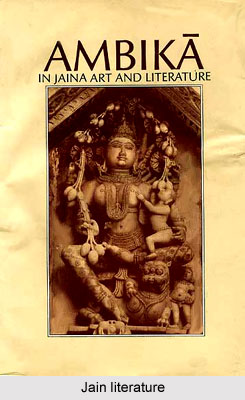 Jain literature is also of immense value for the restructurisation of ancient history of India. The most priceless work in Jain literature is `Parisistha Parvana`, written by Hema Chandra. Bhadrabhahu renders historical stuff about the rule of Chandra Gupta Maurya. Other works of historical importance include- `Katha Kosh`, `Kalika Purna`, `Lok Vibhaga` etc. The chief religious book of Jams, known as `Angas` and `Upangas`, also furnishes just about some historical material. Thus it can be seen that immense bulk of literature is available for the restructurisation of history of ancient India. As no work equivalent to works of Herodotus and Thucydides is found in the ancient period, uncounted complexities arise in restructuring the history of ancient India and placing the event in a sequential order. However, modern scholars have accomplished an admirable job, by drawing out historical materials from the immense bulk of ancient literature of India, which is primarily spiritual in character.
Inscriptional Source
 The inscriptions have helped the most in identifying the ancient Indian history. They have provided names of kings, given the dates and have also recorded the important events.
Dr. R. C. Majumdar, says "The inscriptions, being contemporary records of a reliable character, have helped us most. They have furnished us with the names of kings. Sometimes together with their dates and other necessary particulars and have recorded many important events of history". Inscriptions have made vast contributions in the knowledge of history of ancient India. Their weight can never be over-emphasised. It is highly regrettable that knowledge cannot be gained of the period prior to 3rd century B.C. These inscriptions furnishes one with valuable information regarding the dynasties of kings together with their dates, social, political and religious conditions of the contemporary period. Subjugations of kings, magnitude of their kingdoms etc. is other useful data which are deduced from the inscriptions. A bunch of them are remembrances, celebratory or donative. They owe their beginning to some specific events. These inscriptions are imprinted on rocks, stones, iron pillars, caves, bronze, copper and on terracotta seals. Due to they being imprinted on stones and metals, they could not be fiddled with and hence still contains what was originally written on them. They, therefore, provide genuine information and also assists to test the records, which are found written in books.
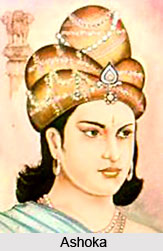
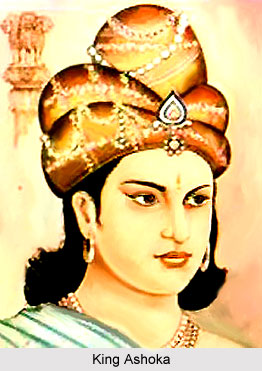
Ashoka was the first king who started releasing inscriptions throughout his kingdom and the whole history of his rule can be structured from his own inscriptions. The crucial edicts which have so far been discovered comprise 14 rock edicts and 7 pillar edicts of Ashoka. These are of outstanding quality and establish a class of themselves. They are discourses on `Dharma` or the Law of piety. Some of these inscriptions of Ashoka goes by the name of `Devanampiya`. These inscriptions furnish plentiful materials about the religion and the magnitude of Ashoka`s empire.
Both official and private kinds of inscriptions are found after Ashoka. Official records consisted of both panegyric and grant of lands. Allahabad pillar inscription is the most essential eulogy of Samudra Gupta. It was composed by Harisena and delineates the persona of Samudra Gupta and his conquests. Other tributes, which are found, consist of Gwalior of Bhoj, iron pillar inscription of King Chandra, Devpur of King Vijay Singh of the Sen dynasty of Bengal etc. As these eulogies were written for exaltation of the. Several kings, their rightness needs further certification and careful scrutiny. Compared to the official inscriptions, non-officials are huge in number. Most of these are found imprinted on the idols of God and religious buildings. In addition to shedding light upon the evolution of art and architecture, they provide valuable information about the social, economic and political conditions of their respective periods. The most illustrious of these are Hathigumpha and Kara inscriptions.
Puranic Sources
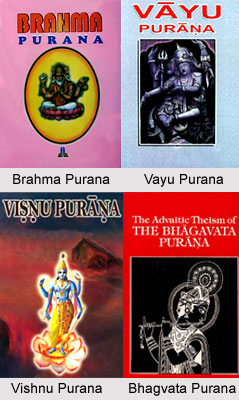 Right from delineating the root of Indian history to mirror the socio economic condition of ancient India, Puranic sources have played a major role. Puranas are coined as the real histories of ancient India, because they hold the most methodical record of Indian historical tradition. Puranas comprise eighteen in number and there are Up-Puranas of an equal number. Five of these Puranas-Vishnu, Vayu, Brahma, Bhagvata and Matsya Puranas-are of a great deal of historical consequence. Every Purana is divided in five parts--1. Sarga, 2. Prati Sarga, 3. Vansha, 4. Manwantar and 5. Vansha Nucharita.
These hold the dynasties of kings and speak about the accomplishments of kings. Besides assisting to know the historical geography of ancient India, the Puranas renders an image of the political, social, economic and religious conditions of India in various times. According to Smith, `the Puranic genealogies cannot be treated as of much value for account of pre-historic period, but they are of immense help in reconstruction of the political history of India for a period subsequent to 600 B.C.` Thus it can be seen that Puranas are a priceless source of history of India from 600 B.C. to succeeding periods. Still, there is requirement of vigilance in restructuring the history on the foundation of Puranas, because there are specific flaws in them. They start mostly with a myth and ends in history. Moreover, they are paradoxical. Hence, a measured and vigilant study is called for, so that plenty historical materials may be deduced from Puranas
Brahmans and Upanishads-Another class of literature associated with the Vedas are Brahmans and Upanishads. Brahmans are the prose commentaries on Vedic hymns. The Upanishads contain the philosophical ethical preachings. Through Upanishads, the religious and cultural thoughts of the Aryans can be recognised. They are detailed dissertations on God, Soul and Salvation. Furthermore, they give priceless information about the reigns of King Parikshit to Bimbisara.
Vedangas-It additions to Brahmans and Upanishads, there are six Vedangas. Vedangas are dissertations on science and art. These Vedangas were meant to assist in the understanding of the Vedas. The six Vedangas xomprise- (1) Phonetics, (2) Astronomy, (3) Ritual, (4) Grammar, (5) Etymology, and (6) Metrics.
Sutras-For better apprehension and study of different branches of Vedas, certain schools came into being in course of time and each school had its individual texts, which are known as Sutras. The most significant of the Sutras comprise- (1) Kalpa Sutras, (2) Grihya Sutras, and (3) Dharma Sutras. Kalpa Sutras contain rituals and has four divisions. Grihya Sutras illustrate the rituals, sacrifices etc. These furnish a flamboyant picture of the social and religious life of people during those periods. Lastly, the Dharma Sutras relates with Dharma or Law.
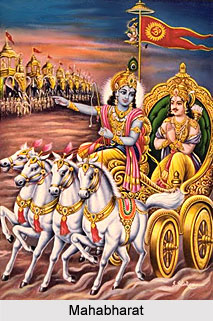
Epics-Epics are the legendary tales, yet they are momentous to that extent because they furnish plentiful information concerning the economic, religious, social and political conditions of the later Aryans. The two epics, `Ramayana` and `Mahabharata` represents Hindu society of their times. The writers assign their period from 4th century B.C. to 4th century A.D. Dr. Ram Naresh Tripathy comments, "No doubt, they give interesting pictures of the religious and social conditions, but as chronicles of political events, they seen lamentably full of tale-telling and chronological aberrations". But, these epics do provide ample information regarding historical materials. For example, `Ramayana` which is in Sanskrit and written by Valmiki, illuminates everybody about the conflict between the Aryans and non-Aryans. The execution of Ashwamedha described in `Ramayana` demonstrates that powers of kings had amplified and that one icing had avowed his domination over other kings. Furthermore, the Aryans had expanded their influence towards the south. From the point of view of political conditions of the epic era, `Mahabharata` is more imperative.
Islamic Sources
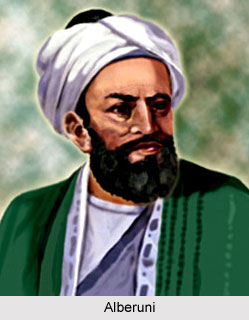 Alberuni`s work, "Tehqiqi-Hindi" is very precious for furnishing an account of Hindu fashion, science and literature. He came in the time of Mahmud of Ghazni,. Being well-read himself in Sanskrit, Hindu social and religious ethnicities, his book is of exceptional significance. After Alberuni the other later Muslim writers worth mentioning are Ibn-Batuta, Al-Masudi, Nizamuddin and Hasan-Nizami.
Besides the above-mentioned foreign writers who have helped readers in restructuring the early history of India, there are some other writers who are of no less importance and a brief mention of their names will not be inappropriate. Tibetan writer, Tara Nath also generates constructive information about India in his book, "History of Buddhism". The Arabian books also incorporate references about India. Important Arab Works include- `Kitab-al-Fihrist`, `Kitab-FotuV, `Dictioneries of Countries` by Yakut and Atar-al-Bilad, and `Monuments of Countries` by Al-Kazwin. Lastly, the traveller who also deserves mention among the foreigners is Marco Polo, `the Venetian traveller`, who visited India in 1294 A.D.
Classification of Sources of ancient Indian history
Indian history comprises more than a span of 5000 years. In order to delve into its past there are various sources and these can be classified broadly into literary sources, archaeological sources and foreign accounts. However, the sources for ancient Indian history are limited by the dearth of written historical materials. Inspite of this fact several excavations, rare manuscripts, monuments and coins have aided in restructuring the ancient history of India.
One of the important sources are the literary sources but oral tradition was prevalent in ancient India. Hence the period before 6th century B.C. is generally obscure. It is only through the Vedas, epics and Puranas that one can get an idea about this period. From 6th century BC to the Gupta Age several manuscripts have been found to retell the tale of the by gone days. These literary sources include the Buddhist Jatakas and Jain Canonical texts. The Jatakas, for instance, contain valuable information about the then social and economic life of the people. The biographical narratives of the Gupta kings written by the court poets also throw ample light about ancient Indian kings and their courts. However, most of these works are eulogies and at times the narratives are exaggerated as well. Besides these south Indian Tamil chronicles like Nandika-Kalambakam and Kalingathu Parani are useful sources of ancient Indian history.
Archaeological sources are one of the most authentic ways to gather information about the past. In fact, archaeology is considered the backbone of the art of historiography. Inscriptions, coins and monuments are regarded as the archaeological sources. Amongst these inscriptions are considered to be of the most significant. Engraved on stones or metals, these throw ample light on the political events like wars and conquests. They also contain dates that serve as landmarks. Next to inscriptions, the coins form an important source of history. The coins of India bear the names of kings or dynasties, dates or the particular deities which were worshipped during that era and royal portraits. These also help to restructure the economic lives and trade relations. The Indian monuments, the existing art and architecture of the ancient days and the ruins of old cities also aid in restructuring the by-gone eras.
Foreign accounts relating to the Persian invasions, spread of Buddhism, administration of the Indian kings and others are essential as well in tracing the events that took place in the past. Foreign writers like, Megasthenes, Hiuen Tsang, Fa-Hien, Al-beruni (Arabic scholar), Lama Taranatha and others have left behind their accounts on ancient history. These have also contributed in gathering information on the ancient history of India.