 With the dawn of industrial era in India, the sources of energy to run giant machines suddenly attained prominence. Wood fuel was confined only to domestic use and that too in the rural areas. Coal, which was already in use, became a highly priced commodity. It was then supplemented by natural oil. After the World War II, another source of energy was added. It was the nuclear energy. It called for a very sophisticated level of technology. All these sources of energy are known as conventional sources of energy, which cannot renew itself at the required rate. The possible extinction of non-renewable sources of energy strongly supported the use of alternatives sources of energy in India, which will not exhaust after use. The modern world is well aware of renewable or natural sources of energy like water, wind and sun. Thus, the use of hydroelectricity gained importance in the areas where running water and needed technology were readily available. Significant increase in India"s capacity to produce wind power has been recorded. The solar power generating industry is also growing in India.
Power Grids in India
Power Grids in India performs the function of transmitting electricity. The power generated from every possible source is fed into five regional grids. All the regional grids are expected to be connected to a single national grid to serve all the regions properly, even in adverse conditions. 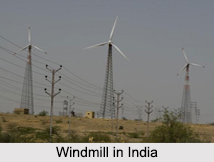
Thermal Power in India
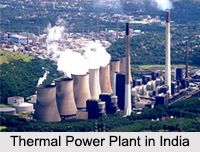
Thermal Power in India is generated by using non-renewable resources. More specifically, it is generated by burning coal or natural gas or petroleum in thermal generators. Among the conventional sources of energy, coal occupies a prominent position. It is important to note that India has the 5th largest coal reserves in the world. It is eastern India and south-central India, where coal deposits are principally found. As on 31st of March, 2016, largest coal deposits in India of about 26.29 percent in Jharkhand and 24.58 percent in Odisha were recorded. Apart from being the prime source of energy, coal is also a raw material and an indispensable part of the steel industry and chemical industry in India. Oil and natural gas are one of the main power resources in India. India has a very large proportion of tertiary rocks and alluvial deposits, particularly in the extra-peninsular India. These sedimentary rocks, which were once under the shallow seas, hold the possibility of harboring oil and natural gas deposits.
Thermal power has the distinction of being largest source of power in India. Thermal power plants differ in terms of fuel used to generate the steam. These power plants produce about 71 percent of electricity consumed in India.
Nuclear Power in India
Nuclear Power in India depends on minerals like radio-active minerals. It is important to note that India`s domestic uranium reserves are so less that it has to import uranium from country like Russia. Nuclear power is known to be the 4th largest source of electricity in India. India has been a leader in making peaceful use of atomic energy in fields like medicine and agriculture. As of 2016, about 22 nuclear reactors working in about 8 nuclear power plants were recorded in India. It is important to note that even though these reactors contribute less than 3 percent to the country"s total energy generation, they cause pollution at every stage of the nuclear fuel cycle. 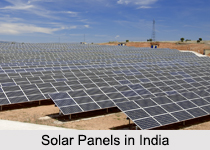
Hydro Electric Power in India
Hydro-Electric Power in India is generated using a simple principle. In this kind of power production, the kinetic energy of water is converted into electrical energy, when the flow of water rotates turbines. Uninterrupted flow of water is a prerequisite to required power production, which depends on favorable geographical and economic conditions. It is important to note that India is the 7th largest producer of hydroelectric power in the world.
Wind Power in India
The history of wind power production in India dates back to 1986. India possessed the 4th largest installed wind power capacity in the world, by the end of 2015. The share of wind power in India`s total installed power generation capacity is nearly 9.87 percent. For wind power production, the location of wind farm is firstly finalized analyzing the wind data. A bigger rotor diameter and more hub height with recent transmission technology are considered to be the vital factors in maximizing a wind farm power generation capacity and diminishing the wind electricity production cost.
Solar Power in India
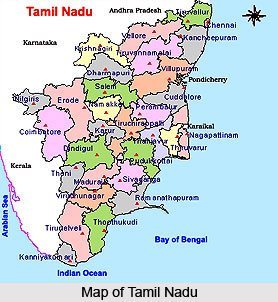
India experiences about 300 clear and sunny days in a year. Thus, India has scope for solar energy production. It is important to note that the solar energy available in a year exceeds the possible energy output of all fossil fuel energy reserves in India. The estimated solar energy prevalence on India`s land area is about 5000 trillion kilowatt-hours per year. The first solar power project of India was registered under the Clean Development Mechanism on 16th of May, 2011. The project is in a village called Sivagangai Village of Sivaganga district in Tamil Nadu. Gujarat is known to pilot solar power capacity in India.