Malla
|
Malla was an ancient Indian dynasty. It is also one of the sixteen Mahajanapadas. This dynasty has been mentioned in some of the ancient texts.
|
|
|
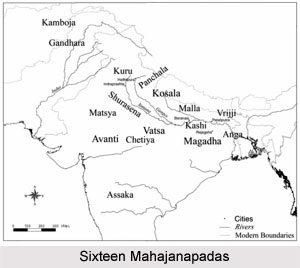 Epics like Mahabharata mentions that the Mallas were considered along with the tribes of the Angas, Vangas and Kalingas. Malla was an ancient dynasty in India and is one of the sixteen mahajanapadas. Buddhist and Jain works have the mention of the Mallas who existed in a republic that consisted of nine territories. In a more original context it is evident that they actually had a monarchical form of government in the beginning but later they transformed into the republic form {Samgha). The Mallas were warlike and brave people and have been mentioned and referred as Vrtaya Kshatriyas by Manusmriti, as Vasishthas in the Mahapparnibbana Suttanta. Mallas have also suffered domination by the Magadha Empire after Buddha's death. Epics like Mahabharata mentions that the Mallas were considered along with the tribes of the Angas, Vangas and Kalingas. Malla was an ancient dynasty in India and is one of the sixteen mahajanapadas. Buddhist and Jain works have the mention of the Mallas who existed in a republic that consisted of nine territories. In a more original context it is evident that they actually had a monarchical form of government in the beginning but later they transformed into the republic form {Samgha). The Mallas were warlike and brave people and have been mentioned and referred as Vrtaya Kshatriyas by Manusmriti, as Vasishthas in the Mahapparnibbana Suttanta. Mallas have also suffered domination by the Magadha Empire after Buddha's death.
Mallas have been mentioned in Anguttara Nikaya. Malla mahajanapada was situated in north Magadha. It was divided into two main parts and Kakuttha River was most probably the dividing line. The capitals of these two sections were Kusavati and Pava. This clan was very powerful in eastern India. Many of the Mallas are followers of Jainism and Buddhism. Initially Mallas had a monarchical form of administration but shifted later on to republican.
Probably they had formed alliance with the Licchavis. They lost their independence sometime after Lord Buddha's death. Their kingdoms were annexed by the empire of Magadha. At Pava Lord Mahavira breathed his last. Kusinara is the place where Buddha went into Nirvana.
This article is a stub. You can enrich by adding more information to it. Send your Write Up to content@indianetzone.com
|
|
|
|





