Location of the Well , Vastu Shastra - Informative & researched article on Location of the Well , Vastu Shastra
 Indianetzone: Largest Free Encyclopedia of India with thousand of articlesIndian Religion


in  
 Art & Culture|Entertainment|Health|Reference|Sports|Society|Travel
Forum  | Free E-magazine  | RSS Feeds  
Indian Religion : Vastu Shastra |Indian Religions |Indian Myths |Indian Mythology |Gods of India |Goddesses Of India |Religious Thinkers of India |Types of Religion in India |History of Indian Religion |Indian Yogis |Ajivikas |Sacred Scriptures in Indian Religion |Tantrism |Shaivism |Indian Communities |Sacred Animals in India |Roman Impact on South Indian Art and Society |Bhattacharyas |Indian Classical Terms
Home > Society > Indian Religion > Vastu Shastra > Location of the Well
Location of the Well , Vastu Shastra
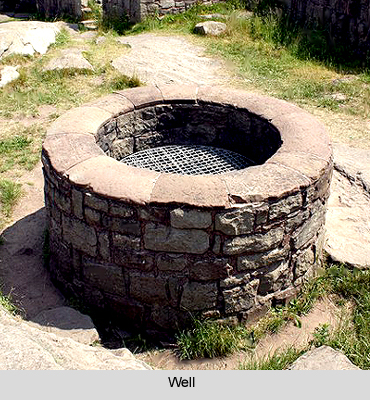
For construction it is necessary to the proper Location of the Well andVastu Shastra helps with this.

 Location of the Well , Vastu ShastraMost of the buildings are accompanied by several smaller units that are required for daily usages. For such structures Vastu Shastra states certain rules. For instance, the location where these would be constructed or the materials to be used are mentioned in the ancient architecture. For the construction of wells, borings and underground water storage tanks the following rules should be observed.

  • The best place for digging the well is the north-east corner of the plot. This will result the increase in wealth, prosperity, knowledge.

  • While digging the well an axis from the north-east corner to the south-west corner should be drawn. It should be seen that the well does not intersect with the axis. The well needs to be dug to the right or to the left of the axis.

  • It is most beneficial if a well is dug in the east side of the north-east corner of the plot. There will be an increase in wealth as well as prosperity.

  • If the well is dug to the north side of the north-east corner there will be an increase in wealth but reputation increases marginally.

  • The well should be in the north-east corner. It should be dug less than half way to the east and the north sides. It should not be constructed in the south-east or the north-west corners.

  • A well in the east direction leads to prosperity, in the north results in increase in wealth, in the west one has to face many difficulties and hardships. When dug in the south it will lead to untimely deaths, deformities, frequent accidents and suicide attempts.

  • Unnecessary enmity and theft will result if the well in the plot is in the northwest corner it leads to.

  • Never built a well in the south-west corner of the plot. Vastu Shastra considers it inauspicious as it may result in the untimely death of the head of the family. Violence increases; there will be a total failure in the jobs undertaken; loss of wealth, suicide, clashes in the family and other problems will arise. These troubles are adequate to make life miserable.

  • If a well is constructed in the south-east corner it may prove to be perilous for children. Fire and water are two opposite elements and when they come together, clashes and troubles are infused in one`s life. additional troubles include loss of wealth and serious strife at home. Compared to men women will suffer more losses.

  • If there is a well at the centre of the plot or building it will definitely ruin the family. The central position is accredited to Brahma and hence no construction can be done here. As a result nobody can stay in such places for a long time and life becomes unstable.

  • The well should be dug only after the land has been worshipped. Before digging the well, the place should be clearly demarcated. If the well is dug when the stars are favourable the water is easily obtained at a low level and it will also taste good.

  • For digging a well, the favourable constellations are Rohini, Uttra, Hasta, Uttara Bhadrapada etc.

  • It is advisable that the digging starts on Monday, Wednesday, Thursday or Friday as these are considered auspicious days.

  • Digging the well should not be started, as far as possible, on the zero day, {Kshya day) or Vridhi tithi.

  • Moreover when the constellations are facing downwards digging can be started. Amongst the downward facing constellations, Bharani, Purva, Krutika, Purvashadha, Purva Bhadrapada, Mula and Ashlesha are favorable for constructing a well.


  • The aforementioned rules are applicable not only to residential buildings but also to business establishments, hospitals, temples and others.

    (Last Updated on : 26/12/2011)
     
     
    Pyramid Vastu Home Vastu Vastu Principles
    Essentials of Vastu Elements of Vastu Griha Pravesh
    Designing a Home Using Vastu Vastu Tips for a House Kitchen Room in Vastu Shastra
    Bathrooms in Vastu Shastra Tips for position of bathroom Sceptic Tank
    Drainage Pipe Line Place of Idol and Worship Selection of Plot
    Bedrooms Strong Room Verandah
    Dining Room Drawing Room Store Room
    Study Room Basement Corners of the Open Space around the Structure
    Open Space Around The Building Parking Tips for building Staircase
    Upper Floor Central Position of a Flat in Vastu Overhead Water Tank
    Proper and Improper Shape of the Plot Survey of the Land or Soil Waste Storage Rooms
    Angles in the Corner of a Plot Compound Wall Engineering and Architecture in Vastu Shastra
    L Type Plots Roads Around the Plot Auspicious Time for Bhoomipuja
    Division of the Plot Gate of the Compound Wall Location of the Well
    Plots with Circular Roads Vithishula Trees Around the Building
    Entering a New House as per Vastu Shastra Purchase of the Adjacent Plot Building Material
    Universal Magnetic field in the Plot Slope in a Plot Diagonal Plots
    Life of the building Quality of a Plot Constructions of Religious Temples
    Constructions of Factories Constructions of Shops Constructions of Hospitals
    Construction of Banks Constructions of Educational Institutions Flat system in Vastu Shastra
    Natural elements and the Vastu Division of a Diagonal Plot East-South-East Extended Plot
    Flooring of the Flat North-North-West Extended Plot Rectifications in the Extended Plots
    South-South-West Extended Plot West-South-West Extended Plot East-North-East Extended Plot
    Entrance Gate for Main Building in Diagonal Plots North-North-East Extended Plot Purchase of the Adjacent plot along the Diagonal Building
    South-South-East Extended Plot West-North-West Extended Plot Windows of Flat
    Apartments and Flat Systems Bedroom in the Flat Kitchen in the Flat
    Outhouse And Garage Main Entrance Door of Flat Kitchen and Dining Table
    Bathroom in flat Seating Room in the flat Structures in the Flat
    Vastu in Different Units of a Flat Tips for Purchasing a Flat Row and Group Housing
    Vastu Shastra Effect of Planets on Buildings Haunted Structures
    Accursed Building Obstacle in a Structure or Dwarvedh Chhaya Vedh
    Selection of the Right Plot Ways to Overcome Inauspicious Vithishula Trees Touching the Structure
    Omens Related to Domestic Animals Omens Related to a Dog Omens Related to a Cat
    Omens Related to a Horse Omens related to a Crow Junction Plots
    Building Construction in L-Shaped Plots L and C Shaped Constructions Construction of L-type Buildings
    Construction of C Shaped Buildings Buildings in Triangular Plots Omens Related to Birds
    Omens Related to Serpent Omens Related to Sneeze Omens
    Auspicious Constellations for Travel Multilevel Structures Structure On a Hill
    Structure in a Ditch Vastu Shastra Related to Agriculture Interior Planning of the Main Building
    Vastu Shastra for Buildings Semi - Diagonal or Extended Plot Units in Apartments and Flat Systems
    Auspicious and Inauspicious Omens Mezzanine Floor Vastu Vidya
    Vastu Purusa Vastu for Multi-Storied Residential Buildings Height of Multi-storied Buildings
    Vastu Sastra in Town Planning Vastu Shastra in Astrology Construction of Central Space and Plinth
    Importance of Vastu Shastra Construction of Residential Buildings Vastu Shastra in Modern Architecture
    Construction of Doors and Windows in Buildings Relevance of Muhurta in Vastu Shastra Arvana in Vastu Shastra
    Vastu Shastra in Ancient Texts Construction of Theatres Vastu Shastra of Karnataka Temples
    Geographical Position of Plot Rectification through Vastu Principles Directions in the Plot and Building
    Place of Auspicious and Inauspicious Powers on the Plot    
    Recently Updated Articles in Indian Religion
    Lord Subrahmanya
    Lord Subrahmanya Swamy is considered to be the universal lord who blesses human beings and helps them get rid of their sins.
    Gods of India
    Gods of India form an inseparable part of the life of the people. Indian Gods are considered to be mysterious superhuman beings who are worshipped in this country in various forms.
    Folk Gods of Kumaon
    Folk gods of Kumaon have a rich history and they provide expression to the famous and popular ideas of the people.
    Seven Sisters
    Seven Sisters are the most famous among Dravidian deities in Southern India. The seven sisters also have a younger brother Potu Eazu.
    Savitr
    Savitr is a solar deity and off-spring of Vedic deity Aditi. Savitr has been mentioned in eleven hymns of Rig Veda.
    E-mail this Article | Post a Comment
    Forum
    Forum on Indian Religion
    Free E-magazine
    Subscribe to Free E-Magazine on Society
     
     
    Location of the Well , Vastu Shastra - Informative & researched article on Location of the Well , Vastu Shastra
    Sitemap
    Contact Us   |   RSS Feeds
    Copyright © 2008 Jupiter Infomedia Ltd. All rights reserved including the right to reproduce the contents in whole or in part in any form or medium without the express written permission of
    Jupiter Infomedia Ltd.
