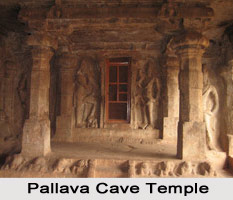
 Lalitankura Pallaveswara Griham is the southern-most Pallava cave temple and shrine of Tiruchirapalli district of Tamil Nadu. This cave temple was excavated by Mahendravarman Pallava in the 7th century. This is known as Lalitankura Pallaveswara Griham, where Lalitankura is taken from (`charming-scion`) the title of Mahendravarman.
Lalitankura Pallaveswara Griham is the southernmost Pallava cave temple. It is a typical early Pallava temple dedicated to Siva, which consists of a front mandapam and a narrow rear mandapam and a sanctum. There are two sculptures of Pallava dvarapalas (doorkeepers) guarding the present empty garbhagriham and the well-known `Gangadhara` (Siva wearing the Ganga on his head) panel in bold relief. This panel is a wonderful composition. The Pallavas most liked motif was this `Gangadhara`. This composition was described by Mahendravarman himself in eight beautiful slokas (verses) in Sanskrit in the Pallava Grantha script, inscribed around the composition itself. Hence it is special one.
Moreover, both the verses and the sculpture have multiple meanings, called dhvani, characteristic of classical Sanskrit poetry. This also represents the well-known scene of falling of Ganga at the request of Bhagiratha. It can also be assumed to signify Mahendra Pallava with his feudatories. These stanzas inscribed here as well as the titles of Mahendra Pallava on the pillars, in both Pallava Grantha and Tamil scripts are calligraphic materials. The Lalitankura Pallaveswara cave temple is a rare specimen of South Indian heritage.