Inscriptional Source of Ancient Indian History
|
Inscriptions are regarded as an important source in understanding the ancient Indian history.
|
|
|
 The inscriptions have helped the most in identifying the ancient Indian history. They have provided names of kings, given the dates and have also recorded the important events. The inscriptions have helped the most in identifying the ancient Indian history. They have provided names of kings, given the dates and have also recorded the important events.
Dr. R. C. Majumdar, says "The inscriptions, being contemporary records of a reliable character, have helped us most. They have furnished us with the names of kings. Sometimes together with their dates and other necessary particulars and have recorded many important events of history". Inscriptions have made vast contributions in the knowledge of history of ancient India. Their weight can never be over-emphasised. It is highly regrettable that knowledge cannot be gained of the period prior to 3rd century B.C. These inscriptions furnishes one with valuable information regarding the dynasties of kings together with their dates, social, political and religious conditions of the contemporary period. Subjugations of kings, magnitude of their kingdoms etc. is other useful data which are deduced from the inscriptions. A bunch of them are remembrances, celebratory or donative. They owe their beginning to some specific events. These inscriptions are imprinted on rocks, stones, iron pillars, caves, bronze, copper and on terracotta seals. Due to they being imprinted on stones and metals, they could not be fiddled with and hence still contains what was originally written on them. They, therefore, provide genuine information and also assists to test the records, which are found written in books.
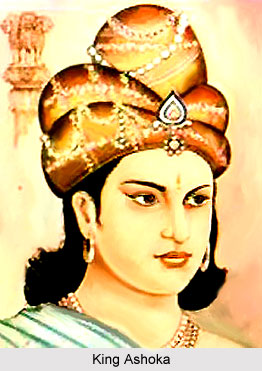
Ashoka was the first king who started releasing inscriptions throughout his kingdom and the whole history of his rule can be structured from his own inscriptions. The crucial edicts which have so far been discovered comprise 14 rock edicts and 7 pillar edicts of Ashoka. These are of outstanding quality and establish a class of themselves. They are discourses on 'Dharma' or the Law of piety. Some of these inscriptions of Ashoka goes by the name of 'Devanampiya'. These inscriptions furnish plentiful materials about the religion and the magnitude of Ashoka's empire.
Both official and private kinds of inscriptions are found after Ashoka. Official records consisted of both panegyric and grant of lands. Allahabad pillar inscription is the most essential eulogy of Samudra Gupta. It was composed by Harisena and delineates the persona of Samudra Gupta and his conquests. Other tributes, which are found, consist of Gwalior of Bhoj, iron pillar inscription of King Chandra, Devpur of King Vijay Singh of the Sen dynasty of Bengal etc. As these eulogies were written for exaltation of the. Several kings, their rightness needs further certification and careful scrutiny. Compared to the official inscriptions, non-officials are huge in number. Most of these are found imprinted on the idols of God and religious buildings. In addition to shedding light upon the evolution of art and architecture, they provide valuable information about the social, economic and political conditions of their respective periods. The most illustrious of these are Hathigumpha and Kara inscriptions.
|
|
|
|





