The downfall of the Mughal Empire in the 18th century, inevitably led to the economic disintegration in India, which with the passage of time brought about utter economic fragmentation and disruption. The continuous conflict and war between the Indian princes initiated the economics disruption, which was later hastened, when the British appeared in the political scenario. With the appearance of the British in the political scenario, plunder and oppression was increased considerably. Roads became unsafe and various unjust tolls and taxes hampered trade and commerce. European trading companies interfered in the Indian politics and profited from the administrative and the political confusions.
The significant feature of the Indian village economy was the existence of the self-sufficient and the self-governing village communities. Indian villages on the eve of the colonial rule functioned as the self-contained community having nothing to do with the outside world. Village economy was self-subsisting providing the foodstuffs it needed except a few necessities like salt and iron. Another important feature of the village economy was the union of the agriculture and the handicraft and the cottage industry. The peasant family undertook spinning and weaving as the secondary activity and produced the clothes needed for the family. The other economic needs were provided by the village craftsmen like carpenter, goldsmith, the potter, blacksmith, the oil presser etc. who in effect were servants of the village. These village servants received a customary share in the village crops for their services. The basic land relationship in the village was governed by custom and usage. The concept of private property in the land was not in vogue during that time. The land in the s village community belonged to the cultivating community, each family having its share in the cultivable land. In the village economy, lands were not considered as the article to purchase or sale.
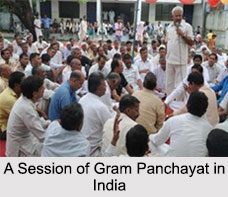
Since the villages were the self-governing, the villages had their own autonomous body to govern these. The village Panchayats administered the village affairs, settled disputes and administered justice. The village Headman was its leader and he was entrusted with the charge of dealing with the government. The local chief did not interfere in the village affairs except during the collection of the shares in the crops. Political convulsions, which were the trend of the urban life did not hinder the village economy and politics.
However the historians have opined that the idea of self-sufficiency became a barrier for the creation of markets for the Indian Handicrafts. The close and the caste bound socio-economic structures permitted a little mobility of the labor. As a result there occurred an economic stagnation in the villages economy. Moreover the alienation from the nationalist currents acted upon against the emergence of national consciousness among the villagers. The Indiana villages on the eve of the British conquest was completely alienated from the mainstream national consciousness and was suffering from economic blockade.
The urban economy of India presented a far better economic structure than the Indian villages. The cotton manufacturers of Bengal (Dacca), Gujarat (Ahmedabad)and Masulipatam, the silk fabrics of Murshidabad, Lahore and Agra, woolen shawls ands carpets of Agra, Lahore and Kashmir etc were in high demand both in India and abroad. Besides gold and silver jewellery, metal work etc were the rare work of excellence. The transactions of these metal goods with the market both within and outside developed the banking system in India.
The banking system in the urban areas was controlled by the shroffs and the mahajans at the lower level and the Jagat Seths , Nagar Seths and Chetties at the top. Indian towns also had a very favorable balance of trade . It seemed that the pre conditions for a rapid capitalist growth exceed. Certain socio-economic constraints like the law of interest and the existence of the feudal classes curbed the economic development.