


 Lord Siva, as the god of dance is known as Nataraja. There are lots of temples in India and especially in Tamil Nadu where Siva is worshipped as Nataraja. But, there are mainly five places in Tamil Nadu where the cult of Nataraja is worshipped with gaiety and pomp. The dancing deity Nataraja can be seen in these 'Pancha sabbas' or five halls of Tamil Nadu. Lord Siva, as the god of dance is known as Nataraja. There are lots of temples in India and especially in Tamil Nadu where Siva is worshipped as Nataraja. But, there are mainly five places in Tamil Nadu where the cult of Nataraja is worshipped with gaiety and pomp. The dancing deity Nataraja can be seen in these 'Pancha sabbas' or five halls of Tamil Nadu.
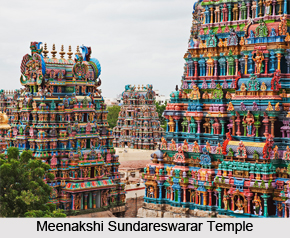
The most important shrine for Nataraja is the 'Kanaka Sabha' or golden hall at Chidambaram. The Nataraja dances here in the 'Ananda Tandava' or 'the dance of bliss' form and he is called 'Kanaka Sabhapati' or the 'Lord of the Golden Hall'. Nataraja was the favourite deity of the Chola kings of Tanjavur and hence they kept idol of Nataraja in all the Siva temples built by them in various places in their empire in Tamil Nadu and all over in South India. The 'Rajatha Sabha' or silver hall (velli ambalam) at the Minakshi Sundareshwarar temple in Madurai is another important Natarja shrine of Tamil Nadu. Nataraja is shown in a very rare posture here. He is shown his right leg raised and dancing on the dwarf (apasmara purusha) with his left foot. Both the main image of stone {moolavar) and the processional image (utsava murti) in this shrine are in unusual posture. The usual posture of Nataraja is dancing with his right leg placed on the dwarf with his left leg upraised. The change in posture of Nataraja here is linked with the legend (sthala-purana) of this place. It is said that the Pandyan king of Madurai was a devotee of Nataraja and under pressure from a rival Chola king, tried to master dance. But while trying to do so, he realised the difficulty of the task. He was filled with agony to see his favourite deity dancing with his right foot always as he did feel while doing himself. So, he prayed Lord Nataraja to change his posture so that he does not get tired in a same posture. The Lord listened to his request and changed his posture. So, Nataraja is seen dancing on his left foot here. One of the five important shrines of Nataraja can be seen at Madurai in Tamil Nadu. Here the dancing posture of 'Ambalavanan' (Lord Siva) with ten hands can be seen only in the 'Velli ambalam' at Madurai. Here the dance performed by Nataraja is known as 'Paramananda Thandavam' and also as 'Chokka Thandavam'. It is also known as 'Sundara Tandavam'. Another important Nataraja shrine of Tamil Nadu is situated at the Nellaiappar temple in Tirunelveli. The 'Tamra Sabha' or the 'hall of copper' is found here in the vast campus. Here the icon of Lord Siva is made of Bronze and is encircled by a 'prabha' or aura of very attractive workmanship. It is said that the Nataraja image here was originally in the temple of Agnishwaram. Once a fire out broke here and then it was kept on the bed of a river. Later, it was brought to the Nellaiappar temple and worshipped here. The Ratna Sabha or the hall of rubies in Tiruvalangadu is another important Nataraja shrine of Tamil Nadu. It takes approximately two hours from Chennai by road to reach Tiruvalangadu. The Lord here is called Ratna Sabhapati or the Lord of the Hall of rubies. There is a mythical story related to this place and the shrine. It is said that once Siva and Kali had a dance contest. At that time Kali was in a very angry mood and could not be pacified easily. Initially, Kali gave a better performance than Siva. But, later Nataraja (Siva) performed the 'Tandava' dance also known as the 'Chanda (terrific) tandava' and lifted his leg up above his head. Then, Kali out of modesty accepted her defeat. Lord Nataraja won the contest but he also declared that Kali was second to none than himself in dance. There is a very stunning metal image of eight-armed Siva dancing in the 'Urdlwa Tandava' can be seen in this temple. There is also a small shrine nearby and there is another metal image of Kali who is also eight-armed can be seen. The last among the five Nataraja shrines in Tamil Nadu is situated at Kuttralam. The 'Chitra Sabha' or the hall of paintings is found here in Kuttralam, which is famous for its waterfalls. Here the lord Siva is known as the 'Kuttralanathan'. But, all the rituals conducted here are first offered for Nataraja and then for Kuttralanathan. Here, Nataraja is known as 'Ananda Nata-rajeshwarar' or the 'God of Blissful Dance'. The Chitra Sabha is located outside the areas of the main temple. It is actually a huge hall built in a typical Kerala style. A huge painting of Nataraja in Tanjavur style can be seen here. |
| |||



Home > Art & Culture > Indian Monuments > Indian Regional Monuments > Monuments of Tamil Nadu > Five Important Nataraja Shrines of Tamil Nadu
Five Important Nataraja Shrines of Tamil Nadu
| There are lots of temples in Tamil Nadu where Siva is worshipped as Nataraja. |
| ||||||||||||||||||||||||||||

